









































































What makes a custom packaging project move quickly?
Complete information moves a packaging review faster than a rushed promise. Send the product dimensions, packing sequence, opening method, artwork, material, finish, quantity, and destination together. A dieline is the flat cutting template used to print and cut the package. When the dieline reflects the actual product, the review can deal with fit and production choices instead of missing measurements.
Use custom packaging solutions to frame the project, then compare real catalog directions such as custom tin packaging, custom taper candle packaging, and custom stevia packaging. A compact carton, a tin, and a candle package can need different closures, inserts, and clearances even when the artwork workflow is similar.
Which structure is a practical starting point?
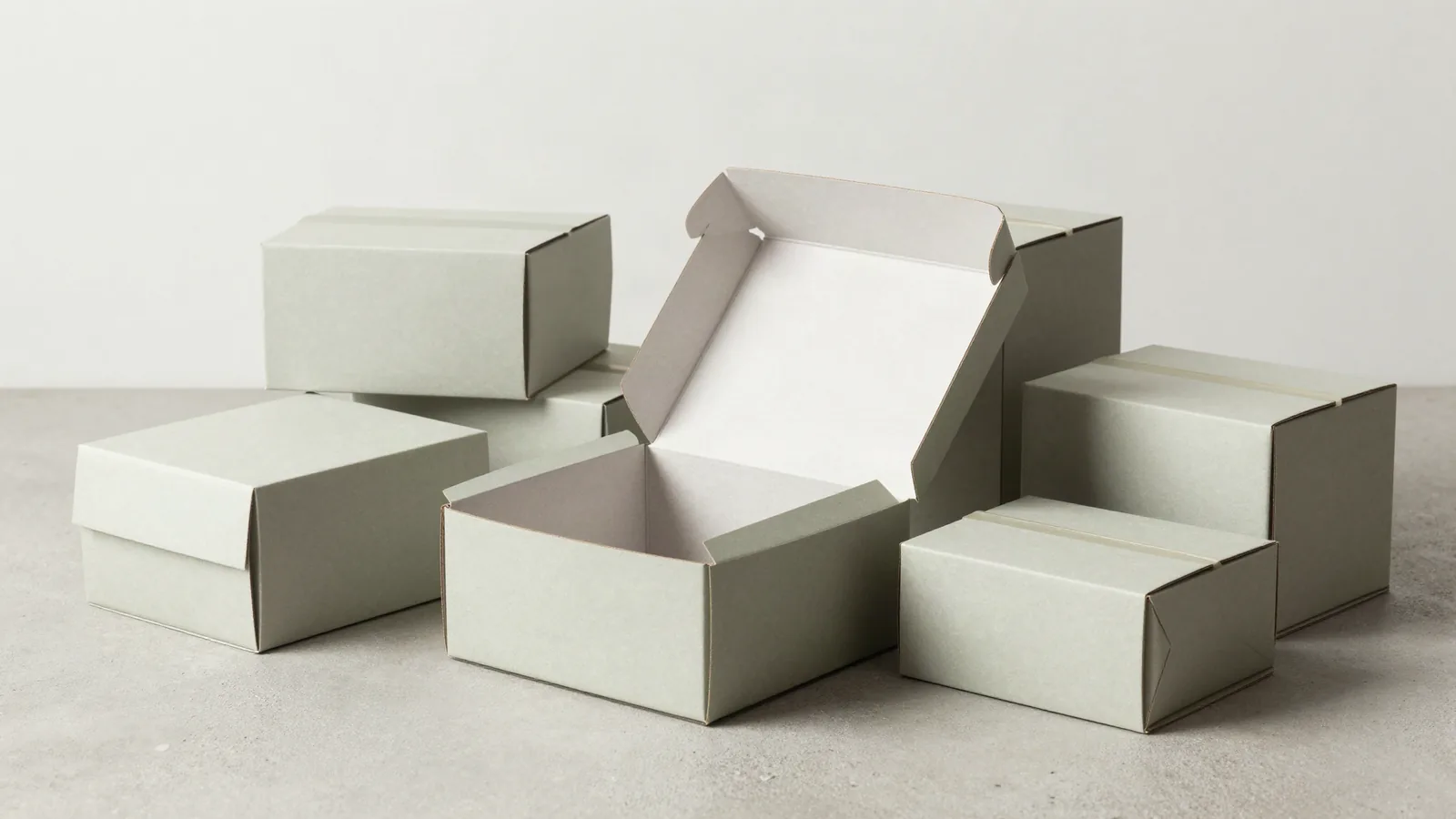
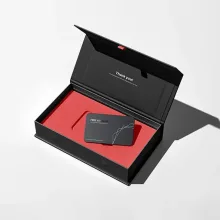
Straight tuck end, reverse tuck end, auto-lock bottom, and crash-lock cartons cover common folding-carton needs. A sleeve adds a printed outer layer around an inner pack. A roll end tuck top mailer is a shipping format commonly referenced by FEFCO 0427. Two-piece rigid, magnetic flap, drawer, and slide structures change the opening motion and the assembly work.
Choose from access, assembly, retention, protection, and display. Custom screw packaging can point toward a compact retail carton. Custom greeting card packaging can point toward a flat format. Custom drone packaging boxes can point toward fitted inserts and protection. These catalog directions narrow the conversation, but the final dieline follows the packed product.
How do materials change the proof?
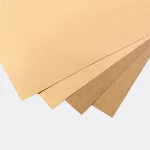
SBS means solid bleached sulfate paperboard, and C1S and C2S identify coated paperboard on one side and two sides. Common paperboard references are 12 to 24 pt, with kraft board around 18 to 24 pt. Rigid boxes often use chipboard around 1.5 to 3 mm wrapped in 100 to 157 gsm art paper. Corrugated E, B, and C flutes add different amounts of thickness and stacking support, with 32 ECT as a common strength designation.
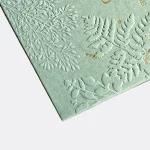
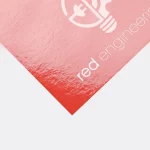
Caliper changes folds, tabs, inserts, and closure fit. Offset CMYK suits detailed print, digital printing can suit short runs or changing artwork, and flexo is common for corrugated graphics. Matte or gloss lamination, soft-touch, spot UV, foil stamping, embossing, debossing, and window patching each belong on the first brief. PET film for a window commonly falls around 0.2 to 0.3 mm.
Which measurements belong in the first request?
The most useful first file gives product length, width, and depth, plus filled weight and the preferred opening direction. State whether the measurements are inside or outside. A common box convention is length x width x depth, with about 1/16 in, or 1.5 mm, tolerance used as a planning reference. Add the insert, closure, substrate, artwork, finish, quantity, and delivery destination.
| Brief component | Why it changes the job | Useful convention |
|---|---|---|
| Dimensions | Controls the dieline and product fit | Length x width x depth, inside or outside |
| Substrate | Changes caliper, folds, and structure | Paperboard 12 to 24 pt, rigid chipboard 1.5 to 3 mm |
| Print and finish | Defines artwork and setup | Offset CMYK, digital, lamination, foil, UV, embossing |
| Window or insert | Adds cut, patching, or retention details | PET commonly 0.2 to 0.3 mm |
What creates avoidable proof delays?
Missing dimensions, missing artwork, unclear print coverage, late finish decisions, unresolved inserts, and an unconfirmed delivery destination can all create new questions. A board caliper can change the dieline after the structure is selected. RGB artwork can shift when converted for press. Type set too close to a score can fold into the copy, and missing bleed can leave an unprinted edge.
Review the digital proof at panel level before print. Check panel order, safe areas, folds, glue zones, closures, window placement, and finishing notes. For an insert, leave enough clearance for the product to come out without rattling. The clock starts at proof approval, so the proof is where structural and artwork decisions need to be settled.
Custom Packaging Lane quotes quick custom packaging from a 100-unit minimum, with pricing from $0.49 per unit at volume, quoted to spec. Production is typically 8 to 10 business days after proof approval, plus delivery. Free US shipping, free design support, and a free dieline are available. The $19.99 sample kit is credited toward the first order.
Frequently Asked Questions
How should I prepare a quick custom packaging brief?
A quick custom packaging brief should include product length, width, depth, filled weight, structure, material, artwork, finish, quantity, destination, opening method, and insert requirements. State whether measurements are inside or outside. Add windows, closures, glue zones, and special effects before proofing so the dieline and artwork are reviewed as one package.
What changes when a package uses a rigid format?
A rigid format changes the opening motion, wall fit, edge wrap, and assembly work. Two-piece rigid, magnetic flap, drawer, and slide structures can support a presentation-led opening, while a folding carton or sleeve uses a different construction. Choose after checking product access, retention, protection, display, and the packed product.
What information most often changes a packaging dieline?
Product dimensions, board caliper, inserts, closures, windows, glue zones, and the packing sequence can all change a packaging dieline. Measurements should identify inside or outside references. Explain how the product enters, closes, and leaves the package, then check the closed and opened construction against the actual item.
Can quick packaging include custom finishes?
Quick custom packaging can include matte or gloss lamination, soft-touch, spot UV, foil stamping, embossing, debossing, and window patching. Map each effect to a specific artwork area and selected substrate. Finishes can affect setup, registration, folds, and panel hierarchy, so list them before the digital proof is prepared.
How do I avoid a rushed proof review?
A rushed proof review usually starts with scattered decisions. Put product measurements, artwork, structure, substrate, finish, insert, opening direction, quantity, and destination in one brief. Mark folds, seams, glue zones, windows, and safety or usage copy. Check the closed package and the opened package at panel scale before approval.