















































Searches for wedding cake tasting box near me and wedding cake box tasting usually point to convenience, not a confirmed local counter. A wedding cake tasting box is the presentation package for portions, labels, and cards as they move from bakery to recipient. A dieline is the flat cutting template used to cut, score, and fold the box. State the handoff first, then use custom packaging solutions to frame the route.
What does a near me search tell the packaging team?
The phrase describes a convenience preference, not a confirmed pickup address. It does not tell the packaging team whether the box is collected at a bakery, handed over from a car, placed in a tote, sent in a parcel, or grouped for an event. Put the destination and route in the quote request. A search result cannot establish local inventory or a storefront.
| Order route | Primary package role | Proof question |
|---|---|---|
| Bakery pickup | Identify and carry the set from the counter | Does the box open cleanly after the handoff? |
| Local hand delivery | Keep the presentation stable through a vehicle or tote | Will labels and the opening side stay visible? |
| Parcel shipment | Place the tasting box inside an outer transit package | Is the outer size appropriate for the packed set? |
| Event delivery | Keep grouped tasting boxes identifiable | Can each recipient match the set to the order? |
Which handoff route should the tasting box support?
Pickup, hand delivery, parcel shipment, and event delivery create different handling tests. Pickup needs a readable handoff and easy carry from the counter. Hand delivery needs a stable presentation through a tote or vehicle. Parcel shipment needs an outer shipper and carrier label. Event delivery may need grouped boxes that stay identifiable. Name the route before the lid and label panels are fixed.
How should pickup and parcel plans differ?
A pickup carton can go straight from a counter to a bag, while a shipped set needs a second package around the presentation box. For US ground shipping, carrier dimensional weight commonly uses L x W x H / 139. Corrugated E, B, and C flutes are common outer-package references, with 32 ECT as a shipping-performance reference. Keep the presentation box and transit box as separate layers in the brief.
What should the recipient understand before opening?
A printed first step reduces the chance that the wrong lid or card gets opened. Use inside measurements for the samples and state length x width x depth. About 1/16 in, or 1.5 mm, is a common packaging tolerance reference. Put the bakery identity and opening message where they remain visible after folds, seams, closure areas, inserts, and cards are in place.
Which materials help compare delivery routes?
SBS, C1S, and C2S paperboard are common folding carton references in the 12 to 24 pt range. Kraft board in the 18 to 24 pt range gives another surface direction. A more structured presentation can use rigid chipboard in the 1.5 to 3 mm range wrapped in 100 to 157 gsm art paper. Offset CMYK is commonly used for detailed carton artwork, while digital printing can suit short-run concept checks. Matte, gloss, soft-touch, spot UV, foil stamping, embossing, and debossing change the surface treatment.
What should I test before approving a tasting box?
The filled set needs to travel through the real handoff before approval. Test actual portions, labels, cards, liners, outer carrier, bag, tote, or shipper; lift it, carry it, and rehearse the first opening. Check whether notes stay with portions and whether the outer package leaves useful room. If cake contacts an interior surface, ask us about food-contact options. Record changes to the opening, panel order, clearances, or outer package.
Which catalog products can show cake related options?
Check wedding card boxes for an event presentation reference, tall cake boxes for cake-related clearance questions, and custom cake pop boxes for another portion-oriented format. Wine box packaging can frame a gift-style handoff. These pages give real formats to compare, but the tasting box still needs the actual contents, route, and opening check.
What should go into a near me quote request?
A useful request translates the search phrase into a physical route:
- State whether the set is for pickup, hand delivery, parcel shipment, or event delivery.
- List portions, labels, cards, liners, carrier bag, tote, and outer shipper.
- Provide inside measurements, length x width x depth, opening direction, and carry orientation.
- Mark artwork panels, folds, seams, glue areas, inserts, windows, and finish zones.
- Share destination, quantity, artwork status, and any food-contact question.
Custom Packaging Lane quotes a wedding cake tasting box to spec from a 100-unit minimum. Pricing is from $0.49 per unit at volume, quoted to spec. Production is typically 8 to 10 business days after proof approval, plus delivery. Free US shipping, free design support, and a free dieline support route planning. The $19.99 sample kit is credited to the first order. Send the tasting layout and handoff route to begin.
How should cake samples be arranged inside a wedding cake tasting box?
Separate each flavor with a removable cross-divider or a die-cut paperboard cavity, and leave enough finger clearance to lift one portion without tipping its neighbors. A die-cut cavity is an opening cut to shape from flat board. Arrange portions in a fixed row or grid that matches the printed flavor key. A zero-clearance cut can bind during loading, while excess space lets portions move and turn labels away from the opening.
The score pattern should fold without pushing a divider into a sample. Keep utensils and cards in their own well instead of laying them over the portions. Glue tabs should remain outside the loading area, and the lid must close without pressing on labels or contents. If any package surface may touch cake, ask us about food-contact options.
Which opening style makes flavor comparison easier?
A sleeve-and-tray structure creates a linear reveal, while a two-piece lid and tray gives a full top view after the separate cover is lifted. A gable carton centers the carry handle over the load but places access at the top. A straight tuck end carton stays flat before assembly and opens through a tucked flap. Each structure changes how labels, portions, and printed instructions appear at first opening.
| Structure | Opening motion | View of contents | Packing form |
|---|---|---|---|
| Sleeve and tray | Outer sleeve slides away | Contents remain on the tray | Two nested pieces |
| Two-piece lid and tray | Separate cover lifts off | Full top view | Stored assembled |
| Gable | Top tabs release around handle | Top access | Folded carton |
| Straight tuck end | End flap pulls open | End access | Flat carton |
Compare custom cake boxes for broad top access, tall cake boxes for vertical clearance, and cake pop boxes for individually positioned portions. These formats are references for structure, not preset tasting-box dimensions.
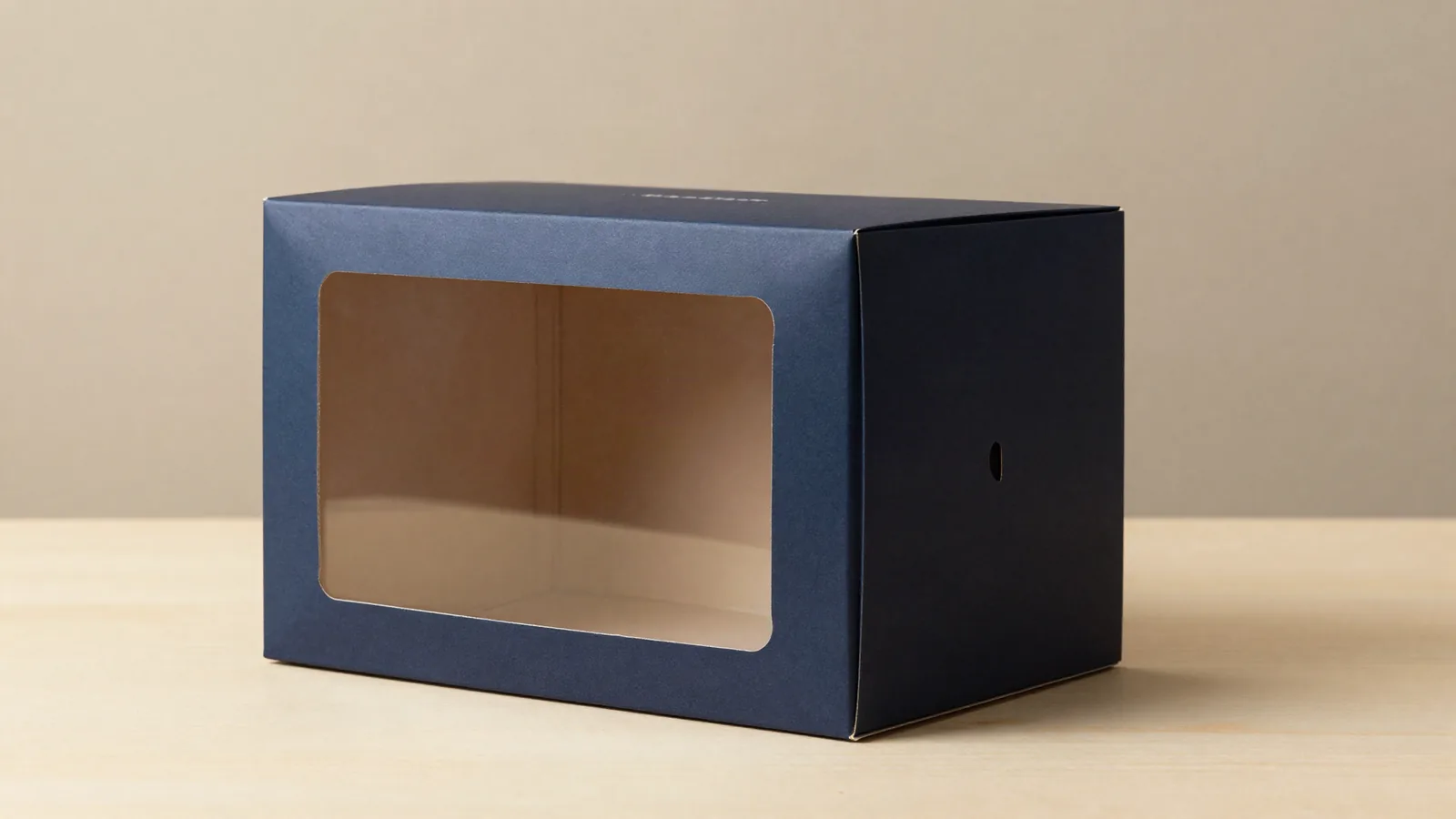
Can a wedding cake tasting box include a clear window?
Clear polyethylene terephthalate (PET) film for a tasting-carton window is commonly specified at either 0.2 mm or 0.3 mm. Window patching should leave room around scores and glue tabs, and the cutout must not weaken the closure panel. Check the filled box under the lighting used for presentation, because glare can hide labels even when the window is clear.
A window works best when every sample sits at a repeatable height. If portions settle at different levels, a printed flavor key on the lid may be easier to read than a large opening. The final review should cover condensation risk, film flex, and whether each flavor can be identified without rotating the box.
How do bakeries prepare artwork for tasting box labels?
A panel map should assign each flavor name, bakery mark, and opening instruction to surfaces that remain visible after folding. Use vector logos and 300 dpi images at final size. A common prepress standard extends edge artwork 0.125 in, or 3 mm, past the cut line, while critical type stays inside cuts, scores, seams, and glue tabs. Pixelated photography loses detail on small flavor labels, while screen-based colors may change during preparation for a printing press.
A spot-color callout should name the ink reference and whether the artwork is prepared for coated or uncoated stock. Foil, spot UV, and embossing areas need separate artwork layers. Quantity, artwork versions, ink coverage, and tooling affect whether digital or offset printing is suitable. Browse the custom bakery box range, then open the sample kit page if a physical stock and finish reference would help the approval.
Frequently Asked Questions
What does wedding cake tasting box near me mean?
The phrase usually signals a need for convenient access, but it does not confirm a storefront, pickup point, local inventory, or delivery arrangement. State whether the set will be collected, hand delivered, or shipped. Include the destination, contents, route, and opening experience so the packaging request answers the actual need.
How should a tasting box change for pickup versus shipping?
Pickup can focus on a clean counter handoff and easy carrying. Shipping adds an outer package, address label, carrier handling, and a check of void space and packed dimensions. Keep the presentation box separate from the transit layer. Test the filled set in the bag, tote, or shipper used for the route.
How can the recipient know where to begin?
Use a clear first point on the exterior, lid, or interior card, then keep flavor names connected to the matching portions. Test the set after it is closed, carried, and reopened. The guide should remain visible without covering the sample view or becoming hidden by a flap or closure.
What outside package details matter for a local handoff?
State whether the box travels in a tote, bag, vehicle, carton, or shipper and whether it must remain upright. Note grouping, label visibility, opening direction, and available space around the tasting box. Local movement can still involve stacking and vibration, so the outer carrier needs its own check.
What should I ask about cake touching the box interior?
Describe the portion, liner, cup, contact surface, and delivery path. Ask about food-contact options instead of relying on a broad material label. Keep the tasting box, insert, outer carrier, and parcel shipper separate in the discussion so each layer is assessed for its actual role.