


























































What is a belt packaging box?
A belt packaging box is a custom box sized around the belt, buckle, and planned presentation. The useful interior comes from the actual product, not only from the word belt on a stock size chart. A flat belt, a rolled belt, and a belt with a large buckle each need a different clearance plan.
Custom Packaging Lane's box-dimension database includes standard belt box sizes and insert styles used across accessory retail orders. Treat those sizes as a starting point. Send the belt dimensions and a photo or sample so the dieline, the flat cutting template used to print and cut the box, can match the product. Related formats such as shoe box packaging and wine box packaging can be reviewed for long-form presentation ideas, but they do not replace belt measurements.
How do I measure a belt for packaging?
Measure the belt in the position the customer will see when the box opens. For a flat presentation, record the usable length, strap width, strap thickness, buckle width, and buckle height. For a rolled presentation, record the coil diameter and thickness, then mark where the buckle sits. Include the space needed for a product card, tissue, or insert.
Give the removal path equal attention. If the customer lifts the buckle, pulls the strap, or raises an interior support, the box needs room for that motion. A digital proof should show the opening orientation and clearance before printing. Type that sits too close to a score, the crease where a panel folds, can become hard to read after assembly.
Which insert works for a belt box?
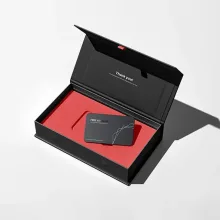
The right belt insert controls the part of the product that moves inside the box. A strap channel guides the belt, while buckle support keeps hardware from pressing into a printed panel. A rolled support holds the coil shape. A card or tissue space keeps the product presentation deliberate.
| Insert choice | Controls | Measurements to send |
|---|---|---|
| Buckle support | Hardware movement and pressure points | Buckle width, height, and weight distribution |
| Strap channel | Flat alignment inside the box | Strap width, thickness, and presentation direction |
| Rolled support | Coil diameter and side-to-side movement | Coil diameter, thickness, and buckle position |
| Card or tissue space | Separation between product and printed panels | Insert contents and preferred placement |
| Removal path | How the customer lifts or pulls the belt | Opening sequence and hand clearance |
Metal hardware creates concentrated pressure points, so check the insert with the actual belt. An insert cut to the exact product outline can hold the belt neatly, but it can also make removal awkward if the buckle has no lift space.
Can a belt box be printed for retail presentation?
Yes. The outer panels can carry a logo, collection name, pattern, color system, or short message. A folding box is easier to store and handle, while a rigid box holds its shape for a more formal gift presentation. The choice belongs to the belt, the opening path, the storage plan, and the desired finish.
For related accessory packaging, compare sock packaging and towel packaging. Those products can show how a line uses labels, panels, and inserts across soft goods. They are references for the visual system, not belt specifications.
What are the MOQ, price, and production terms?
The MOQ is 100 units. Pricing is from $0.49 per unit at volume, quoted to spec. The approved dimensions, material, insert, printing, finish, artwork, and quantity shape the final quote, so the volume figure is not a flat price for every belt box.
Production is typically 8 to 10 business days after proof approval, plus delivery. Free US shipping and free design support are available. The clock starts after proof approval, not when the first inquiry is sent.
How can I check the packaging before ordering?
The $19.99 sample kit gives you a way to compare material feel, surface finish, print appearance, and presentation before the belt structure is approved. A physical check matters when the buckle is heavy, the box needs a precise opening path, or the package will sit beside other accessory boxes.
Send the belt length, strap width, strap thickness, buckle dimensions, flat or rolled presentation, insert preference, artwork status, finish direction, quantity, destination, and target in-hand date. Free design support can then organize the dieline and digital proof. Use custom packaging design for the artwork and structural brief, then approve the proof once the belt fits the plan.
Frequently Asked Questions
What is the MOQ for belt packaging boxes?
The MOQ for custom belt packaging boxes is 100 units. The quote is based on the approved belt dimensions, construction, insert, printing, finish, artwork, and quantity. Free design support is available for the dieline, and a digital proof is sent before printing so the buckle clearance and opening direction can be checked.
How should a belt be placed inside its box?
A belt can be planned for a flat or rolled presentation, but the correct placement depends on the strap, buckle, thickness, and desired opening sequence. Measure the belt in its intended presentation state, then confirm the insert, clearance, and removal path in the digital proof before approval.
Do belt packaging boxes include inserts?
Custom belt packaging boxes can be quoted with an insert when the belt needs buckle support, strap alignment, rolled support, or a defined removal path. Include the belt sample or measurements in the brief. The insert should be checked with the actual hardware because a tight cut can make the belt difficult to remove.
What is the price for a belt packaging box?
Pricing for a custom belt packaging box is from $0.49 per unit at volume, quoted to spec. The final quote depends on the approved box dimensions, material, insert, printing, finish, artwork, and quantity. This volume price is a starting reference, not a flat price for every belt box.
How long does a custom belt box take?
Production for a custom belt packaging box is typically 8 to 10 business days after proof approval, plus delivery. The production clock starts at proof approval. Free US shipping and free design support are available, while the delivery portion is planned separately from production.