




























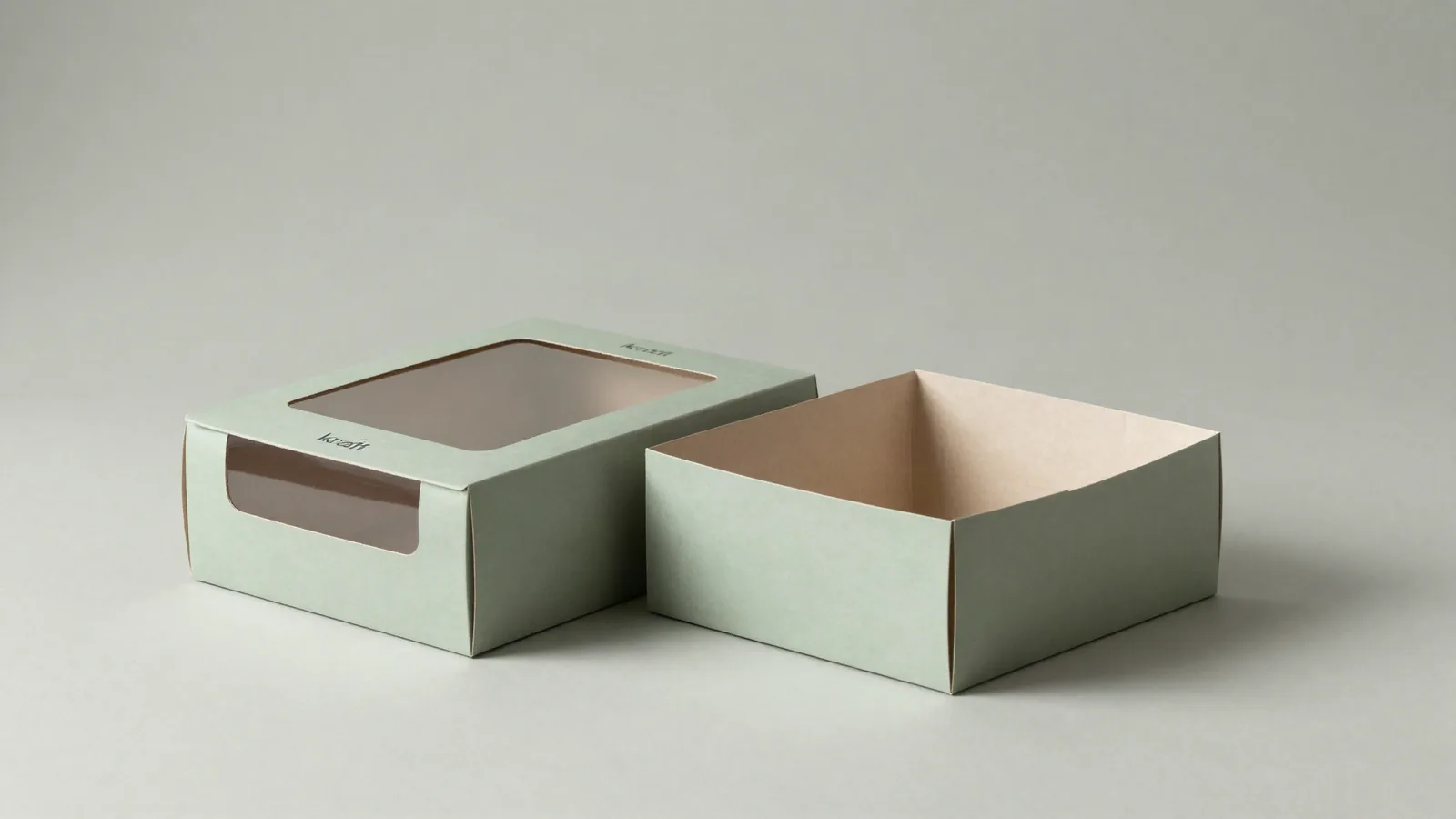




















































Start with the finished cake and its board. A cake board is the flat support under the cake. The decoration envelope is the full space taken by icing, flowers, lettering, and toppers. A dieline is the flat cutting template for the box, with its cuts, scores, folds, glue areas, and window location. Big cake packaging boxes should be built around those physical limits, the opening path, and the hands that carry the order. If the bakery needs a smaller-format reference, review cake corrugated boxes and custom cake boxes while keeping the large-cake brief separate.
What cake profile should a large box accommodate?
The board footprint and decoration envelope set the starting cavity. Record the board length, board width, finished height, highest raised element, and widest finished point. Use inside length x width x depth for the package, and state whether the lid lifts, slides, or opens from a side. About 1/16 in, or 1.5 mm, is a common planning tolerance reference. The actual clearance has to follow the finished cake, board, icing, and topper.
| Cake profile | Record in the brief | Packaging consequence |
|---|---|---|
| Tall layered cake | Board footprint, finished height, and top clearance | Sidewall height and lid path need room above the decoration |
| Wide decorated cake | Widest icing, flowers, lettering, or side detail | Inside width must clear the broadest finished point |
| Topper-led cake | Topper position and highest raised element | Opening direction must avoid contact with the topper |
| Display-led cake | Visible face and preferred viewing angle | Window or open panel must frame the intended area |
How should the bakery plan the pickup handoff?
The carry direction decides whether a baker can lift the box without tilting the cake. Mark where hands grip, which edge opens first, and whether the cake slides into a base or lowers from above. A gable can create a defined carry direction. An auto-lock bottom or crash-lock base changes setup and support. The opening path needs room for the board and decoration, because forcing a tall cake through a tight lid is how a clean finish gets damaged.
What belongs in the cake box specification?
A usable brief names the load and the package mechanics on separate lines. List the cake board, finished height, widest decoration, topper position, opening edge, carry direction, handle or gable need, window choice, and any card or accessory. Add board material, print coverage, and finish. If a presentation box goes inside a separate outer shipper, say so. Ask us about food-contact options for your product.
How can a window support a display-led carton?
A window trades printed panel area for a view of the cake. PET is a clear plastic film, and PET film commonly falls around 0.2 to 0.3 mm. Mark the cutout against the finished decoration envelope. Keep its edge away from folds, glue flaps, handles, and closure paths. Window patching is a separate step, so the visible cake area and exterior artwork should be drawn together on the dieline.
Which materials suit presentation and an outer shipper?
Paperboard and corrugated board do different jobs. SBS, C1S, and C2S paperboard are commonly discussed at 12 to 24 pt for printed folding cartons. Kraft board commonly falls around 18 to 24 pt. E, B, and C flutes are common corrugated references for an outer layer. Flute is the wavy inner sheet that gives corrugated board thickness and stacking strength. 32 ECT is a strength designation used in corrugated specifications. Offset CMYK suits detailed paperboard art. Flexo is common for corrugated surfaces. Digital printing can suit a short-run concept. Ask for the presentation box and outer shipper as separate constructions.
Which catalog references are useful for large cake formats?
Height-led, general, and corrugated catalog pages answer different packaging questions. Tall cake boxes are a direct reference for height-led packaging. Custom printed macaron packaging boxes show how a smaller bakery format can use defined compartments and printed panels. These catalog pages are starting points, not finished dimensions for a large cake.
What should I send for a big cake packaging quote?
The fastest quote starts with a packed-cake record, not a guessed square box.
- Provide the cake board footprint and finished height.
- Mark the tallest topper and widest decoration.
- Describe the entry path, opening edge, carry direction, and handle need.
- State the window, board, print coverage, and finish direction.
- Explain if the presentation box needs a separate corrugated outer layer.
Custom Packaging Lane quotes big cake packaging boxes with a 100-unit minimum. Pricing is from $0.49 per unit at volume, quoted to spec. Production is typically 8 to 10 business days after proof approval, plus delivery. Free US shipping, free design support, and a free dieline are available. The $19.99 sample kit is credited to the first order. Use custom packaging for small business when the bakery needs a clear brief for a large format.
Frequently Asked Questions
Can one big cake box fit every cake shape?
One big cake box cannot be assumed to fit every cake shape. A tall cake, wide cake, topper-led cake, or decorated edge changes the finished envelope and the opening path. Record the actual cake board, highest point, widest point, decoration position, and carry direction so the box follows the cake instead of forcing the cake into a generic proportion.
Why should the cake board lead the packaging brief?
The cake board establishes the footprint and the way the finished cake enters the carton. Its length, width, thickness, and carry direction affect the usable interior and the base layout. Add the decoration envelope separately, because flowers, lettering, icing, and toppers can extend beyond the board or rise above the main cake.
What does PET add to a cake box design?
PET adds a clear viewing panel and a window patching step. PET film commonly falls around 0.2 to 0.3 mm, but the useful design question is what part of the cake should remain visible. Mark the cutout away from folds, glue flaps, handles, and closure paths, then coordinate the window with the artwork.
When does an outer corrugated layer make sense?
A separate corrugated layer belongs in the conversation when the presentation box needs an outer carton for handling or delivery. E, B, and C flutes are common references, with 32 ECT used as a strength designation. Keep the presentation box dimensions, cake fit, and outer carton dimensions separate because they perform different jobs.
What information should a bakery send first?
A bakery should send the cake board footprint, finished height, tallest decoration, widest point, opening path, carry direction, window preference, and artwork status. Add the board or corrugated direction, print coverage, finish, cards, and accessories. Those details give the dieline a physical starting point and prevent the finished cake from being treated like a simple square carton.












