




























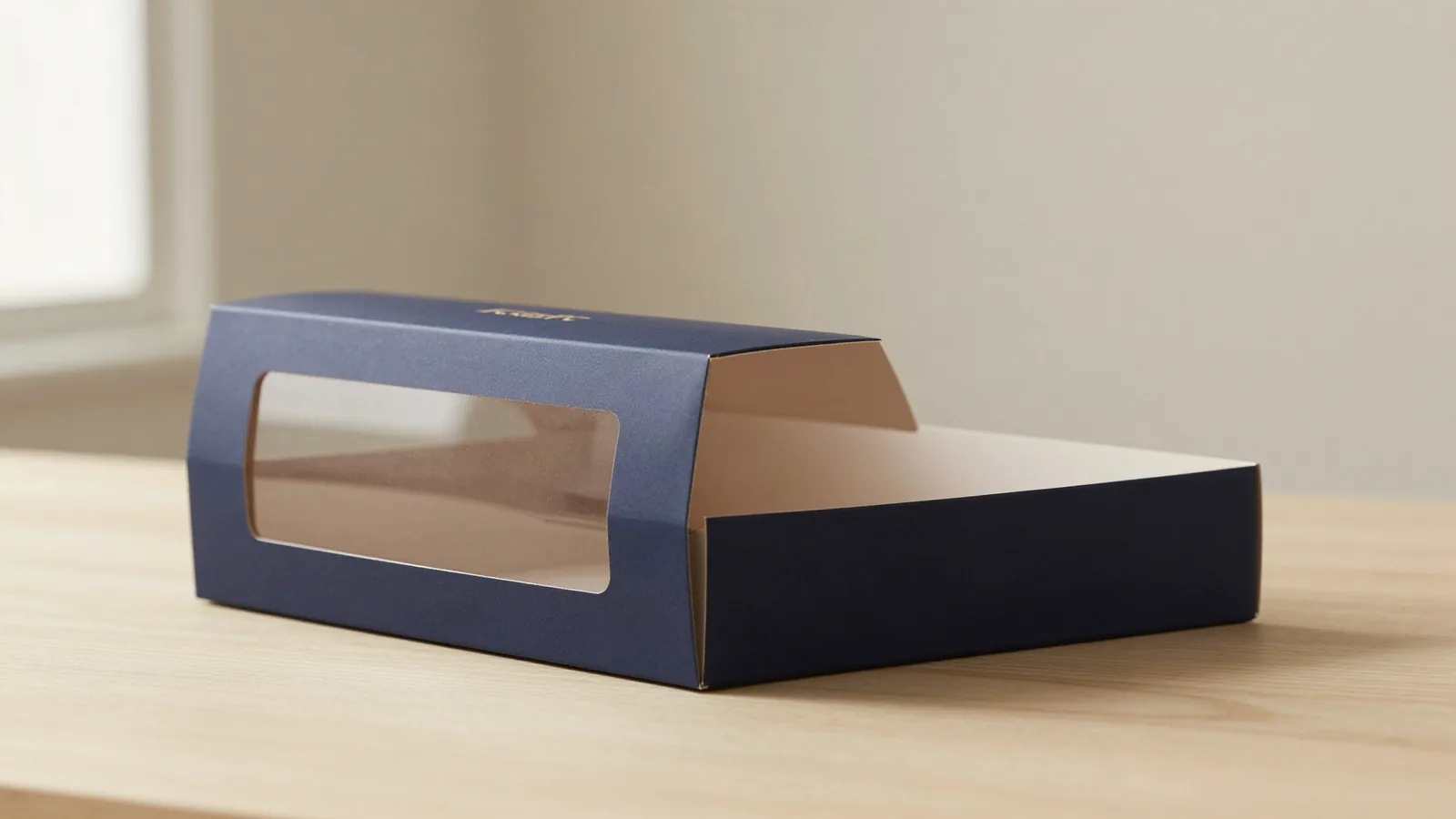




















































A wedding cake testing box is organized around comparison. Each portion needs a place, an identifier, and a removal path that stays clear from packing through handoff. That makes the testing box different from a presentation box built mainly around a reveal. Start with the sequence: what is being compared, how the pieces are labeled, and how the package will be opened and closed. Custom packaging design can hold those decisions in one brief.
How is a testing box different from a tasting box?
A testing box gives each sample a fixed position and reading order, while a tasting box can put more weight on the recipient's reveal. The inside may use a tray, divider, sleeve, or insert that assigns a place to every portion. The exterior can stay restrained while the interior carries identifiers or notes. This format suits a deliberate comparison of flavors, fillings, finishes, or decoration choices.
What should each sample position contain?
Every position needs a sample, identifier, and removal path before the outside artwork is drawn. Define the order from the first piece to the last, then check that the lid, divider, and insert do not hide the label. A useful working list includes:
- Sample position and reading order.
- Flavor, filling, finish, or decoration note.
- Tray, divider, sleeve, or insert location.
- Card or removable information panel.
- Clearance for fingers, folds, seams, and closure movement.
Keep the notes beside the position they describe. A label on a shared lid panel can become confusing when the package is opened from a different direction.
Which format keeps sample order visible?
A divider or tray turns the inside of the package into a fixed layout. The structure should match the way the testing set is packed and inspected, not just the way it looks closed.
| Testing format | Structure reference | Best question to answer | Information location |
|---|---|---|---|
| Divided folding carton | Straight tuck or reverse tuck end | Where should identifiers sit? | Interior panels or divider faces |
| Rigid test set | Two-piece rigid or drawer format | Should the lid lift or tray slide? | Lid, tray, or base panel |
| Sleeved tray | Sleeve over an inner tray | Does the outer sleeve protect sample order? | Tray positions and sleeve panel |
| Transit-ready test pack | Mailer with FEFCO 0427 reference | What orientation reaches the carrier? | Outer label panel and inner sequence |
Tall cake boxes can frame vertical clearance questions. Custom foam box inserts show how shaped cavities can be assigned to separate zones. Wedding card boxes offer a reference for keeping information visible in a celebration-related package. Use the closest format as a starting point, then specify the testing arrangement.
How do I set the sample cavity size?
Use length x width x depth for the box and inside measurements for each sample cavity. A cavity is the assigned pocket or space that holds one portion. Measure the sample, wrapper or liner, tray, divider, and any piece that changes the footprint. About 1/16 in, or 1.5 mm, is a common packaging tolerance reference, but the actual clearance follows the sample shape, board thickness, insert, folds, and closure. If a cake sample may touch an interior surface, ask us about food-contact options.
Where should labels and notes go?
The label belongs beside the sample it identifies, not in a panel that disappears under a fold. It can sit on an interior panel, divider, tray position, or removable card. Use a consistent reading order and keep flavor or test notes close to the relevant portion. Offset CMYK is commonly used for controlled color on paperboard, while digital printing can suit a short testing run or flexible artwork. Keep marks away from score lines, folds, glue flaps, and closure edges.
When does an outer mailer belong in the test plan?
Add the mailer when the sample set needs a separate carrier-facing shell. Corrugated E, B, and C flutes are common references for different package profiles, and 32 ECT is a familiar corrugated strength specification. For US ground dimensional weight, carriers commonly use length x width x height divided by 139. Use the packed outer dimensions, not only the testing box measurements. The presentation structure and the transit shell should have separate notes for orientation, labels, insert clearance, and opening.
Which material should carry the testing layout?
Paperboard keeps folding formats flat and printable, while rigid construction holds a box shape without a fold. SBS, C1S, or C2S paperboard in the 12 to 24 pt range is a common folding carton reference. Kraft board in the 18 to 24 pt range gives another surface direction. A two-piece rigid structure commonly uses 1.5 to 3 mm chipboard wrapped in 100 to 157 gsm art paper. Choose the reference after checking the sample order, repeat handling, opening path, insert method, and printed surface.
For a project quoted to spec, use a 100-unit minimum. Pricing is from $0.49 per unit at volume, quoted to spec. Production is typically 8 to 10 business days after proof approval, plus delivery. Free US shipping, free design support, and a free dieline support the testing brief. The $19.99 sample kit is credited to the first order. Share the sample sequence, identification method, insert position, closure direction, and transit plan to begin.
Frequently Asked Questions
How do I keep flavor labels with the right samples?
Assign every sample a fixed position and place its flavor or test note beside that position. A divider face, tray pocket, interior panel, or removable card can carry the identifier. Check the reading order after the package is opened, because a label that looks correct when closed may be unclear once the tray moves.
Is a divider better than a sleeve for a testing box?
A divider separates sample positions inside the box, while a sleeve adds a removable outer layer around a tray or inner package. Choose the divider when position control is the main task. Choose a sleeve when the testing layout needs an outer panel that can be removed without disturbing the sample order.
What is a FEFCO 0427 mailer used for?
FEFCO 0427 is a standard roll end tuck top mailer reference. It can be considered when the testing set needs an integrated folding opening and a defined outer orientation. Review packed dimensions, closure, label panel, insert clearance, and the sample reading order before selecting the structure.
Can folding and rigid formats be compared for the same test set?
Folding and rigid formats can be compared when the sample sequence, cavity layout, and opening path are held constant. Folding paperboard can provide broad printed panels and a lighter construction. Rigid chipboard holds its shape without a fold. Compare lid movement, tray access, insert position, and information visibility.
Should a testing box have an outer shipping carton?
A testing box should have an outer shipping carton when the presentation structure needs a separate carrier-facing shell. Record the packed outer length, width, height, flute or board reference, label panel, and clearance around the inner package. If the testing box is the parcel itself, review its closure and corners as transit surfaces.












