




























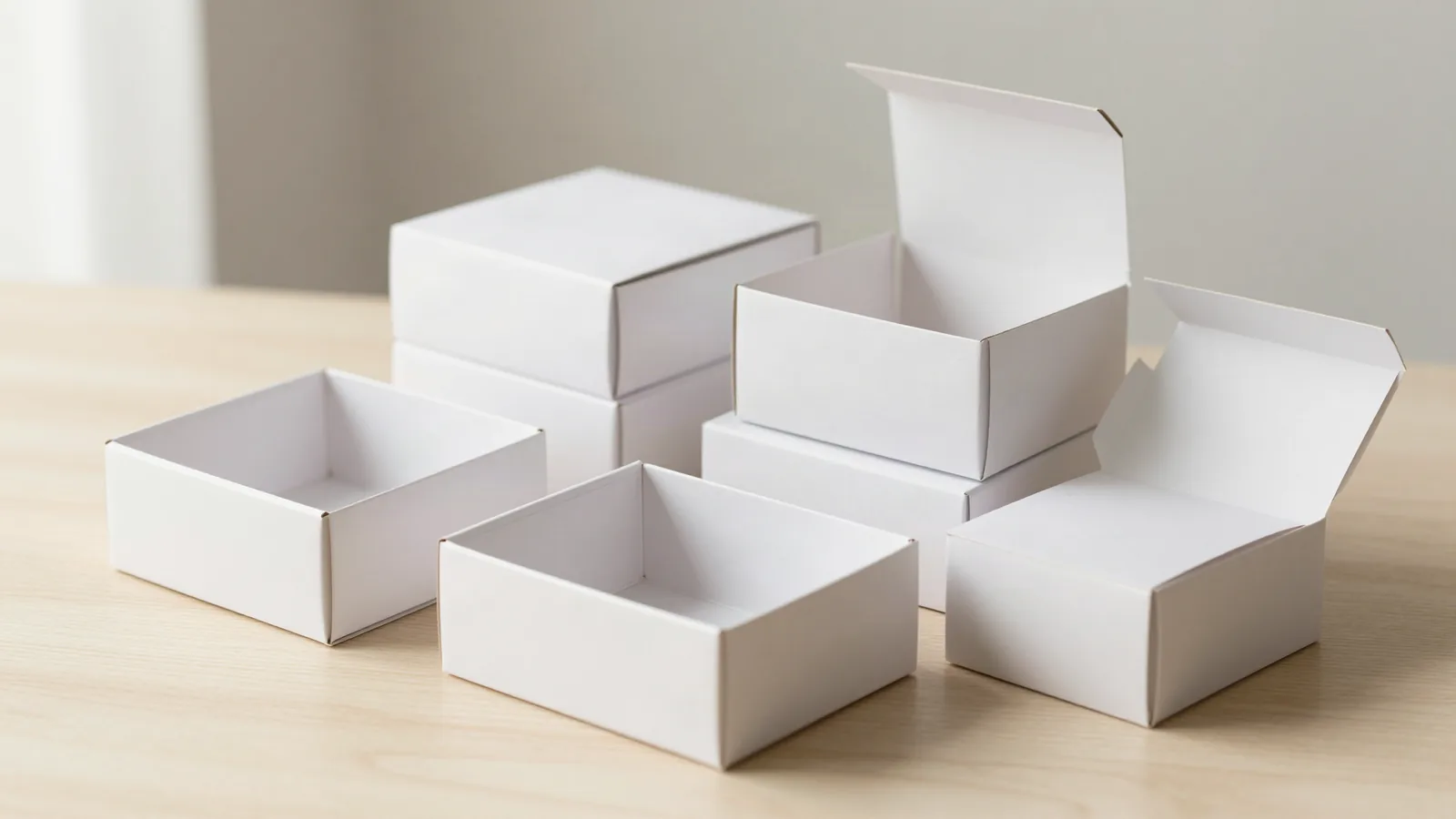




















































A bouquet box starts with the arrangement in its packed condition: stems, wrap, water source, sleeve, tissue, and card included. The inside cavity should restrain movement without pressing petals or bending the arrangement. A dieline is the flat cutting template that maps the box's panels, scores, folds, glue areas, and window before assembly. See bouquet boxes for the closest catalog format. For broader structure planning, visit custom packaging solutions.
What should a bouquet box protect?
The box has two jobs to solve together: hold the lower part of the arrangement and leave clearance around petals and decorative elements. Measure the complete packed bouquet using inside length x width x depth. About 1/16 inch, or 1.5 mm, is a common tolerance reference during planning, but product variation, folds, and assembly can change the final clearance.
Decide whether the box is for hand delivery, carrier delivery, display, or a combination. A presentation box can prioritize the reveal and opening. A delivery packout adds movement, crush, orientation, and outer-carton questions. If moisture is present, discuss the interior materials and sealing around the actual use case. Ask us about food-contact options if the floral gift includes edible items or food-contact surfaces.
Which bouquet-box structure works for the occasion?
The occasion determines the structure: a two-piece rigid box suits gift presentation, while a mailer with a roll end tuck top suits direct delivery.
| Structure | Useful direction | Design priority |
|---|---|---|
| Two-piece rigid | Gift presentation | Protect the reveal and stabilize the base |
| Mailer, roll end tuck top | Direct delivery | Control movement and edge compression |
| Gable | Carry-friendly gifting | Balance handle strength and bouquet height |
| Sleeve | Secondary branding layer | Coordinate sleeve clearance with the inner pack |
| Windowed carton | Retail or handoff visibility | Keep the window clear of folds and moisture points |
SBS or C1S paperboard in the common 12 to 24 pt range can support printed folding cartons for lighter, controlled packouts. Kraft board in an 18 to 24 pt range gives a natural surface and different stiffness. Rigid chipboard around 1.5 to 3 mm wrapped in 100 to 157 gsm art paper creates a box that holds its shape without a fold. Match the structure to the arrangement's height, weight, and handling path.
How can the box keep a bouquet from shifting?
A base insert, collar, divider, or shaped paperboard restraint should hold the lower portion while leaving the flowers free. The cutout follows the packed shape, including wrap and water setup, not an assumed stem diameter. Compare custom foam box inserts when the presentation needs controlled positioning.
PET window film is commonly about 0.2 to 0.3 mm. Map the window, patch, scores, glue zones, and visible flower area together. A clear window can show a box bouquet before opening, while a closed printed box can give the contents more protection from handling and visual clutter. Test the chosen direction with the complete packout.
Which print and finish choices suit floral gifting?
Offset CMYK suits full-color artwork such as botanical patterns, brand photography, or a restrained color system. Digital printing is commonly considered for short runs or seasonal versions. Matte or gloss lamination changes glare and surface protection. Soft-touch changes the outer package's hand feel. Spot UV, foil stamping, embossing, and debossing can emphasize a logo, message, or botanical line in selected areas.
Keep the collection name, occasion, handling direction, and gift message easy to find. Do not promise freshness, shelf life, or transport performance unless those statements are supported by the actual product and packout testing.
How should a bouquet box be prepared for delivery?
The complete closed packout needs a handling check with the insert, moisture setup, tissue, card, sleeve, and void fill in place. E, B, and C flutes are common corrugated constructions, and 32 ECT is a common board specification to discuss for a shipping carton.
Keep the outer carton close to the protected packout. Carriers calculate dimensional weight for US ground services with length x width x height divided by 139, so unused space can affect the shipping quote. Lift, open, close, and orient the assembled sample. Check whether the arrangement stays centered and whether the lid or handle takes unintended load.
Which related products can inform bouquet packaging?
Start with bouquet boxes for the closest floral direction. Compare custom foam box inserts for controlled positioning, and review embossed tin boxes for a giftable metal accent or keepsake component. Use the sample kit to compare board, surface, and insert direction before approving the structure.
Custom Packaging Lane quotes bouquet boxes from a 100-unit minimum. Pricing is from $0.49 per unit at volume, quoted to spec. Production is typically 8 to 10 business days after proof approval, plus delivery. Free US shipping, free design support, and a free dieline are available. The $19.99 sample kit is credited to the first order.
Frequently Asked Questions
What does bouquet in a box mean for packaging?
Bouquet in a box means a floral arrangement is presented inside a structured package rather than a loose wrap alone. The box needs a cavity that holds the packed arrangement, a restraint that limits movement, and enough clearance around petals and decorative elements. Start with stems, wrap, water setup, tissue, and card included, then choose the structure.
Where should a bouquet restraint hold the arrangement?
A bouquet restraint should hold the lower area of the packed arrangement while leaving clearance around petals and decorative elements. Measure the stems, wrap, water source, tissue, and card together. A base insert, collar, divider, shaped paperboard restraint, or matched foam support can control movement, but the closed sample still needs a handling check.
Can a bouquet box include a clear window?
A bouquet box can include a clear window, and PET window film is commonly around 0.2 to 0.3 mm. Map the window around scores, glue zones, moisture points, and the visible flower area. A window improves pre-opening visibility, while a closed printed box can reduce exposure to handling. Test the selected packout before approving it.
What board works for floral gift boxes?
SBS or C1S paperboard in the 12 to 24 pt range is a common direction for lighter printed cartons. Kraft board commonly falls around 18 to 24 pt. Rigid packaging uses 1.5 to 3 mm chipboard wrapped in 100 to 157 gsm art paper. The arrangement's height, weight, moisture setup, and delivery path guide the final choice.
What should the outer shipper account for?
The outer shipper should account for the complete closed bouquet packout, including the insert, moisture setup, tissue, card, sleeve, and void fill. Corrugated E, B, and C flutes are common options, and 32 ECT is a common shipping-carton specification to discuss. Dimensional weight uses length x width x height divided by 139 for US ground services.












