












































































How should chewing gum packs work in a retail display?
The individual pack, display, replenishment carton, and outer shipper should share one variant system. Several flavors, pack sizes, or seasonal graphics still need one consistent way to identify variants and replenish displays. A checkout fixture needs fast recognition. A counter display needs stable orientation. A subscription shipment needs a pack that survives the shipper. A gift set needs an opening sequence that does not hide the flavor or brand. Start the brief with where the package is received, stored, replenished, selected, and carried away.
If gum or a wrapper may touch the interior, ask us about food-contact options for your product. Record the filled pack dimensions, orientation, grouping, and the information that must remain visible when the display is partly full.
| Retail task | Packaging cue | Check on the filled sample |
|---|---|---|
| Receiving | Consistent variant identifier | Read the code or label on closed packs |
| Replenishment | Stable shelf or tray orientation | Test a short group in the actual display space |
| Selection | Readable flavor and brand hierarchy | View the filled pack at hand height |
| Post-purchase use | Orderly opening and reclosure | Open and close the actual sample |
What should a replenishment brief include?
Staff need one fixed field for every variant, plus a clear rule for how packs enter and leave the display. List every variant, the identifier used by staff, the order in which packs enter the display, and whether the outer carton stays in place or is removed. Reserve a consistent field for flavor, style, quantity, lot, or internal SKU information where the process needs it. A dieline is the flat cutting template for the package. Mark the label zone on the dieline and test it with neighboring packs if labels are applied after printing.
Information still has to work when the display is partly full. Check the first and last pack in a row, then add a new variant and see whether staff can recognize it without opening the package. A panel that reads well on a flat proof can disappear when the display turns or the outer carton stays in place.
How do primary, display, and shipper layers fit together?
The primary pack holds the gum. The display or grouping carton organizes packs for selection and replenishment. The outer shipper carries that arrangement through storage and delivery. Document the handoff between each layer, because a pack can fit its product while the display or shipper creates the handling problem.
Paperboard references include SBS or C1S in the typical 12 to 24 pt range. C1S means coated one side. Kraft board in the typical 18 to 24 pt range creates a different paper surface. Corrugated board uses a fluted middle layer between liner sheets. E, B, and C flutes differ in thickness and stacking behavior, while 32 ECT, where ECT means edge crush test, is a common strength reference for corrugated board. These are typical industry references, not a fixed construction for every gum program.
How can artwork stay consistent across variants?
A fixed panel map keeps flavor changes from shifting the rest of the brand layout. Mark the fixed brand area, variable product area, internal identifier, quiet space, folds, seams, and any window patch. Offset CMYK, the standard four-color process, is a common reference for detailed folding-carton graphics, while digital printing can suit short-run checks. Review a filled sample for contrast, glare, and legibility at the retail fixture.
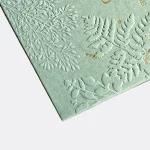
Matte or gloss lamination, soft-touch, spot UV, foil stamping, embossing, and debossing each change the surface. Use them where they support the information hierarchy, then check whether a decorative effect competes with flavor information. If a window is considered, PET, or polyethylene terephthalate, around 0.2 to 0.3 mm is a common material reference. Check whether the window helps the retail task or takes an information panel away from it.
What should a gum packaging quote request include?
The request should name the gum format, number of variants, pack grouping, display relationship, shipper relationship, information hierarchy, target dimensions, artwork status, contact question, and delivery destination. State how the package will be filled and replenished. Send the actual inner pack or a drawing when fit, orientation, or panel scale is hard to judge.
Custom Packaging Lane is a US-based packaging supplier. Commercial planning starts at a 100-unit minimum, with pricing from $0.49 per unit at volume, quoted to spec. Production is typically 8 to 10 business days after proof approval, plus delivery. Free US shipping is available. Free design support includes a free dieline. The $19.99 sample kit is credited toward the first order. Review custom chewing gum boxes, private label packaging, and seed packaging as catalog references. For a grouped order, visit wholesale custom packaging.
Frequently Asked Questions
What belongs on a multi-variant gum pack?
A multi-variant gum pack needs a fixed brand area and a repeatable field for flavor, variant, or internal identification. Keep the main distinction visible when packs sit in a row or inside a display. Test the printed sample filled and partly loaded. If a label is added later, reserve its zone on the dieline and check that it does not cover required copy.
How do I plan a display tray around gum packs?
A gum display tray should be planned around pack dimensions, row orientation, replenishment motion, and the information staff need to see. Place a short group in the actual display space, then check the first and last pack in the row. The tray, grouping carton, and outer shipper should be reviewed together because each layer changes access and storage.
What corrugated flute should hold a gum shipper?
E, B, and C flutes are common corrugated references for a gum shipper. E flute is thinner and supports finer print detail, while B and C flute provide more thickness and stacking structure. A common 32 ECT, or edge crush test, reference describes board strength. Choose the construction after checking the grouped pack weight, stack load, and handling route.
Is a window useful on chewing gum packaging?
A window is useful when seeing the pack helps selection or variant recognition, but it also takes space from printed information. PET around 0.2 to 0.3 mm is a common material reference for a window patch. Check the filled package at hand height, then decide whether visibility supports the retail task or crowds the panel.
How should I test printed gum packaging?
Test printed gum packaging filled, partly loaded, and grouped for replenishment. Check flavor readability, brand hierarchy, glare, window visibility, label placement, opening, reclosure, and the handoff from display to shipper. Review the flat proof and the assembled sample. A panel that reads well alone can disappear when the pack turns or the display is partly empty.