




























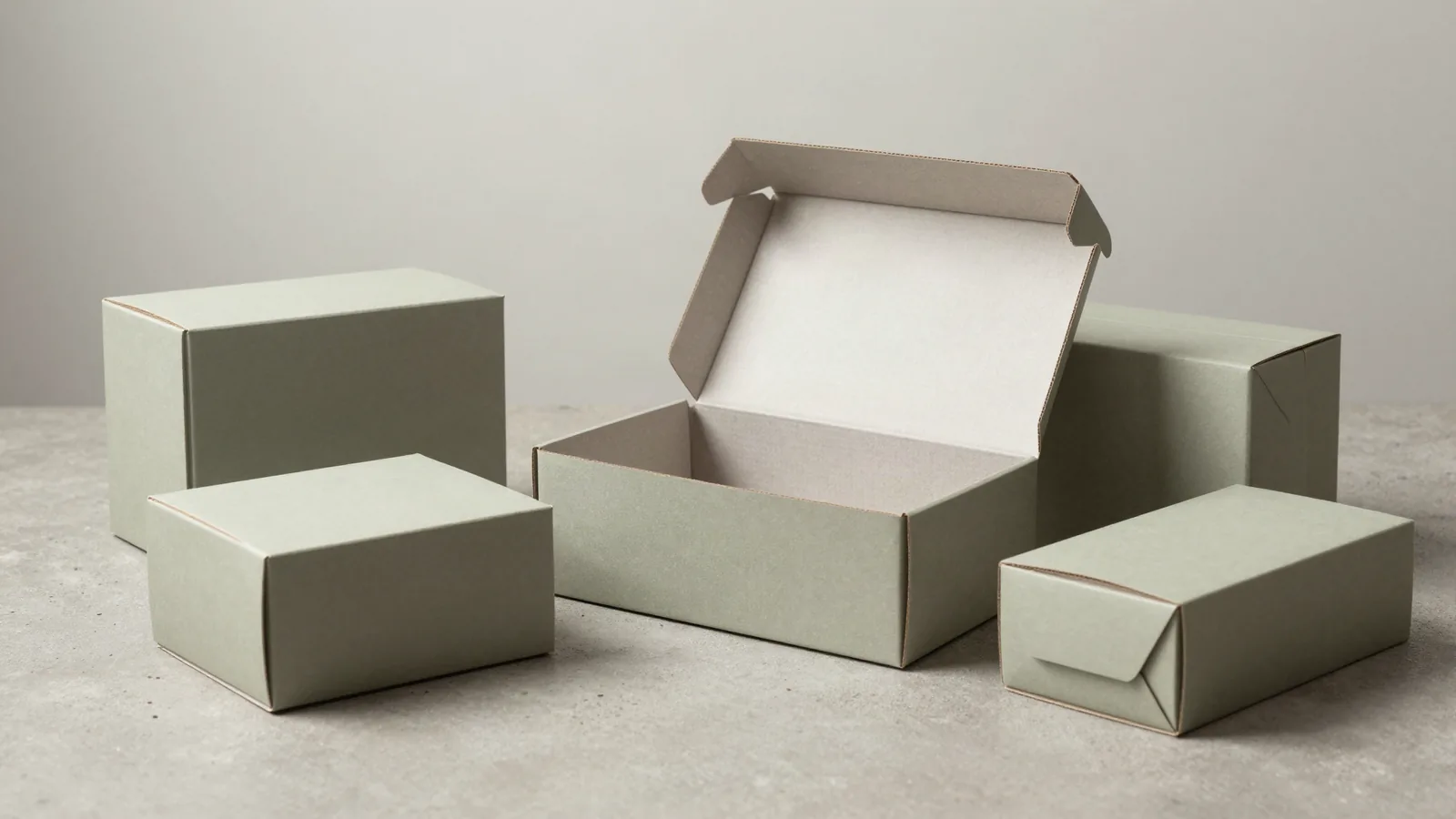




















































A custom packaging solution has to connect the product cavity, opening, pack-out, display, and delivery route. Start with inside length, width, and depth, written in that order, plus fragile points, loose components, and the way the product enters the package. A dieline is the flat cutting template used to print, cut, crease, and assemble the structure. About 1/16 in (1.5 mm) tolerance is a common box fit reference.
What does a complete custom packaging solution need to solve?
The package specification should answer four practical questions: what holds the product, how it closes, how it is packed, and how it travels. A straight tuck end or reverse tuck end carton is a familiar folding-carton format. An auto-lock bottom or crash-lock base changes hand assembly. A mailer, including a roll end tuck top or FEFCO 0427 style, combines a box body with a parcel closure.
Two-piece rigid, magnetic flap, drawer or slide, and sleeve formats make a different structural choice. They shift attention toward the opening, wall stiffness, and component fit. Put the actual product into the proposed structure before judging it by appearance.
Which packaging format should South Bend buyers compare first?
Retail shelf work usually starts with a folding carton, parcel work with a mailer, and a presentation-led project with a rigid box.
| Buyer job | Format to compare | First physical check |
|---|---|---|
| Retail shelf presentation | Straight tuck end or reverse tuck end | Information panel, opening, and fold placement |
| Parcel handling | Mailer, roll end tuck top, or FEFCO 0427 | Closure and product movement during packing |
| Structured presentation | Two-piece rigid, magnetic flap, drawer or slide | Wall stiffness and opening sequence |
| Flexible barrier pack | Mylar or foil laminate | PET, AL, and PE layer needs |
Corrugated flute is a board profile, the shaped paper layer inside corrugated board. E, B, and C flutes are common references. A 32 ECT specification is a common edge crush test reference. E flute has a finer profile and print surface, B flute gives a broader balance of cushioning and stacking behavior, and C flute is thicker for larger or more protective shippers. The box design, pack-out, and stacking pattern still need a physical check.
How do materials and finishes change the package?
Caliper changes stiffness and folding behavior. SBS, C1S, and C2S paperboard commonly sit in the 12 to 24 pt range. Kraft board commonly sits in the 18 to 24 pt range. Rigid chipboard commonly measures 1.5 to 3 mm and can be wrapped in 100 to 157 gsm art paper. A wrapped rigid board holds shape without a fold, but it occupies more space than a flat paperboard carton.
Offset CMYK is common for detailed paperboard artwork. Digital printing suits short runs or multiple artwork versions. Flexo is common on corrugated surfaces. Matte or gloss lamination changes reflection and surface protection. Soft-touch changes hand feel. Spot UV creates localized contrast, foil stamping adds a reflective mark, and embossing or debossing changes surface relief. A window patch adds visibility, but its edge and patch area need to stay clear of scores and glue.
For product-specific references, compare custom drone packaging boxes when components need separation, custom scissor packaging for a long or edged item, and custom screw packaging for compact countable parts. These pages are references for the packaging job, not substitutes for the actual product dimensions.
How should a South Bend packaging brief be organized?
A workable brief carries the product, inside dimensions, insertion and removal direction, closure, material, finish, artwork status, print coverage, insert or window, quantity by version, and delivery destination.
Separate protection requirements from visual choices. Say whether the package is packed by hand, displayed at retail, shipped as a parcel, or used in more than one setting. Keep type, barcodes, glue areas, windows, and small marks away from scores and seams. The custom packaging design hub is the right companion when the open question is artwork, dieline development, or finish placement. For physical comparison, use the sample kit and test the proposed structure with the actual product.
Custom Packaging Lane quotes South Bend packaging projects from a 100-unit minimum, with pricing from $0.49 per unit at volume, quoted to spec. Production is typically 8 to 10 business days after proof approval, plus delivery. Free US shipping, free design support, and a free dieline are available. The $19.99 sample kit is credited to the first order.
Frequently Asked Questions
How should a buyer compare a carton, mailer, and rigid box?
A folding carton is a common retail format, a mailer combines a box body with a parcel closure, and a rigid box uses chipboard walls for a firmer presentation. Compare the actual product dimensions, closure, pack-out, assembly method, board or laminate, finish, and shipping context. The best-looking structure still fails if the product shifts inside it.
What do E, B, and C flute mean in corrugated packaging?
E, B, and C flute describe common corrugated profiles, meaning the shaped paper layer inside corrugated board. E flute has a finer profile and print surface, B flute balances cushioning and stacking behavior, and C flute is thicker. A 32 ECT edge crush test specification is a common reference, but the complete box and stack still need checking.
When should a buyer compare a rigid box?
A buyer should compare a rigid box when firm walls and a repeatable opening matter more than a flat folding carton. Two-piece rigid, magnetic flap, and drawer or slide structures change how the package opens. Rigid chipboard commonly measures 1.5 to 3 mm and may be wrapped in 100 to 157 gsm art paper.
Can one package combine product protection and printed branding?
One package can combine product protection and printed branding when the structure, insert, corrugated layer, or laminate handles the product's physical needs and the print handles identification and presentation. Offset CMYK, digital printing, flexo, lamination, soft-touch, spot UV, foil, embossing, and debossing are common choices. The proof should show both parts together.
What should South Bend buyers send for a packaging quote?
South Bend buyers should send the product name, inside dimensions, closure preference, quantity by version, artwork status, print coverage, finish, insert or window needs, delivery location, and pack-out context. State whether the package is for retail display, parcel shipping, or both. If it may touch food, ask about food-contact options for the product.












