




























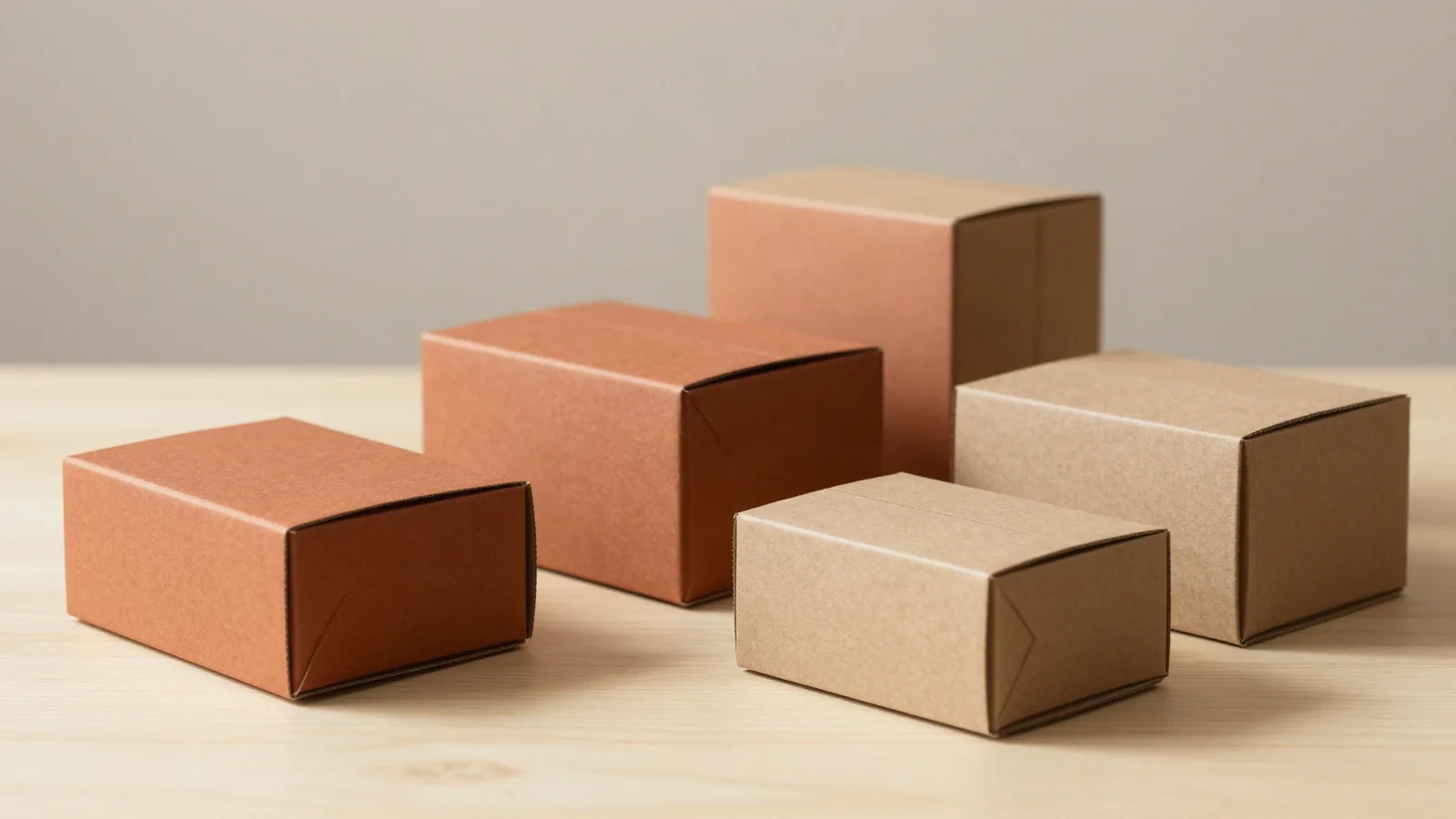



















































What should a cig carton do on shelf and in hand?
Inside dimensions and the packed product set the carton before artwork does. A cig carton is a compact folding package that organizes the contents, presents the artwork, and opens predictably. Write the packed product or inner-pack size as length x width x depth, then state how many units or inner packs belong inside. A common planning tolerance is about 1/16 in, or 1.5 mm. A dieline is the flat cutting template used to print, cut, crease, and fold the carton.
SBS or C1S paperboard in the 12 to 24 pt range gives a smooth printable surface for detailed graphics. Kraft board in the 18 to 24 pt range changes the surface and print direction. Decide whether the carton is secondary packaging around an inner pack or whether it needs an inner barrier, liner, or insert. That distinction changes the interior, closure, and panel layout.
Which structure is a good starting point for a cig carton?
| Structure | Useful direction | What to check |
|---|---|---|
| Straight tuck end | Compact retail carton with a familiar opening | Top flap depth, tuck friction, and front-panel alignment |
| Reverse tuck end | Carton with offset top and bottom tucks | Opening direction and display position |
| Auto-lock bottom | Package needing a formed base | Bottom-lock geometry, board caliper, and packing sequence |
| Sleeve | Branded outer wrap over an inner pack | Inner-pack clearance and sleeve retention |
A straight tuck end gives a familiar compact opening. A reverse tuck end changes the closing-panel direction. An auto-lock bottom forms the base during setup. A sleeve adds a branded outer layer when the inner pack already provides containment. Share the packed product or a representative inner-pack sample before the dieline is fixed, because a screen mockup cannot show tuck friction or sleeve retention.
How can print and finish support the carton design?
CMYK means cyan, magenta, yellow, and black, the four process colors used for many printed carton graphics. Offset CMYK suits detailed graphics, color blocks, gradients, and small text. Digital print avoids plates and is commonly used for short runs. Offset can become more economical as the quantity grows. The crossover is job-specific, so compare quantity, panel size, ink coverage, and finishing before choosing the process.
Matte lamination reduces surface reflection, while gloss lamination increases reflected light. Soft-touch changes the tactile surface. Spot UV, foil stamping, embossing, and debossing create separate artwork and registration requirements, so show each effect on the proof. A press check looks at color registration, solid ink areas, small text, and the relationship between finish layers and creases.
A PET window around 0.2 to 0.3 mm is a common range when the design needs a visible product area. Window patching must clear creases, glue flaps, and the panel seen first. Bleed is artwork that extends beyond the cut line, and type should stay away from scores, glue tabs, and the window edge. RGB art can shift when it is converted for press. If the construction needs an inner barrier or liner, Mylar or foil laminates can use PET, AL, and PE layers. Ask us about food-contact options for your product if any part of the construction touches the contents.
What details belong in a cig carton quote request?
- Packed length, width, and depth, plus the number of units or inner packs
- Secondary-packaging use, or any inner barrier, liner, or insert requirement
- Artwork panels, barcode locations, warning or handling copy, and variant count
- Board, print coverage, opening style, and finish priorities
See the custom cigarette carton boxes product page for the dedicated format. The same custom cigarette carton box details page can be used for panel planning, and the custom cig carton product reference is available when preparing artwork. Broader planning is in wholesale custom packaging. Order the $19.99 sample kit to compare materials and finishes before the first order. Projects are quoted to spec from a 100-unit minimum, from $0.49 per unit at volume. Production is typically 8 to 10 business days after proof approval, plus delivery. Free US shipping and free design support include a free dieline.
Frequently Asked Questions
What dimensions should I provide for a cig carton?
For a cig carton, provide the packed inner-pack or product dimensions as length x width x depth, using inside measurements for the carton fit. Include the number of units, any liner or insert, and the clearance required for removal. About 1/16 in, or 1.5 mm, is a common tolerance reference, but the final fit should be checked on the physical structure.
Can a cig carton use a sleeve instead of a folding carton?
A cig carton can use a sleeve when an inner pack already provides containment and the sleeve is the branded outer layer. Size the sleeve for retention without crushing the inner pack, then check insertion, removal, panel alignment, and the opening direction. A representative inner pack should be reviewed before the sleeve dieline is approved.
What board is commonly used for printed cartons?
Printed cig cartons commonly compare SBS or C1S paperboard in the 12 to 24 pt range with kraft board in the 18 to 24 pt range. SBS and C1S provide a smooth printable surface, while kraft changes the surface direction. Carton size, folds, print coverage, finish, and inner-pack construction decide the final board.
Which finishes are available for a branded cig carton?
Common cig carton finishes include matte or gloss lamination, soft-touch, spot UV, foil stamping, embossing, and debossing. Matte reduces reflection, gloss increases reflected light, and spot treatments add separate artwork and registration notes. Put each finish on the proof so its position can be checked against folds, glue flaps, windows, and handling.
How can I review materials before ordering?
A physical sample lets a cig carton buyer compare board feel, print appearance, surface treatment, tuck friction, sleeve retention, and opening behavior. Share the packed product or a representative inner pack with the sample request. Use the observations to refine the dieline and finish notes before the proof is approved.