




























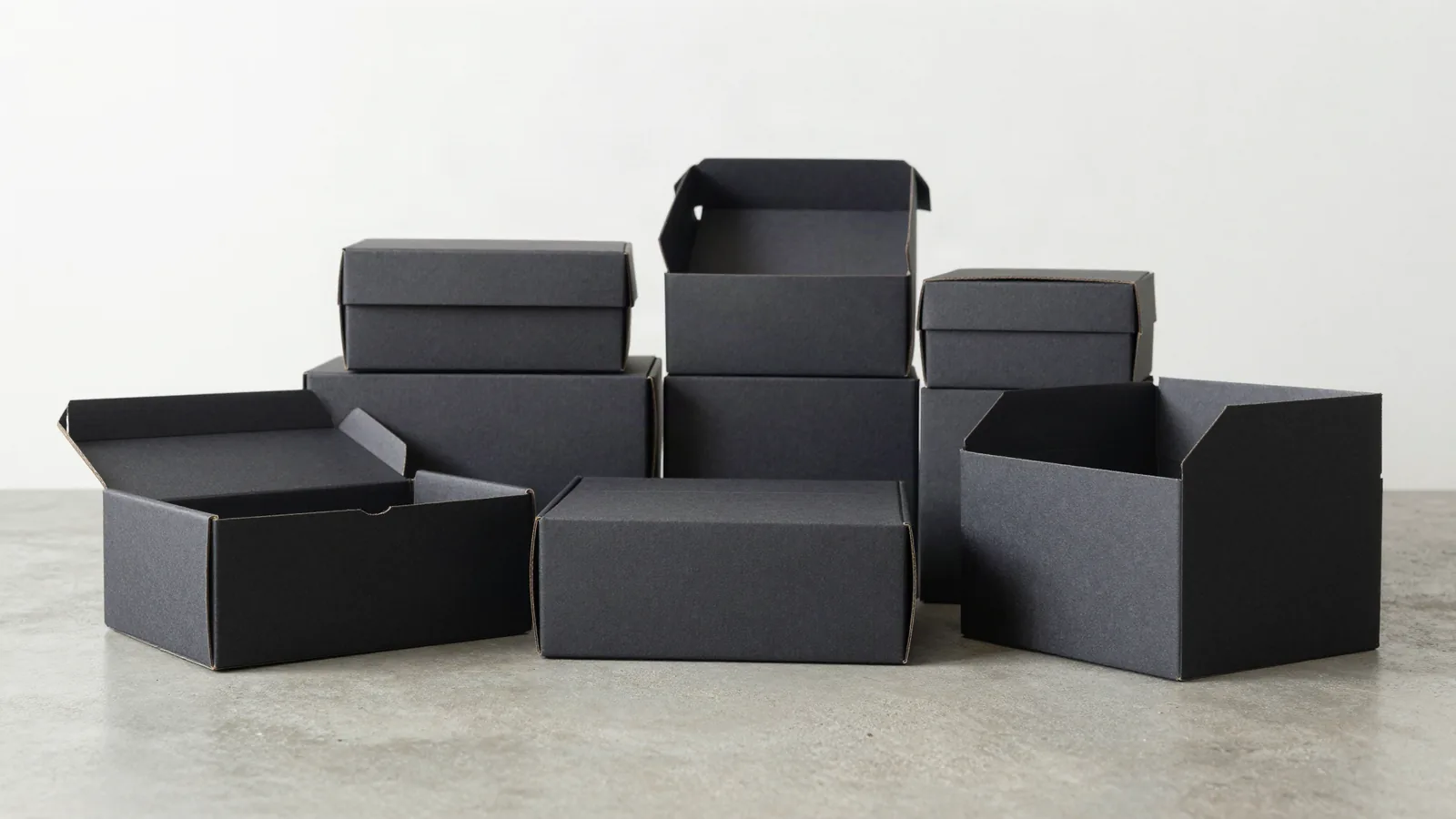




















































Packaging for brands stays coherent when the supplier receives more than a logo file. The working brief needs product dimensions, package structure, board, print coverage, finish, and the panels that carry product information. That is how a brand system survives the awkward parts of production: a score through a headline, a glue tab under a logo, or artwork that looks right on screen but shifts after RGB files are converted for press.
How can packaging for brands create a repeatable identity?
Lock the decisions that must repeat, then leave room for the information that changes by product. Set the logo position, color roles, type hierarchy, image treatment, information order, and clear-space rule before designing individual cartons. A candle carton can use a calmer panel layout, while a greeting card package may need more room for product details. Compare custom taper candle packaging and custom greeting card packaging as format-specific references. The identity stays related because the rules are shared, not because every package has the same panel geometry.
Which product format should carry the brand first?
The product and opening sequence should decide the structure before the logo gets placed. A straight tuck end and a reverse tuck end are folding-carton closures. An auto-lock bottom or crash-lock base changes how the box is assembled. A sleeve is a printed layer that wraps or slides over an inner package. A tin gives the brand a metal surface, while a carton gives it several paperboard panels. Compare custom tin packaging and custom stevia packaging when the format changes the way the identity is seen and handled.
Which material choices should a brand team compare?
Board caliper, the measured thickness of paperboard, changes how a carton folds, prints, and holds its shape. SBS means solid bleached sulfate. C1S and C2S describe paperboard coated on one side or two sides. The following are typical industry references, not CPL order data.
| Material direction | Typical industry reference | Practical question |
|---|---|---|
| SBS, C1S, or C2S paperboard | 12 to 24 pt | Does the carton need more stiffness, or more flexible folds? |
| Kraft board | 18 to 24 pt | Does the natural board surface fit the visual system? |
| Rigid chipboard | 1.5 to 3 mm, wrapped in 100 to 157 gsm art paper | Does the package need a board construction that holds its shape without a fold? |
| Surface finish | Matte lamination, gloss lamination, soft-touch, spot UV, or foil | Will the surface be read, handled, or used as a small accent? |
A heavier board is not automatically the right choice. Score depth, glue-tab width, closure tension, and inside clearance can matter more than thickness alone. A rigid box uses chipboard that holds shape without a fold. A folding carton has to balance stiffness with clean scores and a workable closure.
How should print coverage support brand hierarchy?
The front panel needs a reading order that still works after the carton is folded and glued. Put the brand mark, product name, variant, and supporting details on a clear path. Offset CMYK suits detailed folding-carton artwork. Digital printing can suit short runs or an artwork test. Flexo printing is common for corrugated surfaces. Keep the seam, fold lines, glue areas, and opening direction visible in the dieline. A dieline is the flat cutting template that shows where the printer trims, scores, folds, and glues the package. Leave bleed wherever artwork runs to a trim edge, and keep type away from scores. Low-resolution art and RGB files can create surprises when they are prepared for press, so catch both during proof review.
When does a finish earn space in the brand system?
A finish earns its place when it marks a defined piece of hierarchy, such as a logo, product name, or pattern. Matte lamination cuts glare compared with gloss. Gloss lamination raises surface contrast. Soft-touch changes the hand feel. Spot UV puts a harder glossy patch on selected areas, while foil stamping reserves a metallic accent for a defined shape. Embossing raises a selected area, and debossing presses it down. Keep effects clear of scores and glue tabs where the fold can crack or the adhesive needs a clean surface.
How can one brand system adapt across products?
Separate the fixed layer from the product layer, then test both on the actual blank. The fixed layer holds the logo treatment, type choices, color logic, and finish rules. The product layer holds the item name, scent, flavor, collection, or variant details. This lets a tin, folding carton, sleeve, or rigid format feel related without forcing the same layout onto every surface. A paperboard panel can carry a product name easily, but a tin's printable area and a rigid box's wrapped edges need their own artwork map.
What should I include in a custom brand packaging brief?
A usable brief names the physical package before it describes the mood.
- Brand files, preferred typefaces, color references, and logo clear-space rules.
- The product, packed dimensions, package format, opening direction, and inside fit.
- The main display panel, supporting information, seam, folds, and glue areas.
- The board or material direction, plus any lamination, soft-touch, foil, embossing, or debossing request.
- The brand elements that stay fixed and the product details that change.
- The planned quantity and delivery destination for a complete quote request.
That list gives the supplier enough context to draw the package around the product instead of laying a logo over an empty rectangle.
How do I turn the brief into a quote?
The quote should tie every price driver to one approved structure and one artwork file. Custom Packaging Lane quotes to spec from a 100-unit minimum. Pricing is from $0.49 per unit at volume, quoted to spec. Production is typically 8 to 10 business days after proof approval, plus delivery. Free US shipping, free design support, and a free dieline keep the planning step concrete. The $19.99 sample kit is credited to the first order. Start with custom boxes with logo when the brand needs a logo-led box brief, then send the brand files and product dimensions.
Frequently Asked Questions
What belongs in a custom brand packaging guide?
A custom brand packaging guide should record the logo treatment, color roles, type hierarchy, clear-space rule, information order, image treatment, package structures, and finish rules. It should separate fixed brand decisions from product fields that change by SKU, collection, scent, flavor, or variant. Add panel maps for seams, folds, glue tabs, and opening direction so artwork adapts without losing production context.
How do brands keep artwork consistent across different box formats?
Brands keep artwork consistent by locking the decisions that repeat, then mapping variable content to each structure. Record logo position, type relationships, color roles, panel order, safe areas, folds, glue zones, and finish locations. A tin, sleeve, folding carton, and rigid box can share one visual system while using different artwork maps.
What is the difference between SBS, C1S, and C2S board?
SBS is solid bleached sulfate paperboard. C1S is coated on one side, and C2S is coated on two sides. The coating direction changes the printable surface and the inside or outside appearance. Compare those choices with the folds, glue areas, closure, product fit, and whether the carton will be viewed from both sides.
When should a brand use foil or spot UV?
Foil and spot UV work best when they mark a defined area, such as a logo, product name, or small pattern. Foil creates a metallic accent. Spot UV creates a harder glossy patch over selected artwork. Keep both effects away from scores and glue tabs, and check fine type on the proof before approval.
What does a packaging proof need to show?
A packaging proof should show the flat artwork against the dieline, panel order, trim, folds, glue areas, opening direction, finish marks, and the assembled reading order. Check small type, barcode placement, bleed, logo clear space, and variant fields. Resolve errors on the proof before the production file is approved.












