













































































What does custom commercial packaging include?
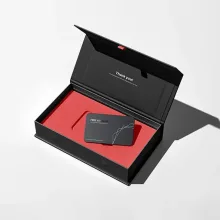
A commercial packaging program ties one package brief to a product, sales channel, or fulfillment step. The package may be a folding carton for shelf graphics, a tin for a durable container, a corrugated box for shipping, or a rigid box for a fixed presentation. The useful starting point is the packed product, not a generic box name.
Send product dimensions, packed weight, opening sequence, handling environment, artwork status, quantity, and destination. A dieline is the flat cutting template used to print and cut the package. Specify length x width x depth and mark inside versus outside measurements. About 1/16 in, or 1.5 mm, is a common planning tolerance, but the selected closure and product still need a physical fit check.
Which material fits a commercial packaging job?
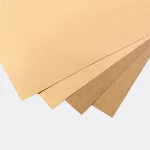
Paperboard is the usual starting point for printed folding cartons, while rigid chipboard, corrugated board, tin, and laminate each solve a different package problem. SBS, C1S, and C2S paperboard sit in a 12 to 24 pt planning range. Kraft board often sits around 18 to 24 pt when a natural surface matters. A rigid box commonly uses 1.5 to 3 mm chipboard wrapped in 100 to 157 gsm art paper.
Corrugated board uses fluted paper between liner sheets. E, B, and C flutes change the board profile, interior room, and stacking behavior, with 32 ECT as a common compression reference. A laminate is a bonded stack of layers. Mylar or foil laminate can use PET, AL, and PE layers, so the quote should name the barrier layers, seal area, fill method, and artwork.
| Commercial requirement | Common material or structure | Review points |
|---|---|---|
| Shelf graphics | Paperboard carton, 12 to 24 pt planning range | Caliper, print coverage, folds, and finish |
| Structured presentation | Rigid chipboard, 1.5 to 3 mm, wrapped in 100 to 157 gsm art paper | Closure, wrap, insert, and assembled dimensions |
| Parcel handling | Corrugated E, B, or C flute, 32 ECT reference | Product fit, packed weight, and carrier exposure |
| Barrier-oriented pouch | PET / AL / PE laminate construction | Layer needs, seal area, fill method, and artwork |
How do print methods and finishes affect the package?
Offset CMYK suits detailed paperboard artwork and repeat graphics. Flexo prints directly on corrugated board. Digital printing is often considered for short runs, prototypes, or changing artwork. Matte or gloss lamination changes reflection, soft-touch changes surface feel, and spot UV creates a hard glossy area on selected graphics.
Foil stamping adds a reflective mark, embossing raises paper, and debossing presses it below the surface. Window patching adds a clear opening, often with PET around 0.2 to 0.3 mm as a common reference. A digital proof is the artwork mapped to the structure for review, so inspect it at final size. Put finish and window locations on the proof so folds, glue areas, seams, and text remain clear. Tooling can affect setup and quantity planning when several finishing operations share one package.
How should one packaging program handle several SKUs?
Keep the shared structure, closure, and panel order fixed when products share a format; vary the dimensions, insert, or graphics only where the product changes. A SKU is one distinct product variation, such as a size or flavor. Lock the repeatable elements in the dieline, then mark every variable panel so a reviewer can see what changes between versions.
That separation makes a quote easier to compare. Quantity, board caliper, print coverage, finishing, tooling, and shipping zone can change by version. A product family should still be checked one assembled sample at a time because an insert cut for one product can leave another product loose.
Which commercial formats can I compare?
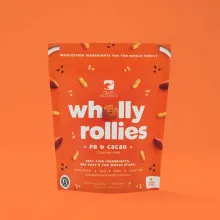
Four catalog formats give different starting points for a commercial brief. Custom tin packaging shows a formed container with a decorated surface. Custom taper candle packaging provides a narrow product format to compare. Custom stevia packaging is a small-format carton reference. Custom drone packaging boxes are useful for thinking through product geometry, inserts, and shipping. These are catalog directions, not order data.
What should a commercial packaging quote contain?
Start the quote with the information that controls fit and production: product dimensions, packed weight, quantity, structure, board or laminate, print method, finish, tooling, artwork status, and destination.
- Product measurements, packed weight, orientation, and included contents.
- Structure, closure, insert or window, and inside or outside dimensions.
- Board, laminate, caliper, flute, or layer requirements.
- Print method, coverage, finish locations, and tooling needs.
- Quantity, artwork status, destination, and whether a sample is needed.
Custom Packaging Lane quotes commercial packaging from a 100-unit minimum. Pricing is from $0.49 per unit at volume, quoted to spec. Production is typically 8 to 10 business days after proof approval, plus delivery. Free US shipping, free design support, and a free dieline are available. The $19.99 sample kit is credited to the first order. The wholesale custom packaging page is the next step for a repeat or multi-SKU request.
Frequently Asked Questions
What makes a packaging program commercial?
A commercial packaging program connects one package format to a product, sales channel, or fulfillment workflow. Buyers usually compare structure, board, print method, finish, tooling, quantity, and destination across a repeatable run or product family. A clear dieline and proof keep dimensions, copy, and artwork changes visible from one version to the next.
Which material should I compare for commercial packaging?
Paperboard suits printed folding cartons, rigid chipboard suits fixed presentation, corrugated board suits parcel handling, tin creates a formed container, and laminate uses bonded film layers. Common planning references include paperboard at 12 to 24 pt, rigid chipboard at 1.5 to 3 mm with 100 to 157 gsm art paper, and corrugated E, B, or C flute with 32 ECT.
Does a commercial package need a window?
A commercial package needs a window when product visibility is part of the sales or handling brief. Window patching often uses PET around 0.2 to 0.3 mm as a common reference. The patch needs clear space around folds, glue areas, and closures, and the visible product should sit in the intended orientation.
How do I plan packaging for several SKUs?
Several SKUs should share fixed structure and panel order when the products use the same format. Mark the dimensions, inserts, and graphics that change from one version to another. Review each assembled version because an insert or closure that fits one product can leave another product loose or misaligned.
Why do board, printing, and tooling change a quote?
Board caliper, print coverage, finishing, tooling, package dimensions, quantity, and shipping zone all change the work required for a commercial package. A useful quote names the product fit, packed weight, structure, artwork status, finish, quantity, and destination so the options can be compared on the same basis.