
































































How should a custom chopstick sleeve fit?
A chopstick sleeve is a narrow paper package sized around the packed pair, wrapper, napkin, or card that enters it. Measure the full set, not the bare chopsticks, then mark the insertion direction, opening size, sleeve length, and widest cross-section on the dieline. A sleeve that is short by a small amount can catch the ends, while an oversized opening lets the pair slide around.
Food-contact selection depends on the contact surface, ink system, coating, and use conditions. Ask us about food-contact options for the intended restaurant, hospitality, event, or takeaway use. State whether the sleeve touches the utensils, a wrapper, or another inner package.
Which sleeve structure and board should I compare?
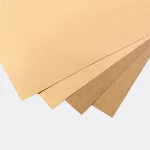
Open-end sleeves load quickly, while a wraparound band uses overlap and adhesive to hold a bundled pair. A closed-end or narrow straight tuck end format gives the set a more enclosed presentation. For a folding sleeve, SBS, C1S, or C2S paperboard is commonly discussed at 12 to 24 pt. Kraft board is commonly discussed at 18 to 24 pt when the natural paper appearance fits the artwork.
| Decision | Typical industry reference | Practical check |
|---|---|---|
| Board selection | SBS, C1S, or C2S, commonly 12 to 24 pt | Stiffness, fold behavior, print surface, and feel |
| Natural appearance | Kraft board, commonly 18 to 24 pt | Ink appearance and uncoated visual character |
| Print process | Offset CMYK or digital for short runs | Detail, color control, and layout testing |
| Finish | Matte or gloss lamination, soft-touch, spot UV | Surface feel, contrast, and handling |
Rigid chipboard is a different category for a small sleeve because it adds a stiff wrapped construction. Compare it when the presentation brief calls for that change. The board, opening, loading method, print coverage, and packed utensil set need to agree.
How should restaurant artwork fit a narrow sleeve?
Keep the restaurant name, logo, menu cue, website, or service message on the main visible panel, then reserve the fold, glue area, seam, overlap, and insertion opening. Offset CMYK suits detailed paperboard graphics, while digital printing can suit a short run or layout test. On a narrow sleeve, a limited finish plan often protects legibility better than covering every panel with effects.
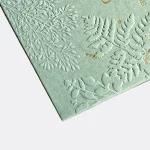
Matte or gloss lamination changes the surface, soft-touch changes hand feel, and spot UV isolates a selected mark or pattern. Foil stamping, embossing, and debossing can be evaluated when the board and folds support them. A PET window around 0.2 to 0.3 mm is a common reference for a different package concept, but a chopstick sleeve already has an opening where the contents can be seen.
What should the proof show before printing?
The proof should show the packed pair in the sleeve, not a flat art file alone. Mark the front panel, back seam, opening, fold, glue area, overlap, loading direction, and any wrapper or napkin position.
- Check the actual length and widest cross-section of the packed set.
- Keep type and the restaurant mark clear of scores, seams, glue, and the opening.
- Review the sleeve empty, loaded, removed, and placed inside the outer bag when that is part of service.
- Confirm the print process, board, lamination, soft-touch, spot UV, foil, embossing, or debossing notes.
Which related packaging formats are useful comparisons?
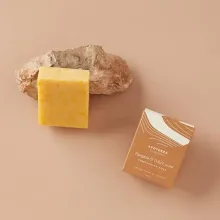
Custom chopstick packaging is the closest product comparison. Soap sleeves show another narrow branded sleeve format, while custom white paper bags can carry the sleeve through takeaway handoff. Custom votive candle boxes are useful only when the same brand system extends into another package type.
What details belong in a chopstick sleeve quote?
Send the packed chopstick length, widest cross-section, wrapper or napkin arrangement, count per sleeve, opening style, loading method, board preference, print coverage, finish, service setting, storage conditions, and delivery destination. Ask for the dieline and check the proof for folds, glue zones, text size, color conversion, bleed, and opening fit.
Custom Packaging Lane quotes to spec from a 100-unit minimum, with pricing from $0.49 per unit at volume, quoted to spec. Production is typically 8 to 10 business days after proof approval, plus delivery. Free US shipping, free design support, and a free dieline are available. Order the $19.99 sample kit, credited toward the first order, and use custom packaging for small business when the sleeve is part of a restaurant package set.
Frequently Asked Questions
What size should a custom chopstick sleeve be?
A custom chopstick sleeve should be sized from the packed chopstick pair, including any wrapper, napkin, or card. Provide the full length, widest cross-section, sleeve length, opening size, and loading direction. The physical sample should confirm that the pair enters without catching and can be removed without tearing the printed panel.
Which paperboard thickness works for chopstick sleeves?
SBS, C1S, or C2S paperboard is commonly discussed at 12 to 24 pt for folding sleeves, while kraft board is commonly discussed at 18 to 24 pt. Board thickness affects stiffness, fold behavior, ink appearance, and hand feel. Match the board to the opening, overlap, loading method, artwork coverage, and intended contact surface.
Can a chopstick sleeve carry printing on both sides?
A chopstick sleeve can be planned around the visible panel, back seam, folds, glue area, overlap, and opening before print coverage is chosen. Offset CMYK suits detailed paperboard graphics, and digital printing can suit a short run or layout test. Keep type away from scores and seams so both sides remain readable after folding.
How do I keep special finishes off the fold?
Matte or gloss lamination changes the surface, soft-touch changes hand feel, and spot UV isolates selected artwork. Foil stamping, embossing, and debossing can be evaluated when the board and folds support them. A narrow sleeve needs clear type around its opening, seam, overlap, and glue area, so finish placement should follow the dieline.
Can a chopstick sleeve be used around food service?
A chopstick sleeve can be planned for restaurant, hospitality, event, or takeaway service, but the contact surface and use conditions need review. State whether the sleeve touches the utensils, wrapper, napkin, or outer package, then ask us about food-contact options before approving the construction and proof.