














































































Custom clothing packaging starts with the folded garment, not the artwork. A buyer searching custom packaging for clothing or packaging for clothing starts with the shirt, accessory, or set in its packed condition, then decides whether the package will be handed over in a shop, shipped as a parcel, or used for both. A sleeve, mailer, folding carton, drawer, and rigid box each change the opening and the packing motion. For related format references, review custom greeting card packaging, custom taper candle packaging, and custom tin packaging.
What should packaging for clothing do after purchase?
The loading and closing sequence determines whether the package works after the order is packed. Record the folded garment, tissue, card, hangtag, divider, and any accessory, then show how those pieces sit in the cavity. A parcel-ready format also needs a label panel and an outside footprint that works with the shipping route. A retail package can spend more space on the reveal, while a shipper must leave room for handling and closure.
Which format fits a clothing order?
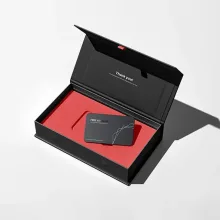
The structure choice changes the opening more than a color change does. A sleeve slips over an inner pack, a drawer uses a sliding inner component, a two-piece rigid box separates a base and lid, and a mailer closes around a parcel-ready cavity.
| Format | Common industry reference | Planning emphasis |
|---|---|---|
| Sleeve | Printed wrap around an inner package or folded garment | Slip fit, panel visibility, and opening direction |
| Drawer or slide | Outer sleeve with a sliding inner component | Pull clearance, reveal sequence, and insert space |
| Two-piece rigid | Separate base and lid for a gift presentation | Inside measurements, lid fit, and brand reveal |
| Mailer | Roll end tuck top structure, commonly associated with FEFCO 0427 | Closing sequence, label area, and shipping footprint |
Which materials are common for apparel packaging?
SBS, C1S, and C2S are paperboard references commonly used for folding cartons in the 12 to 24 pt range. Kraft board in the 18 to 24 pt range has a different surface direction. Rigid chipboard is a dense board in the 1.5 to 3 mm range, often wrapped in 100 to 157 gsm art paper for a covered rigid box. A reusable soft carrier can use cotton canvas in an 8 to 12 oz range or non-woven polypropylene in an 80 to 120 gsm range. Compare each option by folding, stacking, print surface, closure, and the way the garment is loaded.
How should I size clothing packaging?
Inside length x width x depth is the useful starting point for a folded garment package. Measure the garment in its actual fold, then add tissue, cards, hangtags, dividers, and any component that occupies space. About 1/16 in, or 1.5 mm, is a common planning tolerance, but the fold and closure decide the working clearance. Keep the garment cavity separate from the outside dimensions. A mailer can fit the shirt and still be too deep for the parcel route.
How can I control shipping space?
Dimensional weight for US ground parcel planning commonly uses L x W x H / 139. That formula makes the outer length, width, and height worth checking after the folded garment fits. Corrugated E-flute is thinner and prints with finer detail, while B-flute and C-flute are thicker profiles commonly compared for handling. 32 ECT is a recognized board-strength reference, where ECT means edge crush test. Mark the label panel, closure, scores, and any surface that must stay flat during packing.
Which print and finish choices suit apparel branding?
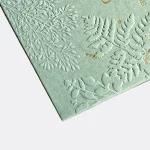
Offset CMYK is a common choice for detailed paperboard artwork. Digital printing can suit a short-run artwork check or version test. Matte or gloss lamination changes sheen, and soft-touch changes the surface feel. Spot UV, foil stamping, embossing, and debossing can separate a logo or pattern from the surrounding print when the flat area supports the effect. Build the finish map into the proof. Keep type, seams, scores, and label space out of the effect areas.
Which CPL products can help me compare structures?
Custom tin packaging is a durable accessory presentation reference. Custom greeting card packaging helps frame a package that includes a printed card or insert. Custom taper candle packaging is a long-format carton reference. The clothing package still depends on the folded garment dimensions, shipping needs, inserts, artwork, and finish.
What should I include in the quote request?
The request becomes useful once the folded garment and packed extras are written down.
- Provide the folded garment or accessory dimensions and orientation.
- List tissue, cards, hangtags, dividers, or other components inside the order.
- Choose a sleeve, mailer, folding carton, drawer, or rigid direction.
- State whether the package is for retail handoff, shipping, or both.
- Mark artwork panels, label space, closure, folds, seams, and finish zones.
- Share the planned quantity, delivery location, and any outer shipping requirement.
Custom Packaging Lane quotes custom clothing packaging from a 100-unit minimum. Pricing is from $0.49 per unit at volume, quoted to spec. Production is typically 8 to 10 business days after proof approval, plus delivery. Free US shipping, free design support, and a free dieline are available. The $19.99 sample kit is credited toward the first order. Use wholesale custom packaging when the apparel format is ready for a scoped quote.
Frequently Asked Questions
What is the difference between a clothing sleeve and a mailer?
A clothing sleeve is a printed wrap around a folded garment or inner package, so slip fit and reveal control the format. A mailer adds a closing sequence, label panel, outside footprint, and parcel-handling requirement. Compare the garment cavity, closure, inserts, artwork panels, and shipping dimensions before choosing.
How much room should I allow for folded clothing?
Measure the garment in its actual folded state, then include tissue, cards, hangtags, dividers, and other packed components. Use inside length x width x depth for the cavity. About 1/16 in, or 1.5 mm, is a common planning tolerance, but the real folded garment and closure must determine the final clearance.
Which material works for a substantial apparel presentation?
Rigid chipboard in a 1.5 to 3 mm range wrapped in 100 to 157 gsm art paper is a common rigid-box reference. SBS, C1S, or C2S paperboard in a 12 to 24 pt range can suit a folding carton. Choose after checking the garment cavity, opening, print surface, finish, and handling.
Can clothing packaging include a fabric carrier?
A fabric carrier can be part of a clothing packaging brief. Cotton canvas in an 8 to 12 oz range and non-woven polypropylene in an 80 to 120 gsm range are common industry references. Specify the garment load, carrier dimensions, closure, print area, and whether the carrier replaces or supplements a box or mailer.
How should I review a clothing packaging proof?
Check folded-garment clearance, insert placement, panel order, closure, label area, scores, seams, artwork, finish map, and outside dimensions before approval. The cavity should match the garment in its packed fold, not an unfolded measurement. If the package ships, review the outer footprint separately from the inside fit.