











































































What does custom made packaging include?
The packed product determines the structure, material, opening, and print area; a stock shape is only a starting comparison. A packaging brief records the item, packed configuration, insert or window, shipping method, and copy required on each panel. A dieline is the flat cutting template a printer uses to show cut lines, scores, folds, and glue areas.
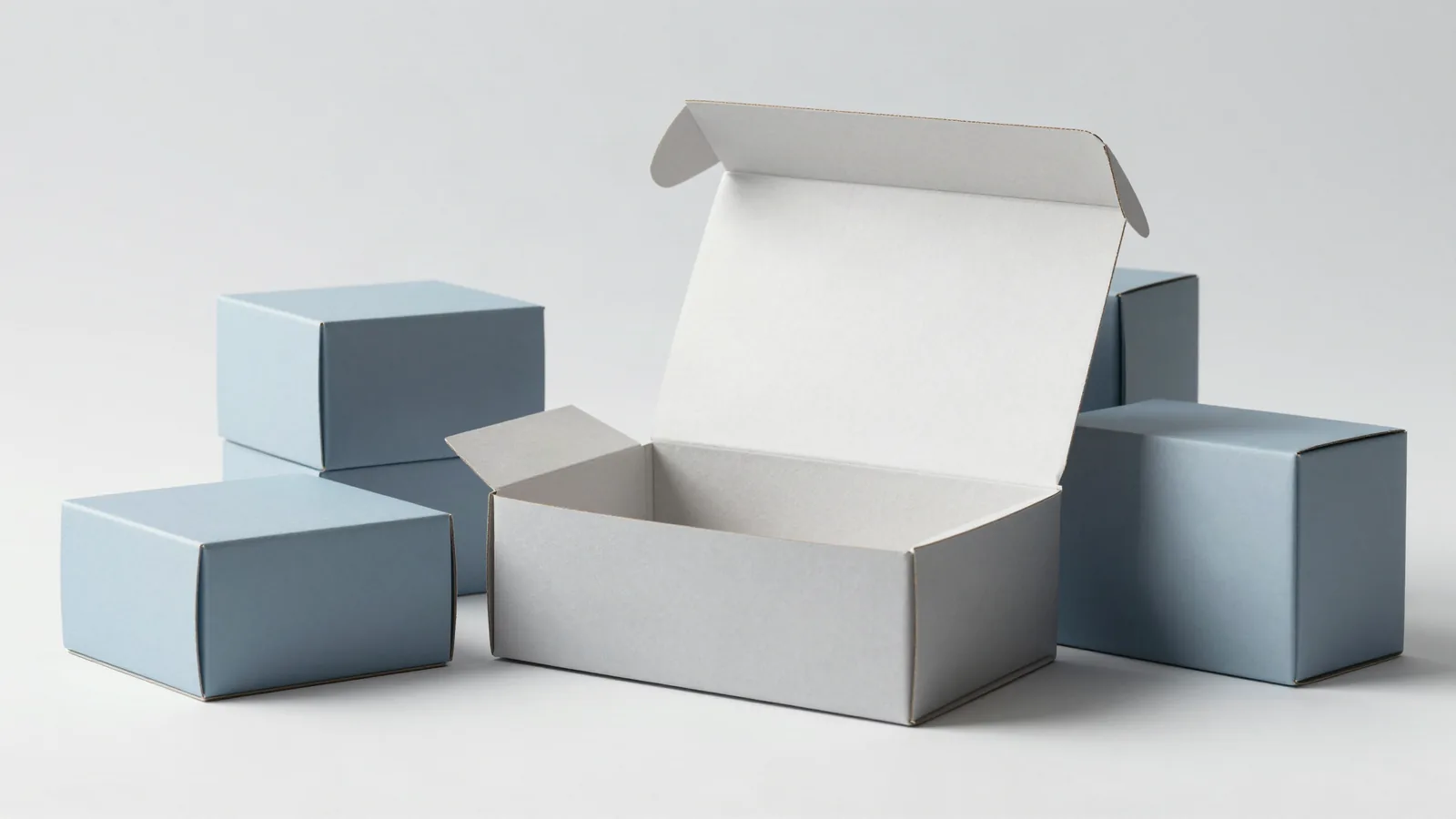
Common structures include straight tuck end, reverse tuck end, auto-lock bottom, crash-lock, sleeve, pillow, gable, and mailer formats. A mailer may use a roll end tuck top structure, commonly associated with FEFCO 0427. Rigid projects often use two-piece rigid, magnetic flap, drawer or slide, or wrapped chipboard construction. Pick the structure after checking opening behavior, stacking, protection, and packed orientation.
How do package structures change the job?
A straight tuck end folds on scored panels, while a reverse tuck end changes the tuck direction and seam position. An auto-lock bottom or crash-lock base changes the assembly pattern. A sleeve wraps another pack, and a pillow or gable format changes how the product sits in the hand. A mailer with a roll end tuck top puts more of the opening movement into the shipper itself. Rigid two-piece, magnetic flap, drawer, and slide structures shift the opening toward presentation. FEFCO 0427 is a reference code to keep with the mailer discussion.
Which materials and finishes fit the product?
SBS, C1S, or C2S paperboard in the 12 to 24 pt range is a common folding-carton reference. SBS means solid bleached sulfate paperboard, while C1S and C2S describe coating on one side or both sides. Kraft board in the 18 to 24 pt range has a visible kraft surface. Corrugated E, B, and C flute profiles change thickness and stacking behavior; 32 ECT is a common strength convention for shipping cartons. A flute is the wave-shaped layer inside corrugated board, and ECT is an edge crush test value used to discuss compression strength. Rigid boxes commonly use 1.5 to 3 mm chipboard wrapped in 100 to 157 gsm art paper.
Offset CMYK suits detailed paperboard graphics, flexo is common on corrugated surfaces, and digital print can suit short runs or variable artwork. Matte or gloss lamination, soft-touch, spot UV, foil stamping, embossing, debossing, and window patching change appearance or handling. For a compact metal format, compare custom tin packaging. For a narrow product carton, see custom taper candle packaging. Small sachet-style products can use custom stevia packaging. These catalog references frame the format discussion; the packed product still decides the construction.
How should dimensions be specified?
Write length x width x depth as inside measurements first, then state outside measurements after board, folds, and finishes are fixed. A tolerance is the allowed difference between the stated size and the finished package; about 1/16 inch, or 1.5 mm, is a common packaging reference. Measure the packed product, including caps, sleeves, inserts, and protective parts, not the bare item alone.
| Project input | Useful convention | Why it matters |
|---|---|---|
| Carton size | Length x width x depth, inside measurements | Controls fit, insert design, and material use |
| Paperboard | SBS, C1S, or C2S, commonly 12 to 24 pt | Balances print surface and carton stiffness |
| Rigid construction | Chipboard commonly 1.5 to 3 mm | Supports a more substantial presentation |
| Shipping carton | E, B, or C flute, with 32 ECT a common convention | Supports stacking and transit planning |
What should the dieline show before print?
The primary viewing panel, folds, scores, glue areas, closure, trim, and any window need labels before artwork is locked. Keep small type away from creases and seams; put foil, embossing, debossing, and spot UV on separate effect layers. Check the reading order after the box is folded, because a panel that looks correct flat can face the wrong direction on the finished package.
What should I send for a custom packaging quote?
Send the product's packed length, width, depth, quantity, artwork status, preferred structure, material, finish, insert or window needs, closure, delivery destination, and any handling concern. The custom packaging solutions hub gives a starting point for comparing structures and applications. For physical material comparison, order the sample kit.
What happens before production begins?
Proof approval is the handoff that starts the production clock, so check the dimensions, structure, materials, finish, artwork, quantity, destination, colors, panels, and closure before signing off. Custom Packaging Lane quotes custom made packaging to spec from a 100-unit minimum. Pricing is from $0.49 per unit at volume, quoted to spec. Production is typically 8 to 10 business days after proof approval, plus delivery. Free US shipping, free design support, and a free dieline are available. The $19.99 sample kit is credited to the first order. Send the packed product details with the intended structure and artwork status.
Frequently Asked Questions
What should a custom packaging brief contain?
A custom packaging brief should state the product's packed length, width, depth, quantity, structure, material, finish, artwork status, insert or window needs, closure, shipping method, and delivery destination. Add the copy required on each panel and identify the panel that faces the buyer. The brief should describe the packed item, not only the bare product.
Which structures can a custom package use?
Custom packaging can use straight tuck end, reverse tuck end, auto-lock bottom, crash-lock, sleeve, pillow, gable, and mailer structures. A mailer may use a roll end tuck top format, commonly associated with FEFCO 0427. Presentation projects can use two-piece rigid, magnetic flap, drawer, or slide structures. The packed product and opening motion decide the fit.
What board grades and flute references are common?
Common paperboard references include SBS, C1S, or C2S from 12 to 24 pt, plus kraft board around 18 to 24 pt. Rigid boxes commonly use 1.5 to 3 mm chipboard wrapped in 100 to 157 gsm art paper. Corrugated projects may use E, B, or C flute, with 32 ECT as a common strength convention for shipping cartons.
Can one package combine print and special finishes?
A package can combine offset CMYK, flexo, or digital printing with matte or gloss lamination, soft-touch, spot UV, foil stamping, embossing, debossing, or window patching. The chosen substrate and process affect the result. List each finish separately, keep it away from scores and glue areas, and show its boundary on the dieline.
What should I check on a packaging proof?
Check the proof against the packed product, structure, dimensions, panel order, copy, colors, closure, inserts, windows, and finish layers. Confirm that scores, glue areas, seams, and trim do not cut through important artwork. Fold the flat layout mentally or with a sample, because a panel can read correctly flat and face away from the buyer when assembled.