




























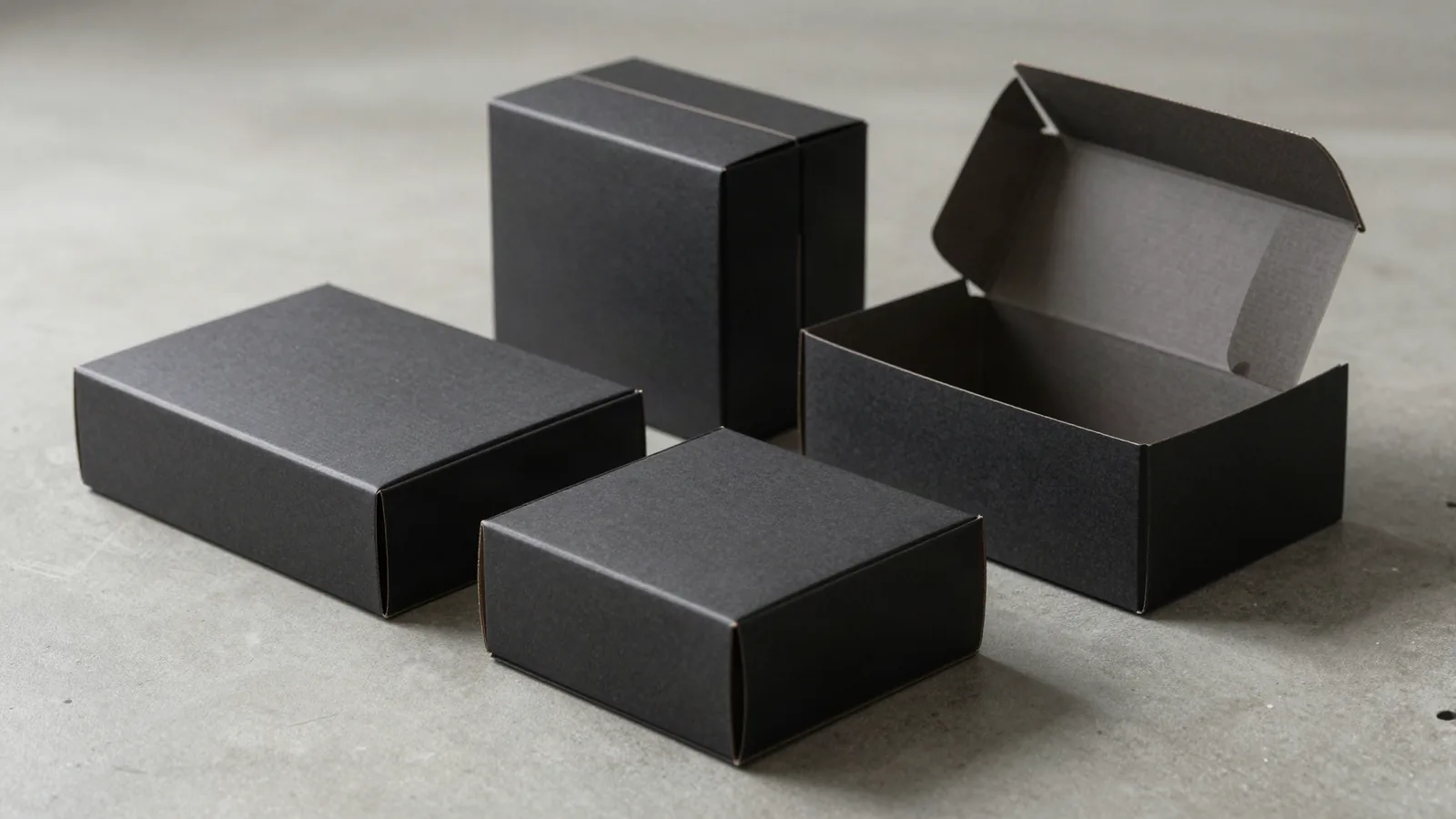




















































Custom delivery packaging is the outer package planned around the trip from packed product to recipient. A dieline is the flat cutting template for that package. Start with the item in its primary package, then record inside length x width x depth, packed orientation, insert, closure, label area, and finished outside length x width x height. Catalog references include custom drone packaging boxes, custom greeting card packaging, custom tin packaging, and custom screw packaging. See custom packaging solutions when a product needs a primary package and a delivery layer.
What does custom delivery packaging have to control?
The handoff sequence sets the brief: the pack station, carrier, and recipient each place a different demand on the package. A product can arrive intact and still cause trouble if an insert loads slowly, a closure catches, or a label crosses a seam. Separate the product package from the outer package.
For one-piece orders, a compact cavity and quick closing motion may be enough. Several parts need an insert or divider. Put those decisions in the brief before artwork is placed.
Which measurements should go on the quote?
Inside dimensions describe the cavity; outside dimensions describe the delivery envelope. Dimensional weight is a carrier calculation based on package volume instead of scale weight. For US ground planning, a common formula is L x W x H / 139. Record both sets of dimensions because board thickness, insert height, and flap clearance can change the outside number.
| Package layer | Record | Delivery question |
|---|---|---|
| Primary package | Inside length x width x depth | What cavity and orientation does the product need? |
| Insert or dunnage | Divider, cavity, wrap, spacer, or tray | Where does each component sit? |
| Delivery structure | Mailer, carton, sleeve, shipper, or rigid outer | How does it close and open? |
| Carrier record | Outside length x width x height | What envelope enters dimensional planning? |
Use inside length x width x depth for product fit. Use outside length x width x height for the carrier envelope. Measure the closed structure, not the flat sheet. A formed box can gain height when flaps and an insert are in place.
Which corrugated flute fits the outer package?
E flute has a finer profile and a smoother print surface; B flute and C flute provide more board depth for shipping-led construction. Flute choice affects thickness and stacking strength, and the letter alone does not finish the specification. 32 ECT is a common corrugated strength designation for planning. Check box size, board direction, packed load, stack pattern, closure, and route before approval.
Which closure should a delivery package use?
FEFCO 0427 identifies a roll end tuck top with a hinged top panel and tuck closure. A straight tuck end and a reverse tuck end use different flap sequences. An auto-lock bottom or crash-lock base changes setup and bottom support. A sleeve can cover a tray or inner carton. A two-piece rigid box, magnetic flap, or drawer or slide format changes how the recipient reaches the product. Compare the opening motion with the packed product in place.
How should the primary package and shipper fit together?
The inner package and the outer shipper need separate jobs and a shared loading orientation. A tin may need a fitted carton or insert around it. A flat greeting card package needs support that keeps the contents from bending. A tall candle package needs clearance for its lid and base. A product with several components may need a divided box before it enters the shipper. Check fit, outside dimensions, opening direction, label area, and presentation together.
How do print and finish affect delivery packaging?
Printing method follows substrate: offset CMYK suits detailed paperboard artwork, flexo is commonly used on corrugated surfaces, and digital printing suits short runs or artwork changes. Matte and gloss lamination alter sheen. Soft-touch adds a tactile layer. Spot UV creates a hard glossy area, but it can crack across score and fold lines. Foil stamping, embossing, and debossing need placement away from folds, seams, glue areas, and label zones. PET window material commonly falls around 0.2 to 0.3 mm. Mark the window area on the dieline before the outer structure is approved.
What should go in a delivery packaging quote brief?
A quote needs six pieces of information: packed product, structure, board, artwork, outside size, and destination.
- Packed product dimensions, orientation, and primary package.
- Insert, divider, wrap, spacer, tray, card, or accessory.
- Mailer, carton, sleeve, shipper, rigid outer, and closure format.
- Board or flute direction, print method, finish, and window needs.
- Finished outside length x width x height, label area, and seam locations.
- Delivery destination and the handling or presentation priority.
A good request puts the product, inner package, and outer shipper in separate lines. It also marks scores, glue, label zones, and artwork panels. The dieline can then solve the actual job.
Custom Packaging Lane quotes custom delivery packaging to a 100-unit minimum, with pricing from $0.49 per unit at volume, quoted to spec. Production is typically 8 to 10 business days after proof approval, plus delivery. Free US shipping and free design support are available, with a free dieline for the planning stage. The $19.99 sample kit is credited to the first order. Put product dimensions, packed orientation, and the intended delivery route in the request.
Frequently Asked Questions
What is custom delivery packaging?
Custom delivery packaging is the outer package that carries a product or primary package to the recipient. It can be a mailer, folding carton, corrugated shipper, sleeve, rigid outer, or a combination. The specification should separate inside length x width x depth for fit from outside length x width x height for the delivery envelope, then map the closure, insert, label area, and loading orientation.
How do I reduce empty space in a delivery package?
Start with accurate inside length, width, and depth for the product and any insert, then confirm the packed orientation and removal access. Compare a fitted carton, mailer, tray, divider, or spacer around that geometry. Check outside length, width, and height separately because empty volume changes the delivery envelope and can affect dimensional weight.
Which corrugated flute fits a delivery outer?
E, B, and C flutes are common corrugated references. E flute has a finer profile, while B and C flute provide more board depth for shipping-led construction. 32 ECT is a common strength designation. The final choice still depends on box size, load, stack pattern, closure, and route.
Can delivery packaging carry printed artwork?
Yes. Offset CMYK suits detailed paperboard artwork, flexo is commonly used on corrugated surfaces, and digital printing suits short runs or artwork changes. Matte or gloss lamination, soft-touch, spot UV, foil stamping, embossing, and debossing need placement around folds, seams, glue areas, and label zones.
What information belongs in a delivery packaging request?
A delivery packaging request should include the packed product, inside length x width x depth, orientation, insert, closure, outside length x width x height, label area, artwork panels, finish locations, destination, and handling route. Separating the primary package from the outer shipper gives the structure and carrier calculation clear inputs.












