




























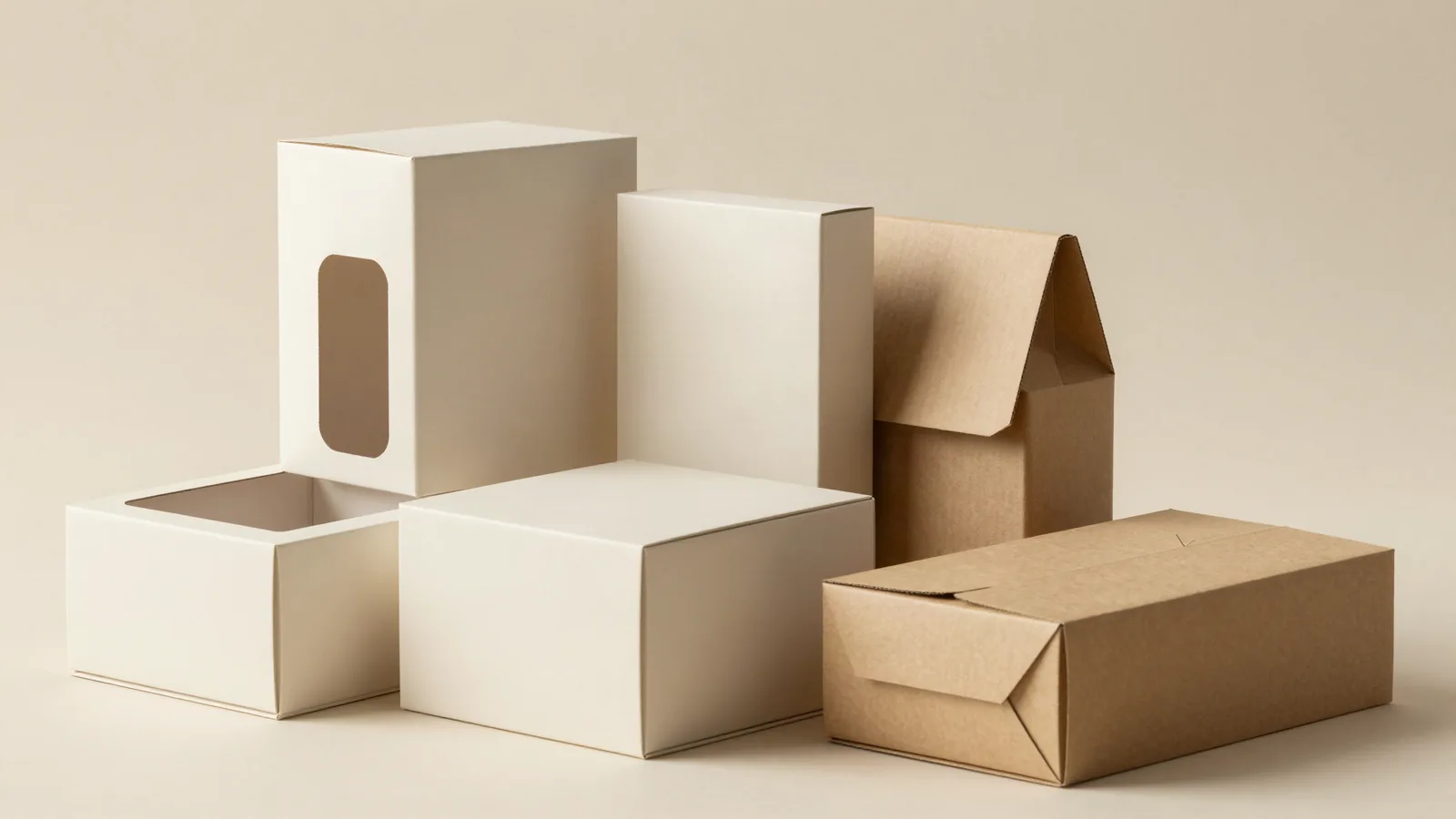




















































What does LWH mean on a box?
Length and width describe the base; height or depth is the remaining direction. LWH is normally written in a fixed order, so inside length x inside width x inside height tells a printer which side each number describes. Depth often replaces height when a box is shown front-on or lying flat. Say the terms in words if the shape is unusual.
Fit work starts with the usable cavity. Outside length x width x height belongs to shipping, pallet, and storage planning. Inside dimensions belong to product fit. Mixing the two is how a box arrives with the right numbers and the wrong cavity.
How should I measure a box for a quote?
A steel rule should touch the usable cavity, not the outside wall. Measure the box in its normal orientation, record inches or millimeters, and mark the longest base side as length. If the item has a lid, flap, or insert, measure the space the product actually occupies after those parts are installed.
| Measurement | What it describes | Common mistake |
|---|---|---|
| Length | The primary inside span from one end to the other | Changing the longest side between versions |
| Width | The inside span across the shorter base direction | Measuring outside walls instead of usable space |
| Height or depth | The inside distance from base to top, or front to back | Ignoring lid, flap, closure, or insert clearance |
| Tolerance | About 1/16 inch, or 1.5 mm, as a planning reference | Assuming the nominal number describes every finished surface |
A general inside-measurement tolerance of about 1/16 inch, or 1.5 mm, is a useful convention to discuss during sampling. The finished fit also reflects board caliper, the thickness of the board, structure, material compression, folds, closure design, insert material, and the product itself. A tight cavity can slow filling; excess space lets the product move.
Which structures change the usable LWH?
The fold pattern can shrink the usable cavity even when two boxes share the same outer size. A straight tuck end, reverse tuck end, auto-lock bottom, crash-lock, mailer, two-piece rigid box, drawer or slide box, and sleeve all use dimension language, but each gives the panels and closures a different job. A mailer adds flaps and dust panels around the cavity. A rigid box may need separate base and lid measurements.
An insert can reduce the open cavity without changing the outside box. Describe the product and insert together. Custom foam box inserts can occupy part of the internal volume. Compare wine box packaging, shoe box packaging, and custom DNA test kit boxes when the product orientation or internal components change the dimension request.
Does LWH affect shipping calculations?
Carrier math uses packed outside dimensions, so the number for shipping is not the number used to check product fit. For US ground parcel planning, a common dimensional-weight convention is L x W x H divided by 139. That formula is a shipping reference, not a rule for how tightly the product should sit.
Record the finished packed size, units per shipper, gross weight, and number of cartons. Do not measure an empty retail box and call it the shipper. A thicker board, insert, sleeve, or overpack can increase the outer dimensions; pallet planning also needs stacking orientation, carton count, and the weakest panel or closure.
What should go on a dieline before proof?
A dieline is the flat cutting template that maps panels, scores, trim, bleed, and glue tabs before a printer cuts the sheet. Start it from the product dimensions, then check the assembled shape, closure movement, and insert fit. The digital proof should show where the artwork sits on that template before anything prints.
Keep type away from scores, trim, glue tabs, tuck areas, and closure edges. Leave bleed on the file. RGB artwork can shift when it is converted for press, while low-resolution art can print soft. A barcode set too close to a score can become difficult to scan after folding. These are cheap fixes before approval and expensive fixes after printing.
- Label every dimension as inside or outside, with the unit and orientation.
- Mark folds, scores, seams, glue tabs, closure parts, and insert edges.
- Show the flat sheet and the assembled box, including any product-facing panel.
- Check the actual product in a sample before locking the cavity.
How do I request a box with LWH specified?
A quote request should put the product, dimension convention, structure, and protective parts on one page. Send inside length x width x height or depth, outside size if shipping matters, intended orientation, insert plan, material, finish, artwork status, delivery location, and shipping use. If a prototype exists, include photos of the closed box, open box, and loaded cavity.
Custom Packaging Lane quotes to spec from a 100-unit minimum, with pricing from $0.49 per unit at volume. Production is typically 8 to 10 business days after proof approval, plus delivery. Free US shipping, free design support, and a free dieline are available. The $19.99 sample kit is credited to the first order. Use the custom packaging solutions hub to connect LWH with structure, artwork, and fulfillment planning.
Frequently Asked Questions
Should box dimensions be inside or outside measurements?
Inside measurements answer whether the product or insert fits, while outside measurements answer shipping, storage, pallet planning, and carton count. State the convention in every quote request, along with units and product orientation. A physical prototype then shows how board caliper, folds, closures, and inserts change the usable cavity.
What is the correct order for LWH?
LWH means length, width, and height, although packaging specifications sometimes use length, width, and depth for the third value. Define each side in words or with a sketch when the box is not symmetrical. For many cartons, inside length x inside width x inside depth makes the intended product fit easier to check.
How much tolerance should I allow for a custom box?
About 1/16 inch, or 1.5 mm, is a common planning reference, but the finished fit also reflects board caliper, folds, compression, insert material, and the product. A tight cavity can slow filling, while excess clearance allows movement. Test a physical prototype with the actual product before approving final dimensions.
Does LWH affect shipping cost?
Packed outside dimensions belong in shipping calculations, while inside dimensions belong in product-fit checks. For US ground dimensional weight, a common convention is L x W x H divided by 139. Inserts, sleeves, thicker board, and overpacks can increase the outer size, so measure the packed shipper rather than the empty retail box.
Can an insert change the LWH I need?
Yes. An insert can consume part of the cavity even when the outside box stays the same. Specify the insert material, pocket or divider layout, product orientation, and lift clearance with the box dimensions. Check the loaded insert inside the closed structure, because the lid, flap, or sleeve can reduce usable space.












