


































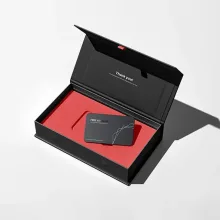














































Custom shipping packages are planned around the full parcel path: product loading, closure, storage, carrier handoff, and delivery. A retail carton handles presentation, while an outer shipper handles the transport layer. A dieline is the flat cutting template used to print, cut, and fold a package. Start with the product and the packed route, then work outward to the structure, board, artwork, and outside dimensions.
A shipping brief should name the product, accessories, orientation, insert, cavity, closure, print scope, finish, and assembled outside size. If the retail package and parcel package do different jobs, quote them as separate layers in one pack-out plan. A package can look right on screen and still fail when a score cuts through type, a flap catches an insert, or the product rattles inside an oversized cavity.
What should custom shipping packages accomplish?
Carrier entry and product fit are the first checks. Give the product dimensions, accessories, orientation, insert or divider needs, opening direction, and the point where the closed package enters a mailer, carton, or carrier network.
Keep the inner cavity separate from the outside shipper footprint. That distinction controls the product fit, the packed dimensions, the loading sequence, and the closure. It also gives the printer enough information to draw the dieline around the real pack-out instead of a guessed box size.
Which shipping package format should I compare?
Paperboard fits printed presentation, corrugated fits parcel handling, and rigid construction holds a set shape. In the table, pt means points, a board-thickness measure; GSM means grams per square meter, a paper-weight measure; ECT means edge crush test, a corrugated strength reference. FEFCO 0427 is a common construction code for a roll end tuck top mailer.
| Format | Common construction reference | First buyer check |
|---|---|---|
| Printed inner carton | SBS, C1S, or C2S paperboard, 12 to 24 pt | Printed panels and product fit |
| Mailer | Roll end tuck top, commonly referenced as FEFCO 0427 | Pull direction, opening, and closure |
| Corrugated shipper | E, B, or C flute, with 32 ECT as a common reference | Outside size and stacking route |
| Rigid presentation layer | 1.5 to 3 mm chipboard wrapped in 100 to 157 gsm art paper | Separate presentation from transport |
Review custom shipping boxes for an outer-carton starting point. Compare custom folding shipping boxes when a folding structure is part of the route. and custom candle shipping boxes show why product shape, cavity, closure, and packed dimensions belong in one specification.
How should I measure a ship-ready package?
Write dimensions as length x width x depth, and label the inside cavity, assembled outside size, and packed shipment size. Inside measurements control fit, clearance, and inserts. Outside measurements control the closed footprint that enters a bag, carton, or carrier network.
About 1/16 in, or 1.5 mm, is a general packaging convention for tolerance, subject to the chosen structure and finish. For US ground planning, carrier dimensional weight commonly uses L x W x H / 139. Use the outside dimensions of the closed packed shipment, and keep the product cavity separate from the outer shipper footprint.
Which closure fits the packing sequence?
Loading direction should decide the closure. Straight tuck end and reverse tuck end cartons create a defined top opening. An auto-lock bottom or crash-lock base changes the assembly action. A roll end tuck top mailer combines a shipping-oriented body with a top closure.
Map loading, insert placement, sealing, and carrier entry before choosing the structure. The closure must work for the person packing the order, not only for the finished photo. A flap that needs force can slow packing and catch the product edge.
Should I use an inner carton and an outer shipper?
Two layers make sense when printed presentation and parcel handling need different structures or sizes. The inner carton can carry product information and finish; the outer shipper can focus on closure, packed dimensions, and movement.
A single carton can cover both jobs when its cavity, board, closure, and outside size fit the whole workflow. Check the packed product, insert, sealing step, storage position, and carrier footprint together before adding a second layer.
How should print and finishing be planned?
Flexo is a common corrugated print reference. Offset CMYK means cyan, magenta, yellow, and black printing, and it suits detailed folding-carton artwork. Digital printing can suit a short run, a design test, or changing artwork. Matte or gloss lamination changes glare and surface feel. Soft-touch, spot UV, foil stamping, embossing, and debossing belong on named panels.
Mark folds, seams, glue areas, closure edges, and finish boundaries on the dieline. Keep type away from scores and glue tabs. Low-resolution art stays soft, RGB art can shift when converted for press, and missing bleed can expose the board. At a press check, inspect ink coverage, panel registration, small type, barcodes, and the finish boundary before the run continues.
What should I include in a shipping-package brief?
- Product, accessories, orientation, insert, and divider requirements.
- Inside cavity measurements and closed outside package dimensions.
- Inner carton, mailer, outer shipper, sleeve, or tray relationships.
- Material, flute, board direction, print coverage, and finish areas.
- Loading sequence and whether carrier dimensional weight matters.
- Planned quantity and delivery destination.
Custom Packaging Lane quotes custom shipping packages from a 100-unit minimum, with pricing from $0.49 per unit at volume, quoted to spec. Production is typically 8 to 10 business days after proof approval, plus delivery. Free US shipping and free design support are available, and a free dieline is included in the setup. The $19.99 sample kit is credited toward the first order. Send the product dimensions and pack-out brief through custom packaging solutions.
Frequently Asked Questions
How are custom shipping packages different from retail cartons?
A retail carton usually handles printed presentation and product access, while a shipping package must also account for loading, closure, outside dimensions, and the parcel route. Many projects use both layers. Define the inner carton and outer shipper separately, then check how the components fit during packing, sealing, and transport.
What does FEFCO 0427 describe?
FEFCO 0427 is a common reference for a roll end tuck top mailer structure. The code identifies the general construction, not the finished package. Dimensions, board, closure details, print, inserts, and the packed product still need their own specification before approval.
Do carrier calculations use the inside or outside package size?
Carrier planning uses the outside dimensions of the closed packed shipment, while product fit begins with inside measurements. Record both. Include the insert, clearance, board thickness, flaps, and outer shipper so the shipping footprint is not confused with the retail carton cavity.
When should I separate an inner box from an outer shipper?
Separate an inner carton from an outer shipper when the product needs printed presentation but the parcel route needs a different closure, flute, size, or handling approach. A single box can work when its structure, cavity, outside dimensions, and closure serve both jobs. Check the packed product before choosing.
What details should a shipping-package brief contain?
A shipping-package brief should contain the product dimensions, accessories, orientation, insert, cavity, outside size, structure, board or flute, print coverage, finish, loading sequence, quantity, and destination. Those details let the quote distinguish a retail carton from a mailer or corrugated outer shipper.