
















































































Scarf packaging starts with the textile in the condition it will enter the package. A folded scarf needs a finished footprint, while a rolled scarf needs roll diameter and length. State whether the package is for shelf presentation, gifting, direct shipment, or more than one of those jobs, then choose a box, sleeve, mailer, or insert-supported format. The scarf boxes product page is the closest catalog reference. Towel packaging and sock packaging are soft-accessory comparisons.
What should scarf packaging do for a folded accessory?
Inside clearance should protect the fold without leaving the scarf loose against the closure. Shelf display, gifting, and direct shipment each put a different demand on the opening and outer structure. If the scarf is rolled, record diameter and length; if it is folded, record the finished footprint after folding. A package based on fabric dimensions alone can miss the bulk created by tissue, wrap, or a pouch.
How should I state scarf box measurements?
Use length x width x depth, with inside and outside measurements labelled separately. Inside dimensions are the useful starting point for fit, and the packed orientation belongs beside each measurement. About 1/16 in, or 1.5 mm, is a common tolerance reference, but the selected board, folds, insert, and finish still need confirmation. Include tissue, wrap, pouch, and the clearance needed for placement.
Which box structure fits the way the scarf is sold?
A drawer or slide gives the customer a pull-out motion, while a sleeve depends on an inner tray or wrap for support. A two-piece rigid box separates the base and lid. A roll end tuck top mailer, commonly associated with FEFCO 0427, can combine retail presentation with shipment. The right choice follows the opening, product support, storage, artwork area, and whether the package travels inside a secondary carton.
| Structure | When to consider it | Buyer decision |
|---|---|---|
| Sleeve | The inner wrap or tray already provides the main support | Choose the sleeve overlap and opening direction |
| Drawer or slide | The opening motion is part of the presentation | Define pull direction and inner clearance |
| Two-piece rigid | The package needs a separate base and lid | Confirm lid fit, stacking, and storage space |
| Roll end tuck top mailer | The same format must present and travel | Separate retail artwork from shipper requirements |
Which materials are common for scarf boxes?
Folding cartons commonly use SBS, C1S, or C2S paperboard in the 12 to 24 pt range. Kraft board in the 18 to 24 pt range has a different printed surface. Rigid formats commonly use 1.5 to 3 mm chipboard wrapped in 100 to 157 gsm art paper. A reusable textile pouch may use cotton canvas in the 8 to 12 oz range. These are typical industry references, so the board and wrap must be checked against the structure and packed scarf.
How should print and finish support the fabric?
Offset CMYK suits detailed color and broad panel coverage, while digital printing can suit a short-run direction or early artwork test. RGB art can shift when converted for press, and type set too close to a score can lose readability after folding. Matte or gloss lamination changes the surface, soft-touch changes the feel, and spot UV creates a selected glossy area. Foil stamping, embossing, and debossing add reflective or relief effects. Mark each treatment on the artwork and keep details away from folds, glue areas, and the scarf opening.
Do I need an insert or product window?
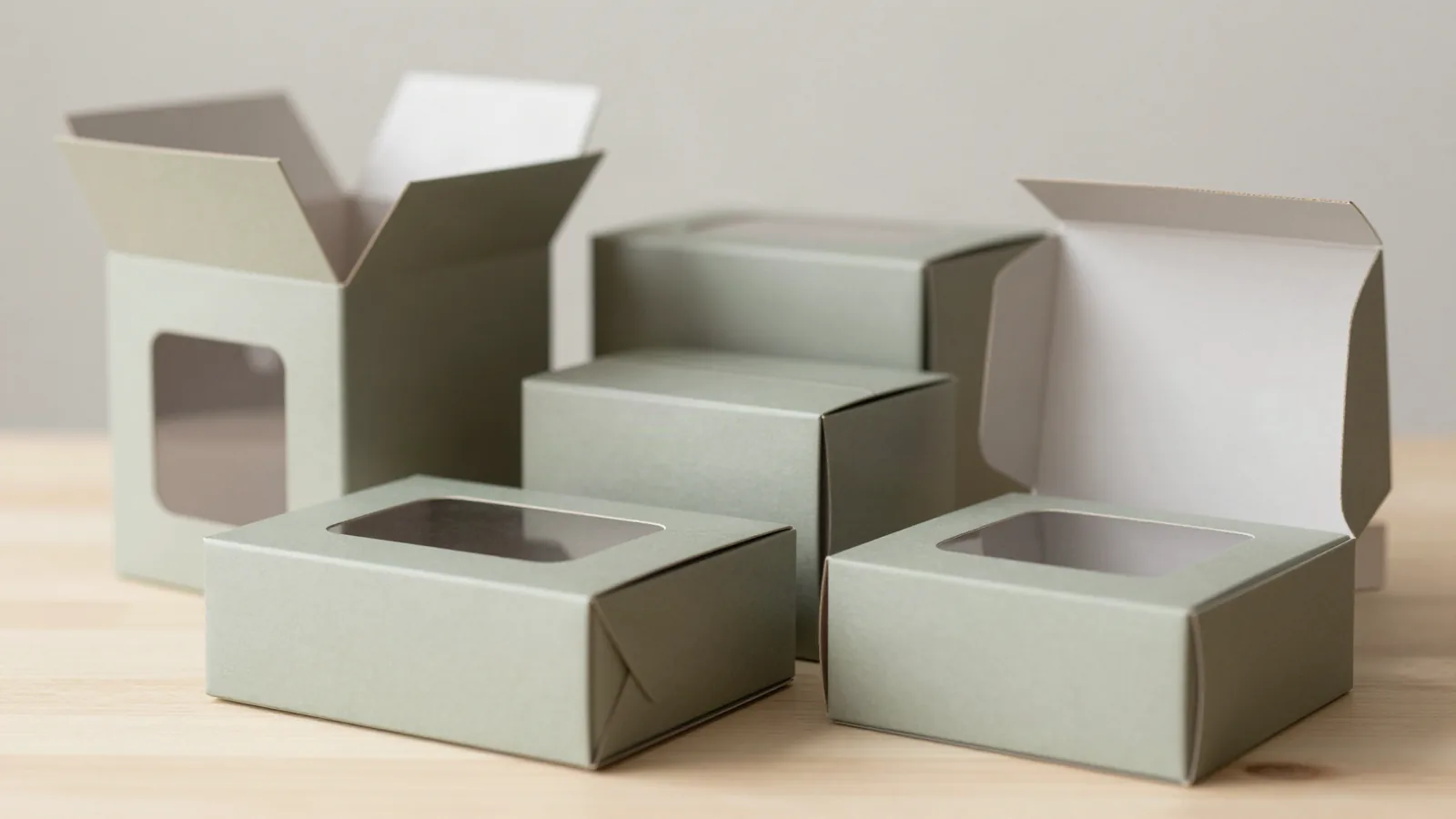
An insert holds a folded scarf in a repeatable position and keeps the front panel aligned during handling. State whether support belongs at the center, edges, or around a separate accessory. If the fabric should be visible, PET window material in the 0.2 to 0.3 mm range is a common reference for window patching. The window must clear folds and glue areas. A printed sleeve or lid panel gives full coverage when the fabric should stay covered.
What should I send for a scarf packaging dieline?
A dieline is the flat cutting template used to print and cut the package. Send the packed dimensions with the artwork map, closure, insert, window, folds, seams, and glue areas marked against that template. Include these details:
- Provide the actual folded or rolled product dimensions and orientation.
- State the desired inside clearance and whether tissue, wrap, or a pouch is included.
- Choose a structure, closure, insert plan, and opening direction.
- Mark artwork panels, seams, folds, window areas, and finish treatments.
- Explain whether the package will sit on a shelf, ship alone, or travel inside a secondary carton.
CPL quotes scarf packaging to spec from a 100-unit minimum, with pricing from $0.49 per unit at volume, quoted to spec. Production is typically 8 to 10 business days after proof approval, plus delivery. Free US shipping, free design support, and a free dieline are available. The $19.99 sample kit is credited to the first order. Use custom packaging design when the folded or rolled dimensions and artwork are ready.
Frequently Asked Questions
How should I measure a scarf for packaging?
A scarf for packaging should be measured in its packed condition, either folded or rolled. Record length x width x depth, then state the orientation, wrap, pouch, and desired clearance. If folding changes the bulk, provide the finished folded footprint; if rolling is used, provide roll diameter and length. Fabric dimensions alone are not enough for a fit check.
How does a scarf package change between shelf display and shipment?
A shelf package can prioritize the opening, visible fabric, and front-panel alignment, while a shipping format needs product support and a controlled outer footprint. A sleeve, drawer, or two-piece rigid box may suit presentation, while a roll end tuck top mailer, commonly associated with FEFCO 0427, can combine presentation with shipment.
How much fabric should a scarf box reveal?
A scarf box can use PET window material in the 0.2 to 0.3 mm range as a common industry reference for a visible product area. Plan window patching with the panel layout so the opening clears folds, seams, and glue zones. State how much fabric should be visible and whether an insert must hold the scarf behind the window.
What material is common for gift-ready scarf presentation?
Folding cartons commonly use SBS, C1S, or C2S paperboard in the 12 to 24 pt range. A rigid option commonly uses 1.5 to 3 mm chipboard wrapped in 100 to 157 gsm art paper. Kraft board in the 18 to 24 pt range gives another surface direction, while cotton canvas in the 8 to 12 oz range can suit a reusable textile pouch.
What artwork details help a scarf dieline?
Artwork for a scarf dieline should identify the logo, panel priorities, color direction, window or closure areas, and finish treatments. Mark folds, seams, glue zones, and surfaces that should stay visually quiet. Include the folded or rolled orientation so artwork follows the real opening. A product sample or dependable drawing connects the artwork to the fit.












