












































































Personalized subscription packages are built around a repeat shipment, so the outer box has to fit a packing routine as well as a product. The cleanest brief separates fixed parts, such as brand panels and the label area, from parts that change, such as an insert, card, or monthly assortment. Start with custom subscription mailer boxes and custom subscription boxes when the shipping and opening sequence need to be considered together.
What must stay consistent across subscription shipments?
The outer dimensions, closure, label zone, and brand panels should stay steady when the assortment changes. Those fixed points give the packer a repeatable setup. The changing parts can sit inside the same shell: a divider, card, sleeve, or variable panel can move without forcing a new carton plan for every cycle.
Measure the full assortment, rather than the product that ships most often alone. The largest item sets the cavity and closure clearance. The smallest item shows whether empty space will let the contents slide. If the box travels with tissue or secondary packaging, include that material in the fit review.
Which structure fits a subscription box or mailer?
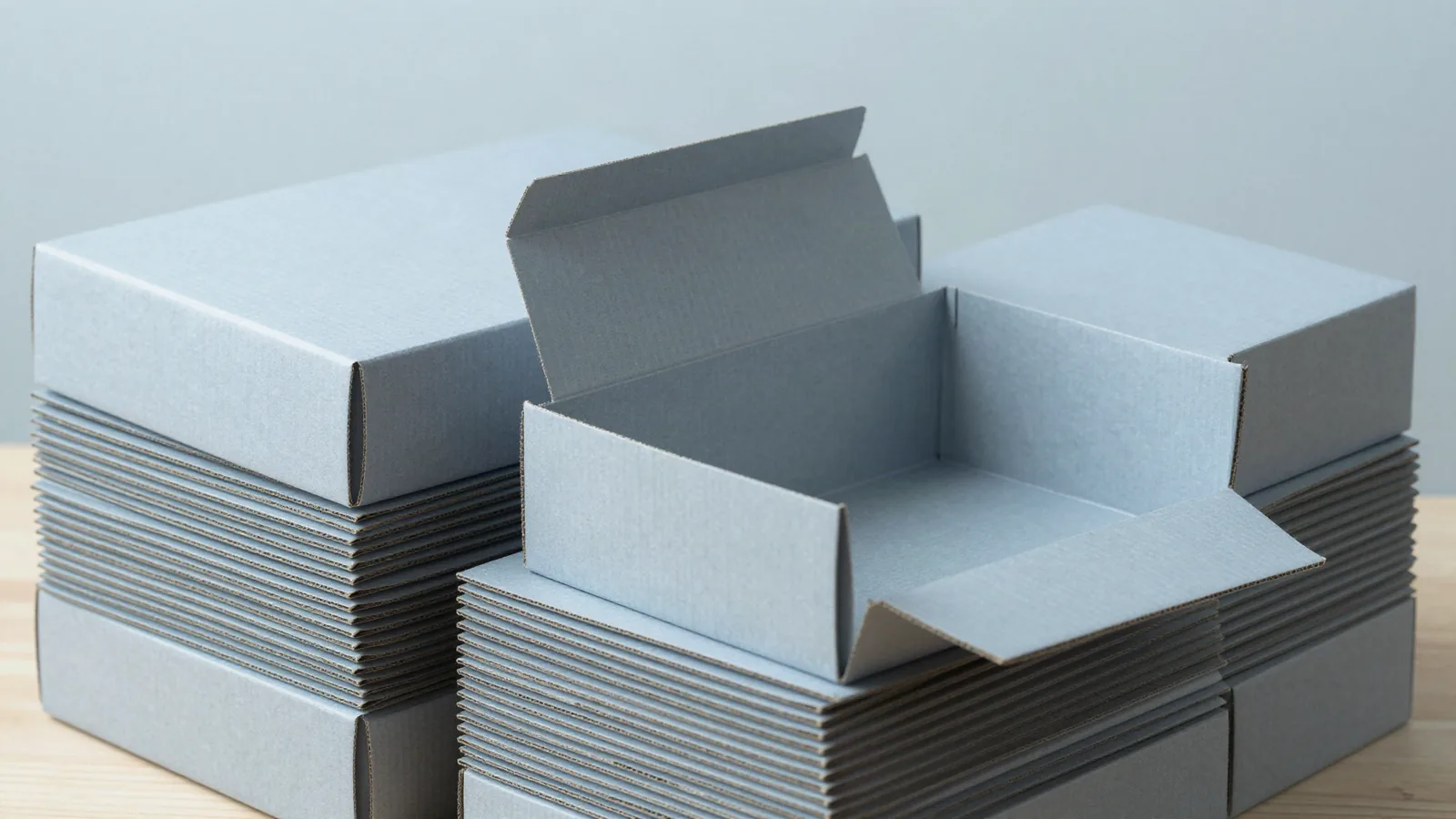
A roll-end tuck-top mailer puts the shipping carton and presentation in one piece, while a folding carton can organize a set inside a separate outer shipper. Straight tuck end and reverse tuck end cartons use different tuck directions. Auto-lock bottom and crash-lock bases change assembly. A rigid two-piece box or drawer format gives a more deliberate reveal, and a sleeve wraps an existing inner box.
For a product-specific brief, custom candle subscription boxes can be compared with coffee subscription boxes. The product, its primary package, and the way it enters the box should decide the insert and closure. The monthly assortment should not be an afterthought.
How should inserts control movement as products change?
An insert is the internal paperboard or corrugated piece that separates products and limits empty space. Give each item a defined pocket or divider position, then test the largest item, the smallest item, and the full assortment together. A cavity cut too close to the product can slow packing, while a loose cavity lets the item rattle against the carton wall.
Keep cards, tissue, and secondary packages in the same test. They change the available height and can press against a tuck flap. A good insert plan also leaves the product visible when the box opens, so the first item does not hide the rest of the set.
Which board and flute choices fit recurring shipments?
SBS, C1S, and C2S paperboard commonly range from 12 to 24 pt, while kraft board commonly ranges from 18 to 24 pt. Caliper means board thickness. Corrugated flute is the shaped middle layer inside the board, and 32 ECT means edge crush test, a common strength reference for a shipping carton.
| Reference | Typical material or value | Practical choice |
|---|---|---|
| SBS, C1S, or C2S | 12 to 24 pt paperboard | Smooth printed cartons and inserts |
| Kraft board | 18 to 24 pt board | Natural paper surface for cartons or mailers |
| E-flute | Lower profile corrugated board | Printed mailers with a compact fold |
| B-flute | Moderate corrugated profile | More board depth around a recurring shipment |
| C-flute | More pronounced corrugated profile | Outer cartons with more interior room |
| 32 ECT | Edge crush test reference | Board reference for the shipping brief |
How should recurring artwork be prepared for printing?
Offset CMYK suits detailed fixed artwork, digital printing suits shorter or changing runs, and flexo is common on corrugated board. A subscriber name, seasonal panel, or variable message can change while the outer shell stays fixed. A dieline is the flat cutting template that shows panels, scores, cuts, glue areas, and folds. Keep the subscriber message, product instructions, barcode, and fulfillment label zone on clear panels that remain readable after folding.
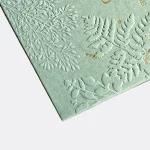
Matte or gloss lamination changes reflection. Soft-touch changes the hand feel. Spot UV, foil stamping, embossing, and debossing can mark a selected logo or panel, but essential instructions should stay away from folds, seams, glue, and reflective effects. If artwork changes each cycle, keep variable copy away from structural movement and send the changed file through the same proof review.
What should be tested before approving a subscription package?
A filled sample should pass the same loading and closing routine used by the packer. Write dimensions as length x width x depth and label them as inside or outside measurements. A common tolerance is about 1/16 in, or 1.5 mm. Check product clearance, insert position, label space, closure effort, removal, and the smallest item's movement.
Review low-resolution art, RGB conversion, bleed, panel order, fold direction, and glue zones on the proof. Then test the filled configuration in the packed state used for delivery. That sequence catches the problems that appear when an attractive flat file meets a real assortment.
Custom Packaging Lane quotes personalized subscription packages from a 100-unit minimum, with pricing from $0.49 per unit at volume, quoted to spec. Production is typically 8 to 10 business days after proof approval, plus delivery. Free US shipping, free design support, and a free dieline are available. The $19.99 sample kit is credited toward the first order. Compare materials and structures through custom packaging for small business, then send the finished brief for a quote.
Frequently Asked Questions
How can a subscription package handle a changing monthly assortment?
A personalized subscription package can keep the outer dimensions, closure, brand panels, and label zone fixed while inserts, cards, or variable artwork change. Size around the largest planned product, then check the smallest product for movement. Test the complete packed assortment, including tissue or secondary packaging, before the dieline is approved.
Should a subscription package be a mailer or a folding carton?
A subscription mailer combines shipping and presentation in one carton. A folding carton can organize the product set inside a separate outer shipper. Choose between them by comparing closure action, insert needs, print surface, packing routine, label placement, and the amount of variation across monthly assortments.
How do inserts prevent movement in subscription packaging?
A subscription insert is an internal paperboard or corrugated component that separates products and limits empty space. It should hold the largest item without crushing smaller pieces, keep the smallest item from rattling, and leave enough room for the closure. Check the insert with the actual assortment, not an empty box.
Which print methods and finishes suit subscription packaging?
Offset CMYK suits detailed fixed artwork, digital printing suits shorter or changing runs, and flexo is common on corrugated board. Matte or gloss lamination, soft-touch, spot UV, foil stamping, embossing, and debossing should be chosen after the panel hierarchy is set, with essential copy clear of folds and glue.
What should a subscription packaging proof show?
A subscription packaging proof should show panel order, fold direction, closure, label zone, insert position, product clearance, and bleed. Check RGB artwork after conversion for press, keep type away from scores, and review the filled sample for loading, closing, opening, product movement, and removal. The physical test exposes fit errors a flat file cannot.