




























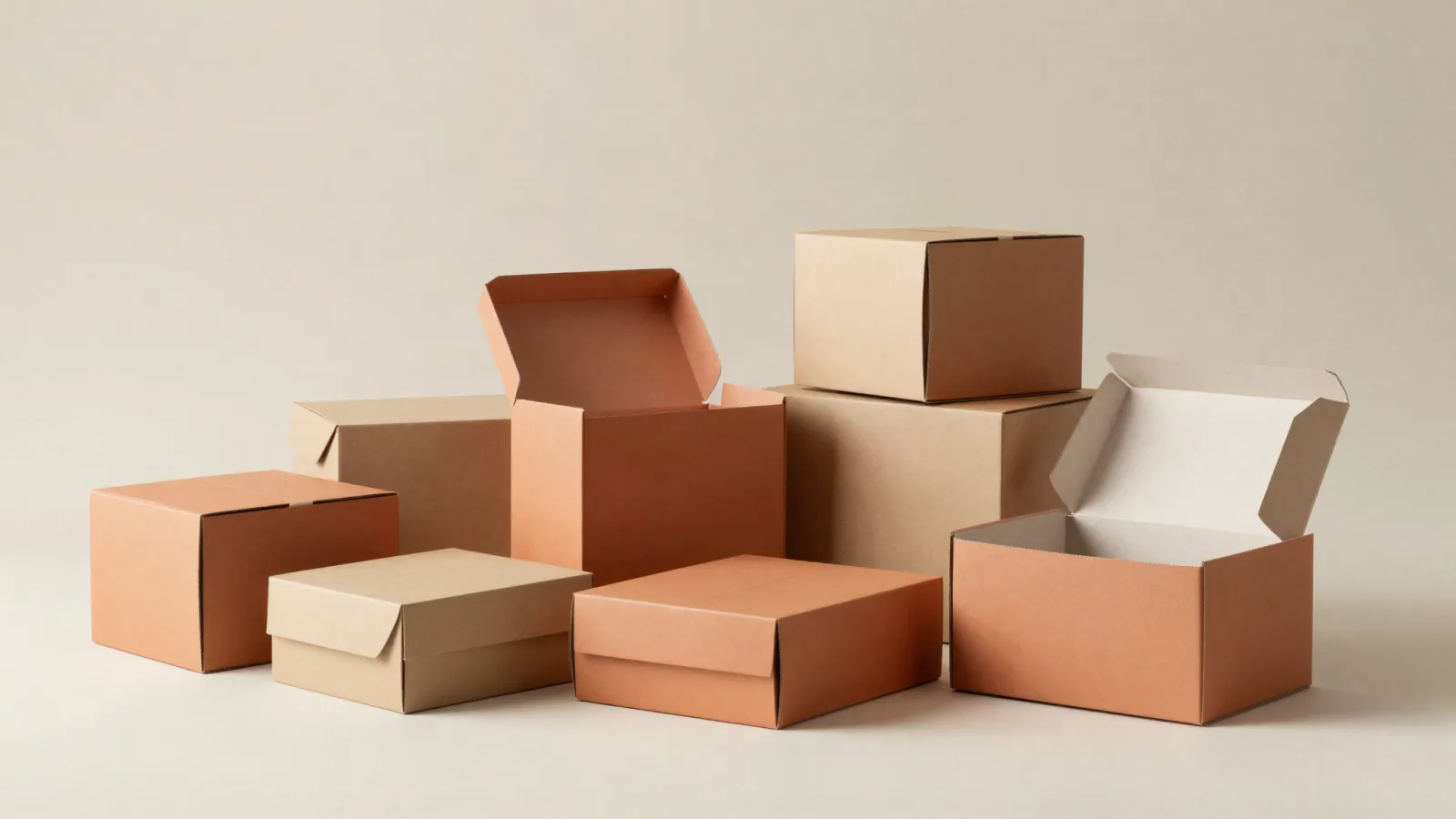




















































Discreet packaging starts with a plain or restrained exterior and a clear plan for what the recipient sees after opening. The outside does not have to look unfinished. It can use a quiet panel, a small brand mark, or a finish direction that keeps product information from dominating the closed package.
What does discreet packaging need to accomplish?
Discreet packaging needs to control what the closed package communicates while keeping the package structurally useful. Mark the words, colors, imagery, and product cues that should stay quiet, then decide what belongs inside. A plain exterior is an artwork and finish instruction, not a missing brief.
Describe the handoff before selecting the surface. A direct shipment, private-label program, and retail opening can require different panel maps. The outside may stay restrained while the inside carries the brand message, product information, or opening cue. That separation should appear in the first brief and the construction proof.
Which exterior treatment fits a discreet package?
The exterior treatment depends on how much the closed package should reveal. These routes give the designer a practical starting point.
| Exterior route | What the closed package shows | What to confirm |
|---|---|---|
| Plain exterior | Little or no prominent product information | Which panel stays neutral and which finish appears on it |
| Small brand mark | A limited identity cue without a full product message | Logo size, position, and contrast against the surface |
| Interior reveal | The main message after the package opens | Whether the first interior panel remains visible |
| Private-label surface | A consistent outside across related products | Which brand elements stay fixed across versions |
These are planning routes, not stock descriptions. CPL can confirm the construction after the packed item, panel map, material, finish, quantity, and destination are known.
How should the opening reveal carry the brand?
Map the opening from the closed package to the first product view. Mark the lid or flap, the panel seen first, the position of the insert, and the point where product information becomes visible. If the strongest message sits inside, make sure the product or insert does not cover it after assembly.
Keep the exterior and interior in one artwork file or panel map. A logo that looks balanced on a flat template can land beside a fold or behind an insert once the box is assembled. Review the closed view and the opened view together. The proof should show both.
What should a plain-exterior spec sheet record?
The spec sheet should name the desired outside level and identify every panel that carries information. It should also show the packed item, orientation, closure, interior reveal, and any fixed brand elements. A clear panel map gives the proof reviewer a short list to check.
- Exterior direction: plain, restrained, or brand-marked.
- Panels that need product information and panels that do not.
- Product orientation, closure, insert, and opening sequence.
- Permanent brand elements separated from product-specific copy.
Ask CPL to name the plain-exterior direction in the finish spec sheet. That wording keeps the approved construction, artwork, and proof pointed at the same outside appearance.
Can matte or gloss change the outside appearance?
Matte and gloss surfaces create different readings on a discreet package. Matte reduces reflection and keeps the outside visually quiet. Gloss reflects more light and can make printed color appear more pronounced. Choose the finish with the exterior visibility goal in mind, then check the result against the interior artwork.
A physical sample is useful here because a screen cannot show the full relationship between an understated outside, the opening edge, and a stronger printed inside. Inspect the closed package first, then open it and check the panel order.
Which CPL catalog pages help plan discreet packaging?
Use private-label packaging when a calm exterior needs to work across a brand family. Wax packaging can help compare a product-specific structure with a controlled outside view. Sock packaging and shoe box packaging show how fit, opening order, and panel placement change the brief.
For broader layout planning, visit custom packaging design. The MOQ is 100 units. Pricing is from $0.49 per unit at volume, quoted to spec, with the quote based on the selected structure, dimensions, material, artwork, finish, and quantity. Production is typically 8 to 10 business days after proof approval, plus delivery.
Free US shipping and free design support are available. The $19.99 sample kit can help compare the outside surface and inside presentation before final proof approval. Send the packed product, outside visibility preference, and interior panel plan with the quote request.
Is discreet shipping the same as discreet packaging?
No. Shipping privacy covers the outer shipper, carrier label, tape, and return-name presentation, while product packaging controls what appears after opening. A plain product box can still arrive inside a branded shipping carton, and a neutral mailer can still expose product details through label text. The shipment needs one instruction for every layer a recipient or bystander can see.
Use the custom mailer box range to select the outer format. Required carrier data such as the recipient address, routing barcode, and service mark remain visible, so optional marketing copy must be handled separately.
What label details can reveal what is being shipped?
A return name, reference field, SKU, product description, or branded tape can disclose an order even when every carton panel is blank. Test the label template with a realistic order record, then inspect the printed result rather than approving only a screen view. Carrier routing information stays in place, but internal reference text can often be written without naming the product.
Check transparent pouches, packing-list windows, and overlabels as well. A folded document can rotate inside a pouch, exposing text that the original mockup kept hidden. The return address also needs enough identity to support delivery and returns without adding optional product language.
Which corrugated board suits a discreet shipper?
E-flute gives a compact wall and relatively smooth print face, B-flute adds cushioning depth, and C-flute creates a deeper profile for shipping cases. Flute is the arched paper medium bonded between flat liner sheets. These common trade profiles describe construction, not an automatic protection result.
| Corrugated profile | Relative wall profile | Common packaging use |
|---|---|---|
| E-flute | Compact | Mailers with detailed graphics |
| B-flute | Deeper than E-flute | Shippers balancing cushioning and crush resistance |
| C-flute | Deeper than B-flute | Shipping cases needing a fuller corrugated wall |
A commonly specified 32 ECT grade is rated at 32 pounds per linear inch in the edge crush test. ECT measures resistance to edgewise compression. Board grade, flute, packed weight, box shape, and distribution route still need to be evaluated together.
Which closure keeps private contents out of sight?
A roll end tuck front mailer encloses its main tabs within rolled side walls and reduces open sightlines at the edges. A regular slotted shipping case closes with flaps meeting at the center, so tape and seam coverage need separate inspection. Bright interior printing can become visible through hand holes, tuck gaps, or a lid that does not seat fully.
Compare custom shipping boxes with custom folding shipping boxes using the actual packed item. Closure style affects assembly time, edge visibility, and whether the exterior stays square after cushioning is added.
How should a discreet shipment be tested before fulfillment starts?
One completed packout should be photographed from all six closed sides, scanned at the label, carried by its normal handholds, and opened in the intended sequence. Repeat the check under strong light to find transparent tape, overwrap, or gaps that reveal color and copy inside. Verify the first unit from fulfillment against the approved sample.
On corrugated board, flexographic printing commonly handles simple repeated marks, while digital printing is practical for short or versioned runs. Low-resolution artwork can make a small outer mark ragged, RGB color can shift during press conversion, and copy placed across a score can move onto the next panel. The compressed channel that guides a fold is called a score. The digital proof should show the assembled exterior, label zone, tape line, and seam positions. Use the sample kit to compare liner color and surface appearance under warehouse lighting.
Frequently Asked Questions
What does discreet packaging mean for a brand?
Discreet packaging uses a plain or restrained exterior while placing the brand, product information, or opening message in a planned location. The brief should state what the closed package shows and what the recipient sees after opening. Custom Packaging Lane then reviews the outside surface, interior panels, packed fit, and proof together.
Can discreet packaging still include branding?
Discreet packaging can include branding on the outside, inside, opening panel, or another approved surface. State which brand elements must remain visible and which should stay quiet. The proof should show the assembled closed and opened package so the logo position, panel order, and information hierarchy match the intended handoff.
What is the MOQ for discreet packaging?
The MOQ for discreet packaging is 100 units. Pricing is from $0.49 per unit at volume, quoted to spec, based on the structure, dimensions, material, artwork, finish, quantity, and destination. Share the plain-exterior direction and interior presentation plan so the quote reflects the actual package.
How do I choose a plain exterior finish?
Choose a plain exterior finish by first deciding how much the closed package should reveal, then marking the panels that stay neutral or restrained. Matte reduces reflection, while gloss reflects more light. Ask CPL to show the selected direction on the finish spec sheet and digital proof before anything prints.
Can a sample kit help with discreet packaging decisions?
The discreet packaging sample kit costs $19.99 and can help compare outside surfaces, printed interiors, and opening sequences before proof approval. Use the physical sample to judge the closed package first, then the interior reveal. The final construction still needs a quote based on the product and quantity.












