































































An empty Nike shoe box request can mean a blank storage carton, replacement packaging, a presentation box, or collection packaging with variable labels. Those jobs share a shoe-box subject but not a file brief. Put the intended use in the first line, then separate shoe fit, panel artwork, authorization status, and finish. Catalog references such as empty paper flip-top boxes and custom empty boxes can show how an unfilled package is described. They do not establish Nike specifications.
What does empty mean in a Nike shoe box request?
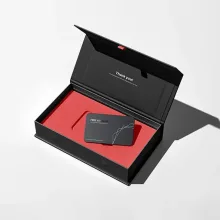
The carton state and artwork permission are separate fields in the brief. A blank storage carton may need a neutral surface and label panel. Replacement packaging needs approved marks and a defined panel map. A presentation carton needs a first-view panel, interior message, and finish direction. Collection packaging needs fixed artwork separated from size or product fields.
| Requested state | Artwork direction | Brief detail |
|---|---|---|
| Blank storage carton | Unprinted or neutral artwork | Identify the label panel and opening orientation |
| Replacement packaging | Only buyer-approved marks | Separate required information from decoration |
| Presentation carton | Planned panel artwork and finish | State the first-view panel and interior message |
| Collection packaging | Shared layout with variable labels | Separate fixed artwork from product fields |
Write the requested state plainly. The word empty does not grant artwork permission or define the finished use.
Can a Nike name or logo go on the box?
A Nike name, swoosh, or other protected mark belongs on the file only when the buyer is authorized to reproduce it. Supply the approved file and identify the panels where it may appear. If no authorization exists, request a neutral design with no recognizable third-party marks. The carton can still have a planned label area, controlled panel order, and defined finish.
Which label fields should share the panel?
A label panel should have one defined job, such as size, style reference, color description, SKU, barcode, or internal inventory note. Keep each field in a named area with quiet space around the type. A barcode should not cross a fold, cut, seam, or glue flap. When several sizes use one layout, separate fixed graphics from variable label fields.
What board fits a blank or printed folding carton?
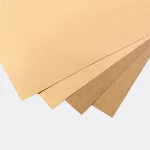
Board thickness should be compared with the closure and print coverage, not chosen from the shoe name. Folding cartons commonly use SBS, C1S, or C2S paperboard at 12 to 24 pt. Kraft board commonly falls at 18 to 24 pt. A rigid package commonly uses 1.5 to 3 mm chipboard wrapped in 100 to 157 gsm art paper. If the package has a viewing panel, PET, a clear plastic film, commonly falls around 0.2 to 0.3 mm. Offset CMYK suits detailed artwork, while digital printing can suit a short-run version or artwork test.
How do the closure and seams change the art?
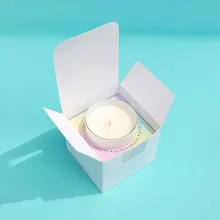
Straight tuck end, reverse tuck end, drawer or slide, and two-piece rigid boxes put the brand panel in different places. Scores, glue tabs, seams, folds, and closure edges should be visible beside the art. A sleeve can cover an inner tray, while a rigid lid and base keep separate surfaces. Choose the opening direction before setting the panel map.
What should the artwork proof catch before printing?
The digital proof should make the panel map readable at a glance. A dieline is the flat cutting template that shows cuts, scores, folds, glue areas, and windows. Check low-resolution images, RGB artwork converted for press, missing bleed, type near scores, barcode placement, and finish boundaries. A press check can then review registration, ink coverage, small type, and laminate edges before the run is released.
Which catalog references can frame an empty-packaging order?
Window display boxes and window boxes show how a clear panel changes the outside presentation. They are construction references, not Nike shoe specifications. For quantity-led planning, use wholesale custom packaging.
What should I send with the quote request?
A usable request identifies the use before the artwork is reviewed.
- State storage, replacement, presentation, or collection use.
- Provide inside length x width x depth and the packed shoe orientation.
- Separate fixed graphics from size, SKU, barcode, and label fields.
- Identify the permitted brand files and panels that must stay blank.
- Mark board, structure, print coverage, finish, and delivery destination.
Custom Packaging Lane quotes empty Nike shoe boxes with a 100-unit minimum. Pricing is from $0.49 per unit at volume, quoted to spec. Production is typically 8 to 10 business days after proof approval, plus delivery. Free US shipping, free design support, and a free dieline support preparation. The $19.99 sample kit is credited to the first order. Send the intended use and authorized artwork status with the request.
Frequently Asked Questions
Will footwear be included in the carton?
Empty Nike shoe boxes are packaging supplied without footwear. The buyer should state whether the carton is for storage, replacement packaging, presentation, or a collection layout. Shoe dimensions, pair orientation, tissue, accessories, and the intended opening give the structure brief enough information for fit and panel planning.
May a buyer add a Nike logo?
A Nike name or logo should appear only when the buyer is authorized to reproduce that artwork. Supply the approved file and identify the permitted panels. Without authorization, request neutral artwork with no recognizable third-party marks. A blank carton can still have a defined label area and organized panel layout.
Can one layout carry several size labels?
One carton layout can separate fixed artwork from variable size, style, color, SKU, barcode, or inventory fields. The variable area should stay in a named panel with enough clear space around the type. Keep the barcode away from folds, cuts, seams, and glue flaps so the label remains readable.
Where does a barcode belong on an empty shoe box?
A barcode belongs on a flat, readable panel that does not cross a fold, cut, seam, or glue flap. Mark the barcode zone on the dieline and keep surrounding artwork quiet enough for scanning. The final position should follow the label fields and the opening direction selected for the carton.
What is the flat cutting template called?
The flat cutting template is called a dieline. It shows the cut lines, score lines, folds, glue tabs, seams, window patches, and panel boundaries used to build the carton. Artwork should be placed against that template so logos, labels, type, and barcodes do not land across structural features.