




























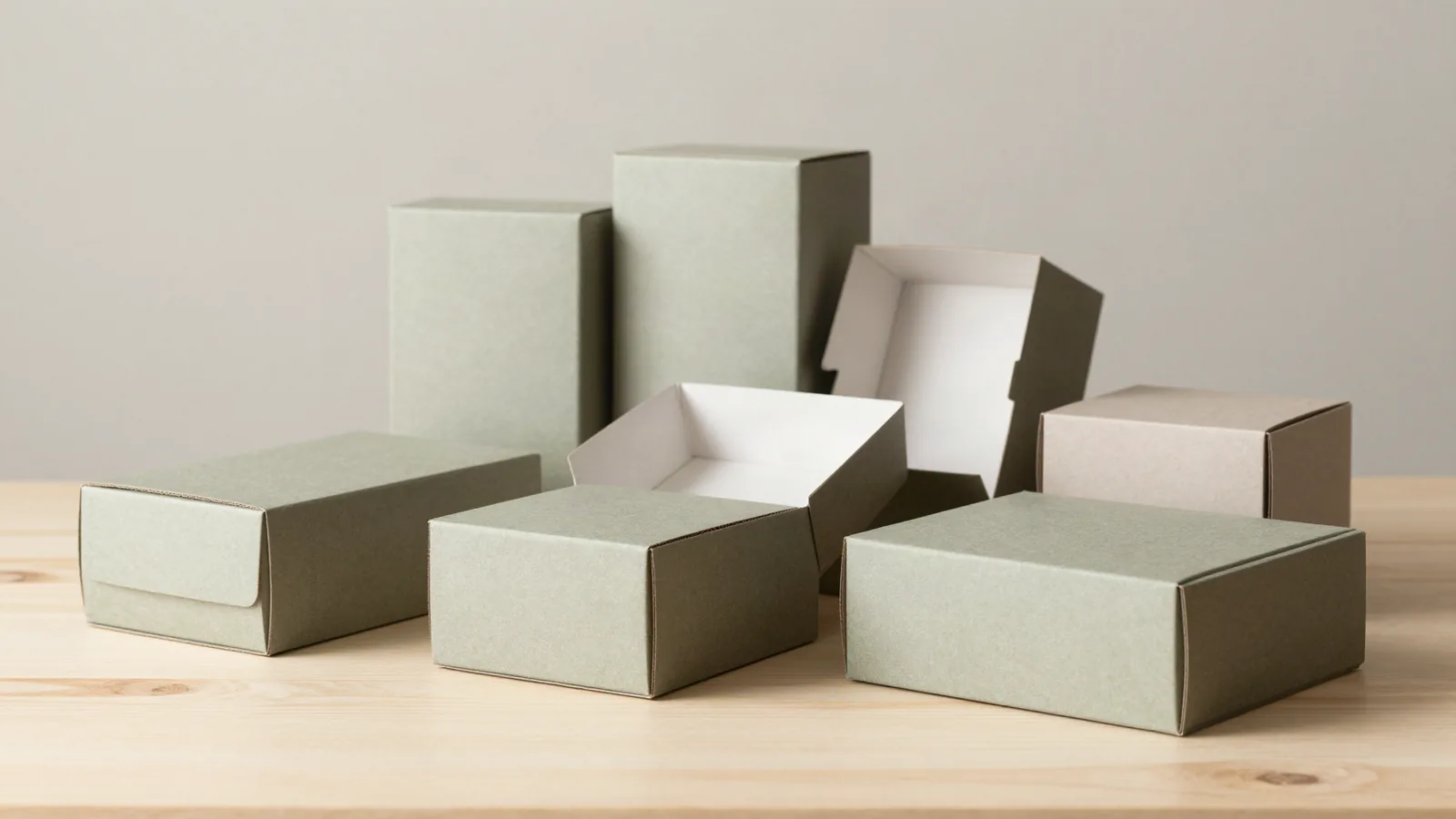




















































Fine jewellery box packaging should be planned around the piece and the order of the reveal. A ring, pair of earrings, pendant, bracelet, or set can need a different insert and lift path. Start with the jewellery, then assign the box, card, and finish to the opening sequence. The private label packaging page is a useful catalog reference for a brand-led presentation conversation.
How should a fine jewellery box stage the first reveal?
The outside lid, inside lid, insert, and card should be assigned a viewing order before the box is drawn. Box dimensions are commonly written as length x width x depth, with inside measurements used for fit. About 1/16 in, or 1.5 mm, is a common planning tolerance, but the jewellery and insert control the final clearance.
| Piece or set | Typical placement | Proof check |
|---|---|---|
| Ring | Upright reveal from a defined slot | Stone, band, and lift point stay visible |
| Earrings | Paired view with posts or hooks aligned | Front faces remain clear and separate |
| Pendant | Longer chain and pendant line | Chain path does not hide the pendant |
| Bracelet | Looped or folded display | Clasp has room for a simple lift |
| Gift set | Grouped reveal across several zones | Piece, card, and accessory order reads clearly |
What should the insert and jewellery share?
An insert is the shaped support inside the box, and it determines where the piece rests, how high it sits, and where fingers can reach it. Record the highest stone or clasp, chain path, earring posts, card location, and lift space. A loose insert lets the piece shift. A cavity cut too tightly makes removal awkward. Mark insert edges, support points, and protective wrap on the dieline.
Which construction gives the opening you want?
A lift-off lid creates a vertical reveal, a magnetic flap hinges, and a drawer or slide pulls a tray through a sleeve. A two-piece rigid box separates lid and base. Straight tuck end and reverse tuck end cartons keep the structure folded. Choose the construction by the intended hand movement, lift access, and card position before artwork is placed.
Where should brand and care copy go?
The first-view panel belongs to the brand mark, while care and collection text needs a separate reading zone. A lid, inside lid, base, sleeve, or separate card can carry a different message. Keep small type away from folds and seams. A shared collection layout can keep logo position and panel order fixed while the insert changes for each piece. Wine box packaging is a catalog reference for a presentation-led box with a defined opening sequence.
Which material and finish notes belong on the brief?
Rigid boxes hold a fixed lid and base, while folding cartons keep the structure integrated. Folding cartons commonly use SBS, C1S, or C2S paperboard at 12 to 24 pt. Kraft board commonly falls at 18 to 24 pt. A rigid presentation box commonly uses 1.5 to 3 mm chipboard wrapped in 100 to 157 gsm art paper. GSM means grams per square metre, a paper weight measure. Offset CMYK suits detailed artwork, while digital printing can suit a short-run concept. Matte or gloss lamination, soft-touch, spot UV, foil stamping, embossing, and debossing should each have a named panel and defined area.
What should prepress and proofing catch?
The proof must show piece clearance and every line that affects hand movement. A dieline is the flat cutting template for the box, with cuts, scores, folds, glue tabs, seams, and panel boundaries. Check low-resolution art, RGB files converted for press, missing bleed, type near scores, barcode placement, and finish boundaries. A press check can review registration, ink coverage, fine type, and the edge between laminate and spot effects.
Which catalog references help frame the package?
Shoe box packaging can frame lid, base, and sleeve relationships. Wax packaging gives a compact product-box reference, while private label packaging supports the brand-panel discussion. These pages are catalog references, not fine jewellery specifications. For a logo-led route, see custom boxes with logo.
What should I send for a fine jewellery quote?
A useful request starts with the piece and the moment the recipient should see it.
- Provide the piece, set, or dependable drawing with its resting position.
- Mark the insert, card, pouch, chain path, clasp, and lift access.
- Choose the opening motion, box construction, lid message, and sleeve direction.
- Identify brand panels, required copy, print method, and finish zones.
- Include the presentation setting and delivery destination.
Custom Packaging Lane quotes fine jewellery box packaging with a 100-unit minimum. Pricing is from $0.49 per unit at volume, quoted to spec. Production is typically 8 to 10 business days after proof approval, plus delivery. Free US shipping, free design support, and a free dieline support the presentation brief. The $19.99 sample kit is credited to the first order. Send the piece, insert plan, opening sequence, and artwork direction.
Frequently Asked Questions
How should a ring sit inside the box?
A ring can sit upright in a defined slot, with the stone, band, and lift point visible when the lid opens. Measure the ring and insert together, then keep inside length, width, and depth separate from the outside footprint. The insert should hold the ring without hiding the first view or making removal awkward.
What can an insert hold besides jewellery?
A jewellery box insert can support the piece, care card, brand card, pouch, chain, or agreed accessory. Mark each item in the opening sequence and show its position on the dieline. The support should keep the jewellery visible, leave room for fingers, and keep cards readable and easy to remove.
Which finish changes sheen rather than texture?
Matte lamination lowers surface sheen, while gloss lamination increases it. Soft-touch changes the surface feel. Spot UV, foil stamping, embossing, and debossing isolate selected marks or patterns. Assign each effect to a named panel and keep it away from folds, seams, glue areas, and small copy.
Can a collection use one fixed artwork layout?
A jewellery collection can share a fixed logo position, type system, color direction, panel order, and finish map while the insert changes for each piece. Keep those fixed elements separate from ring, earring, pendant, bracelet, and set-specific information so one cavity does not get forced onto every item.
Why choose rigid construction for a jewellery box?
Rigid construction uses chipboard commonly around 1.5 to 3 mm, wrapped in printed art paper commonly around 100 to 157 gsm. That build holds a defined lid and base relationship instead of relying on folding panels. The insert, opening motion, artwork, and piece clearance still need their own plan.












