



























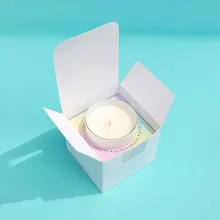





































Foam packaging is an interior insert that holds a product inside an outer box. The insert has cavities, or shaped spaces, cut or formed around the product. A good cavity supports the contact points that can take pressure, limits movement, and leaves room for closures, accessories, and instructions.
Buyers use foam packaging, styrofoam inserts, foam inserts for boxes, and protective foam packaging as overlapping search terms. The material name is only the starting point. Product geometry, cavity layout, outer-box size, handling path, presentation, and cost all belong in the same brief.
What are foam inserts for boxes?
Foam inserts for boxes are fitted interior pieces that hold a product in a defined position. The cavity needs enough clearance for packing, but not so much that the product rattles inside the box. The insert also needs to match the outer box, because a well-fitted insert inside an oversized box can still move during handling.
Send product dimensions, weight, orientation, and vulnerable surfaces before choosing a material. A photo or drawing helps mark glass, sharp edges, buttons, closures, and surfaces that should not touch the insert. Several products in one box need a loading sequence as well as a cavity outline.
How do foam inserts protect a product inside a box?
Foam inserts protect a product by controlling contact and movement. The cavity supports selected surfaces, the surrounding foam absorbs some handling force, and the outer box keeps the insert in place. A cavity cut too loosely lets the product shift. A cavity cut too tightly can slow packing or press against edges.
The product path matters. Check how the item enters the cavity, where a hand can grip it, and whether accessories need a separate space. If the product has several pieces, mark the orientation of every piece on the proof. The digital proof should show the cavity shape, product position, outer-box dimensions, and any printed artwork before production begins.
How do foam, styrofoam, and molded pulp compare?
Foam is the cushioning-first direction when the package needs a shaped cavity around a fragile or movement-sensitive product. Styrofoam usually refers to a lightweight rigid polystyrene foam direction, so it can hold a defined shape but can chip or crack at exposed edges. Molded pulp is formed fiber, so it can support a product with shaped contact points but does not cushion in the same way as foam.
| Insert direction | Protection behavior | Cost driver | Proof check |
|---|---|---|---|
| Foam insert | Cushioning and shaped contact around the product | Material, cavity layout, and quantity | Clearance, grip points, and vulnerable surfaces |
| Styrofoam insert | Lightweight rigid support with defined cavities | Material form, cavity count, and outer box | Edges, surface contact, fit, and loading sequence |
| Molded pulp insert | Formed fiber support with shaped contact points | Forming method, cavity shape, and quantity | Support points, surface texture, and visible presentation |
| No fitted insert | Product sits in the box with open space around it | Box size and the method used to limit movement | Void space, closure, and handling path |
No material name establishes the lowest cost or the highest protection. Compare the same product, outer box, cavity count, artwork, quantity, and delivery requirements. Then inspect a physical sample if fit or surface contact matters.
Which product formats can anchor an insert brief?
A bottle or gift presentation can start with wine box packaging. A small product container can use wax packaging as a format reference. Soft goods can be compared through towel packaging and sock packaging. For a larger retail form, inspect shoe box packaging. Multi-component projects can also use seed packaging, private label packaging, or perforated packaging as catalog directions.
What do custom insert orders cost and how are they planned?
Custom insert orders start at 100 units. Pricing is from $0.49 per unit at volume, quoted to spec, and the final quote depends on the outer box, insert material, cavity design, artwork, and quantity. Free US shipping and free design support are available.
Production is typically 8 to 10 business days after proof approval, plus delivery. That clock starts after the proof is approved, not when the first inquiry arrives. A $19.99 sample kit can help you inspect physical package and insert directions before approving the production proof. The sample kit is credited toward the first order. For broader format planning, see custom packaging solutions.
What should you send for a custom foam insert quote?
- Product dimensions, weight, orientation, and quantity per box.
- Photos or drawings that show contact surfaces and vulnerable areas.
- Outer box style and finished internal dimensions.
- Preferred foam, styrofoam, molded pulp, or alternate insert direction.
- Artwork, delivery location, sample needs, and handling conditions.
Frequently Asked Questions
What are foam inserts for boxes?
Foam inserts for boxes are fitted interior pieces with cavities shaped around a product. The cavities hold the product in position, support selected contact points, and reduce movement inside the outer box. A correct insert also leaves room for packing and removal, so the product dimensions, orientation, outer-box size, and loading sequence belong in the quote.
Are styrofoam inserts the same as foam inserts?
Styrofoam inserts are one rigid foam direction, while foam inserts can describe a wider group of materials and cavity constructions. Styrofoam can hold a defined shape at low weight, but exposed edges can chip or crack. Compare the actual material, cavity layout, surface contact, outer box, and handling path before approval.
Can molded pulp replace protective foam packaging?
Molded pulp can replace foam for some insert applications, but it behaves differently. Molded pulp is formed fiber with shaped support points, while foam provides more direct cushioning around a product. The right choice depends on product geometry, contact surfaces, handling, presentation, and the outer box. A physical sample helps check fit.
What is the minimum order for custom foam packaging inserts?
The minimum order for custom foam packaging inserts from CPL is 100 units. Pricing is from $0.49 per unit at volume, quoted to spec, with the final quote based on the outer box, insert material, cavity design, artwork, and quantity. Free US shipping and free design support are available.
How long does custom foam packaging take?
Custom foam packaging production is typically 8 to 10 business days after proof approval, plus delivery. The proof should confirm product orientation, cavity layout, insert material, box dimensions, fit, and artwork before production starts. CPL orders start at 100 units, and a $19.99 sample kit can help you check the physical direction.