




















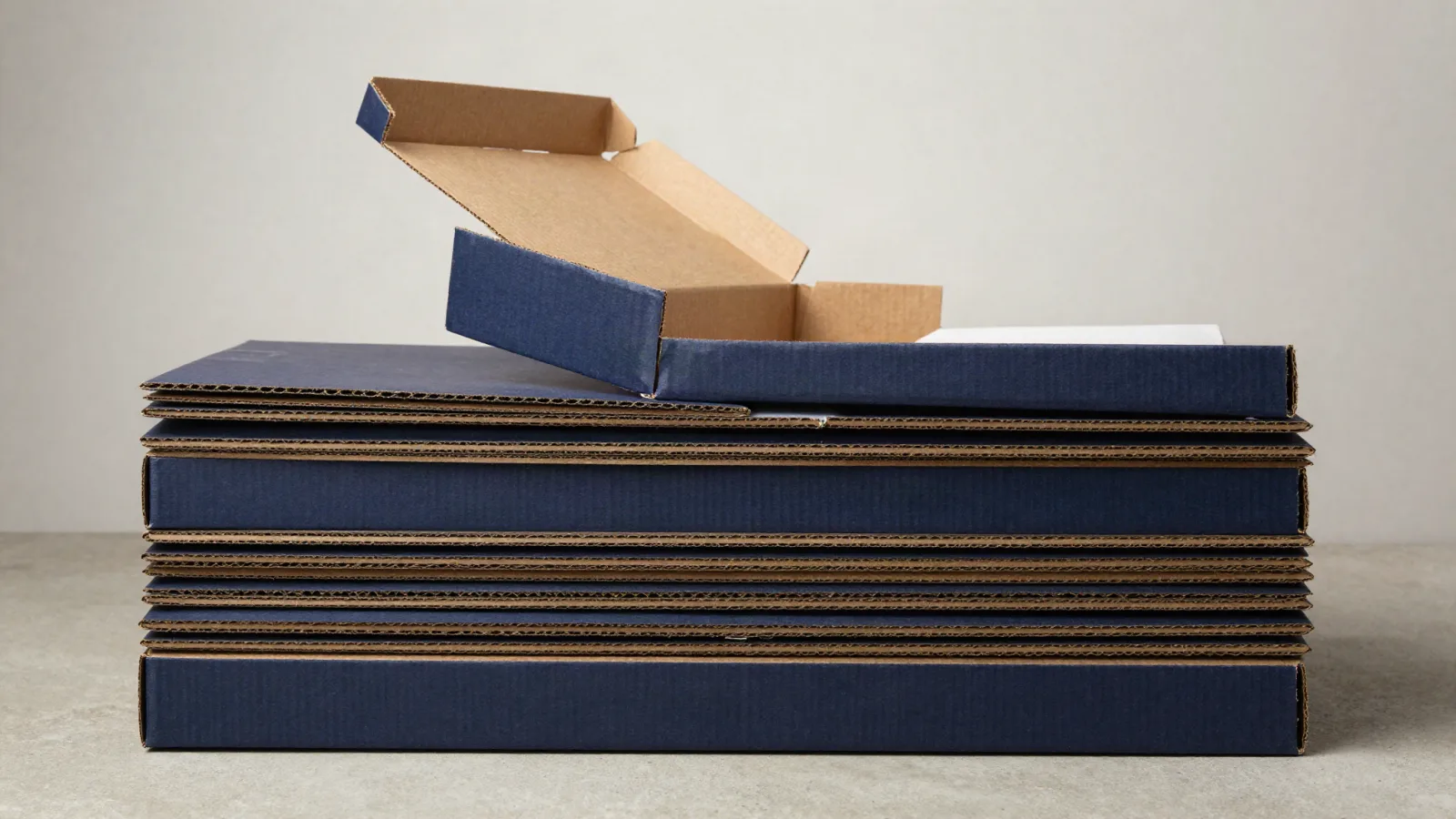











































Hat shipping boxes should be designed around the crush point, not just the hat's outside measurements. A shipping carton is the box that carries the packed product through storage, handling, and delivery. Start with the packed hat, the closure sequence, and the areas that need reinforcement. CPL's shipping-box specification data includes reinforcement intended to help prevent hat crush during transit. The final structure still needs to be checked with the actual pack-out.
How should a hat shipping box be planned at pack-out?
Write down the order in which the team handles the carton. That record gives the dieline and structure a real job to perform.
| Shipping stage | What to record | What to check |
|---|---|---|
| Hat placement | Packed orientation and product reference | The hat sits in the intended position |
| Reinforcement | Crush concern and support area | The structure addresses the stated concern |
| Closure | Closing sequence before shipment | The team can repeat the sequence |
| Label surface | Carrier and internal label location | The closed carton has usable label space |
| Handoff | Storage and carrier movement | The carton matches the actual shipping path |
This is a pack-out record, not a promise about every route. A carton that works for one hat orientation can fail when the product, insert, closure, or storage position changes.
Where should reinforcement go in a hat shipping box?
Reinforcement should sit beside the specific crush concern. If the crown, brim, lid, sidewall, or stacking area carries the risk, name that area in the project brief. CPL's shipping-box data identifies reinforcement as a structural feature used to help prevent hat crush during transit. It does not turn one construction choice into a blanket result for every carrier route.
Share the packed hat and the intended internal support before the dieline is finalized. A board upgrade, added panel, insert, or different closure can change the way loads move through the carton. The proof should show the assembled box and the place where the hat sits.
How can the packing team check the carton before handoff?
Use the actual hat at the shipping station. Confirm that the product enters without forcing the brim, settles into the intended position, and leaves enough clearance for the closure. Then inspect the reinforced area, seams, glue tabs, lid, and label surface with the carton closed. A digital proof checks artwork and structure, but a physical sample is the better check for hand movement and pack-out order.
Low-resolution art, missing bleed, and type too close to a score are prepress problems that should be caught before print. The shipping team should also repeat the closing sequence with the real carton, not a product photograph.
Where should shipping labels go?
Reserve a clear outside panel for the carrier label and any internal order mark. The label surface is part of the carton plan, because a label placed across a seam or closure can interfere with handling and scanning. Keep the brand panel separate when the customer still needs to see it after the shipping label is applied.
Record the label location on the dieline and proof. That small note prevents a last-minute decision at pack-out.
Which CPL products fit a transit-led hat project?
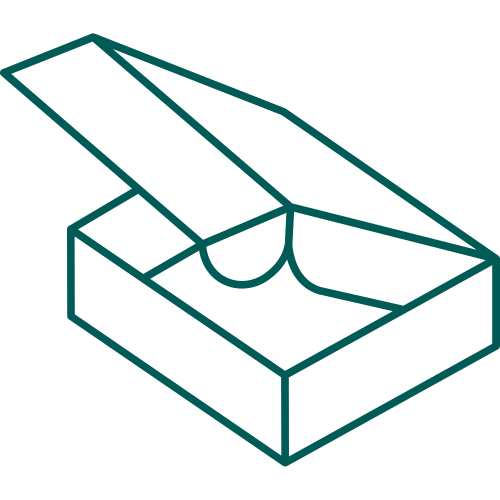
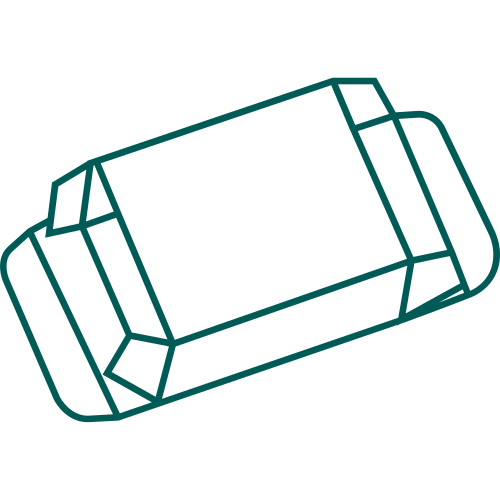
Hat boxes are the apparel-specific reference. Custom shipping boxes help compare a broader transport-led construction. Custom folding shipping boxes are the relevant comparison when the packing team wants a folding format. Each page is a product reference. The final box still follows the packed hat, reinforcement need, closure, and shipping path.
What does a sample show before production?
The $19.99 sample kit gives the team a physical reference for board feel, printed surface, and closure handling. Check it with the actual hat where possible. A sample kit does not replace a structure-specific proof, but it can narrow the material and finish direction before the final carton is approved.
What are the terms for custom hat shipping boxes?
Custom hat shipping boxes have a 100-unit MOQ. Pricing is from $0.49 per unit at volume, quoted to spec. Production is typically 8 to 10 business days after proof approval, plus delivery. Free US shipping and free design support are available. The wholesale custom packaging page is the relevant hub when the shipping carton is part of a larger packaging order.
Frequently Asked Questions
Can custom hat shipping boxes include reinforcement?
Custom hat shipping boxes can include reinforcement planned around the stated crush concern. CPL's shipping-box specification data identifies reinforcement as a feature intended to help prevent hat crush during transit. The packed hat, internal support, closure, and handling path still need review because one structure does not guarantee the same result on every shipment.
What should a packing team check before shipping a hat?
Before shipping a hat, the packing team should check product placement, brim and crown clearance, closure sequence, reinforced areas, seams, and label space with the real carton closed. Repeat the same pack-out using the actual hat. If the product or internal arrangement changes, update the package record before the carton is used.
Where should a carrier label go on a hat shipping box?
A carrier label should go on a clear outside panel that remains usable after the hat shipping box is closed. Keep it off seams, scores, and closure areas when possible, and record the location on the dieline. Check that the label does not cover brand information the customer needs to see.
Which product pages help compare hat shipping boxes?
The hat boxes page is the apparel-specific reference. Custom shipping boxes provide a broader transit-led comparison, while custom folding shipping boxes help frame a folding construction. These product pages do not establish one universal carton. The packed hat, reinforcement concern, closure, and real shipping path determine the final structure.
What are the order terms for custom hat shipping boxes?
Custom hat shipping boxes have a 100-unit MOQ. Pricing is from $0.49 per unit at volume, quoted to spec. Production is typically 8 to 10 business days after proof approval, plus delivery. Free US shipping and free design support are available. The sample kit costs $19.99.