














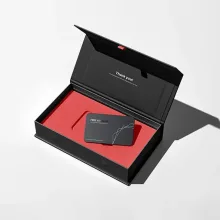












































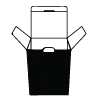

Measure a shipping box in two passes: first for the product fit, then for the assembled outside size. Custom Packaging Lane records dimensions as length, width, and height, so use that order in the quote, dieline, proof, and carrier notes. A swapped width and height can send a packaging request back for clarification. Write the orientation beside the numbers instead of expecting someone else to infer it from a photo.
What do length, width, and height mean on a shipping box?
Length, width, and height are the three measurements that describe the box in its stated orientation.
| Dimension | Where to measure | What the number describes |
|---|---|---|
| Length | Along the established box direction | First value in the package record |
| Width | Across the opening from side to side | Second value in the package record |
| Height | Perpendicular from the opening toward the base | Third value in the package record |
| Outside dimensions | Across the assembled exterior | Finished carrier footprint |
Orientation is the named position of the box, such as the opening facing up or the front panel facing forward. The shortest side is not automatically the width. State the position in plain words, then keep the same length-width-height order throughout the job.
How do you measure package dimensions for a custom box?
Measure the product in the condition in which it will go into the box, then separate those measurements from the finished outside size.
- Measure the packed product, including a cap, folded edge, sleeve, or protective layer that will ship with it.
- Record product length, width, and height before adding clearance for the box and insert.
- Mark which face is the front and which direction is up.
- Measure an assembled sample when a carrier needs the outside package size.
- Label every value as inside usable space or outside package size.
A dieline is the flat cutting template used to print, cut, fold, and glue a box. It includes panels, scores, flaps, bleed, and glue tabs, so it is not the same thing as the finished box measurement. Send product dimensions first. The supplier can draw the dieline and send a digital proof before anything prints.
How do you find the width of a box?
Find the width by measuring across the opening from one side to the other after the box orientation is fixed.
Open the box and identify the front panel and base. Place the ruler across the side-to-side direction, not along the flap or the front-to-back direction. For a product box, record the usable inside width. For a shipping record, record the outside width of the assembled package. A tray, gusset, or insert changes the usable space, so mention it in the measurement notes.
Should you measure the inside or outside of a box?
Use inside dimensions to check product fit and outside dimensions to describe the assembled package to a carrier.
Inside space determines whether the product, insert, and closure can fit without forcing the box. Outside dimensions include the board thickness, folded panels, and any structure that changes the package footprint. Provide both sets when the quote needs product fit and carrier information. A flat dieline cannot replace either measurement because the box has not been folded yet.
What dimensions should you give a carrier?
Give the carrier the assembled outside length, width, and height in the order required by its shipping form.
Many carrier forms use a length-width-height sequence, but the selected service has its own instructions. Measure the closed package after the box is assembled, not the product and not the flat artwork. Keep the box in the same orientation used in the record. If a filled mailer, insert, or irregular closure changes the outside profile, measure that finished package.
Does CPL's 562-product database change the measurement order?
CPL cross-checks its length-width-height order against a 562-product dimension database, but the database does not replace the measurements for your order.
Use the database as a reference for consistent language across spec sheets and quotes. The product itself still determines the inside clearance, outside footprint, opening, closure, and insert requirements. For a shipping format, compare custom shipping boxes and custom folding shipping boxes. Product orientation also matters for shoe box packaging and wine box packaging.
What should you send with a box measurement request?
Send the measurements and the conditions behind them, so the supplier can tell which numbers describe the product and which describe the package.
- Product length, width, and height in packed condition.
- Requested inside usable dimensions and finished outside dimensions.
- Opening, closure, insert, tray, gusset, or other structural details.
- Intended orientation and whether the numbers are for a quote or carrier record.
- Quantity, destination, and artwork status.
Custom orders use a 100-unit MOQ. Pricing is from $0.49 per unit at volume, quoted to spec. Production is typically 8 to 10 business days after proof approval, plus delivery. Free US shipping and free design support are available. The $19.99 sample kit is credited toward the first order, and custom packaging solutions can start the request.
Frequently Asked Questions
What order should box dimensions use?
Box dimensions usually follow length, width, and height order. Start with the orientation named by the supplier or carrier form, then record each value in that order. State the orientation in words because the shortest side is not automatically width. Keep the same order in the quote, proof, and shipping record.
How do you find the width of a box?
To find the width of a box, establish the front and base, then measure across the opening from one side to the other. Record inside width for product fit and outside width for carrier information. The side that looks shortest in a photo is not automatically the width.
Should I measure the inside or outside of a shipping box?
Measure inside dimensions when the question is whether the product fits, and measure outside dimensions when the question is the finished carrier package. Provide both when the quote needs them. Label each value clearly because board thickness, flaps, inserts, and closures can change the relationship between usable space and outside size.
Do carriers use the same length, width, and height order as packaging suppliers?
Many carrier forms use length, width, and height order, but the selected shipping service controls the exact form instructions. Use assembled outside dimensions and confirm the carrier requirement before recording the package. Custom Packaging Lane also records box dimensions in length, width, and height order.
Can Custom Packaging Lane help organize custom box measurements?
Custom Packaging Lane can organize a custom box request from product dimensions, orientation, inside clearance, outside size, and structural details. Custom orders use a 100-unit MOQ. Pricing is from $0.49 per unit at volume, quoted to spec. Free design support includes drawing the dieline before the digital proof.