















































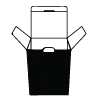

How do you read length, width, and height on a box?
Read a box listing from left to right as length, width, and height unless the supplier's drawing states another convention. Length and width are the two horizontal directions. Height runs vertically from the base toward the opening when the package is positioned for use.
The first check is whether the listing gives inside or outside dimensions. Inside dimensions describe the usable product cavity. Outside dimensions describe the finished exterior footprint. A spec sheet can list the same three numbers correctly and still be wrong for the job if the measurement type is not identified.
Is box depth the same as width?
Depth often names the front-to-back direction, while width often names the side-to-side direction, but product listings do not use those labels identically. Treat depth as a label that needs orientation, not as an automatic replacement for width.
Sketch the box with the opening facing the same way as the product drawing. Mark the front, back, left, right, base, and opening, then attach L, W, or H to the measured sides. If the product can rotate, state which face is the front and which dimension must remain stable. A short drawing prevents a long chain of corrections.
How do you find the inside dimensions of a box?
Find inside dimensions by measuring flat interior surfaces where the product or insert actually sits. Keep the ruler straight and use one unit for all three values. Measure the cavity, not a flap, crease, lid edge, or outside panel.
For an existing box, note whether the board is compressed, bowed, or already assembled. Do not measure across a flap and call that the interior width. If the package has a tray, divider, or custom insert, take a second set of measurements for its cavity. The outside footprint may stay the same while usable product space changes.
How do inserts change the usable space?
An insert takes up part of the interior, so the usable space is smaller than the empty box cavity. Record the product pocket, insert thickness, divider locations, finger clearance, and lid or closure position together.
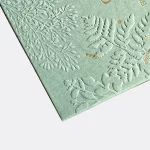
Use the product format as the starting reference. Compare wine box packaging and shoe box packaging when product shape determines the cavity. For smaller presentation formats, see embossed tin boxes and chocolate tin boxes. If a fitted component matters, custom foam box inserts show why the internal measurement needs its own line.
What should a box measurement request include?
A box measurement request should include product length, width, height, units, orientation, inside or outside designation, opening direction, and insert or protective layer requirements.
Add a sketch or annotated photo when length, width, depth, or height could be confused. A test-kit package may need cavities arranged around separate components, so use custom DNA test kit boxes as a format reference.
Which product formats make orientation easy to miss?
Orientation is easy to miss when the package has a lid, body, curved wall, or separate closure. On a tin, state whether the dimensions describe the body, lid, or assembled exterior. On a box with a lid and tray, state the tray cavity and the lid direction. On a product with a protruding part, state whether height includes that part.
CPL's product spec-sheet convention lists dimensions in a defined order, but a buyer's measurement request still needs the drawing or orientation. Do not copy dimensions from another format without confirming the cavity, closure, and assembled position.
What happens after dimensions reach a quote?
After dimensions reach a quote, Custom Packaging Lane connects the measurement record with the structure, material, artwork, and insert plan through free design support. The custom packaging solutions hub is a starting point for that handoff.
The MOQ is 100 units. Pricing is from $0.49 per unit at volume, quoted to spec. Production is typically 8 to 10 business days after proof approval, plus delivery. Free US shipping is available, and a digital proof is sent before anything prints. The $19.99 sample kit can help you compare physical structures before choosing the final direction.
Frequently Asked Questions
How do I read length, width, and height on a box listing?
Read the dimensions in the order shown, usually length, width, and height. Treat the first two as horizontal directions and height as the vertical direction toward the opening. Then confirm whether the listing uses inside or outside measurements, because that distinction changes product fit and the finished exterior footprint.
Is depth the same as width on a box?
Depth often describes the front-to-back direction, but product listings do not always use the same label. Ask which side the supplier calls width or depth and mark the orientation on a sketch. Do not assume the terms are interchangeable when a product cavity, insert, or closure must fit closely.
Should I measure the inside or outside of a box?
Measure the inside when the goal is product fit, insert placement, or usable cavity size. Measure the outside when the goal is shipping footprint, shelf space, storage, or finished package size. State which one you are providing, and include both when the structure has tight clearances.
How do inserts change the box dimensions I need?
An insert uses part of the interior, so the product cavity cannot be based only on the empty box. Measure the product, insert, clearance, and removal space together. A tray, divider, or foam component may change usable dimensions while leaving the outside footprint unchanged.
What should I send with a custom box measurement request?
Send product dimensions, units, orientation, inside or outside designation, opening direction, and insert or protective layer requirements. Add a sketch or annotated photo when length, width, and depth could be confused. CPL's free design support can help organize the specification before proof approval.