


















































How are Mylar bags sealed?
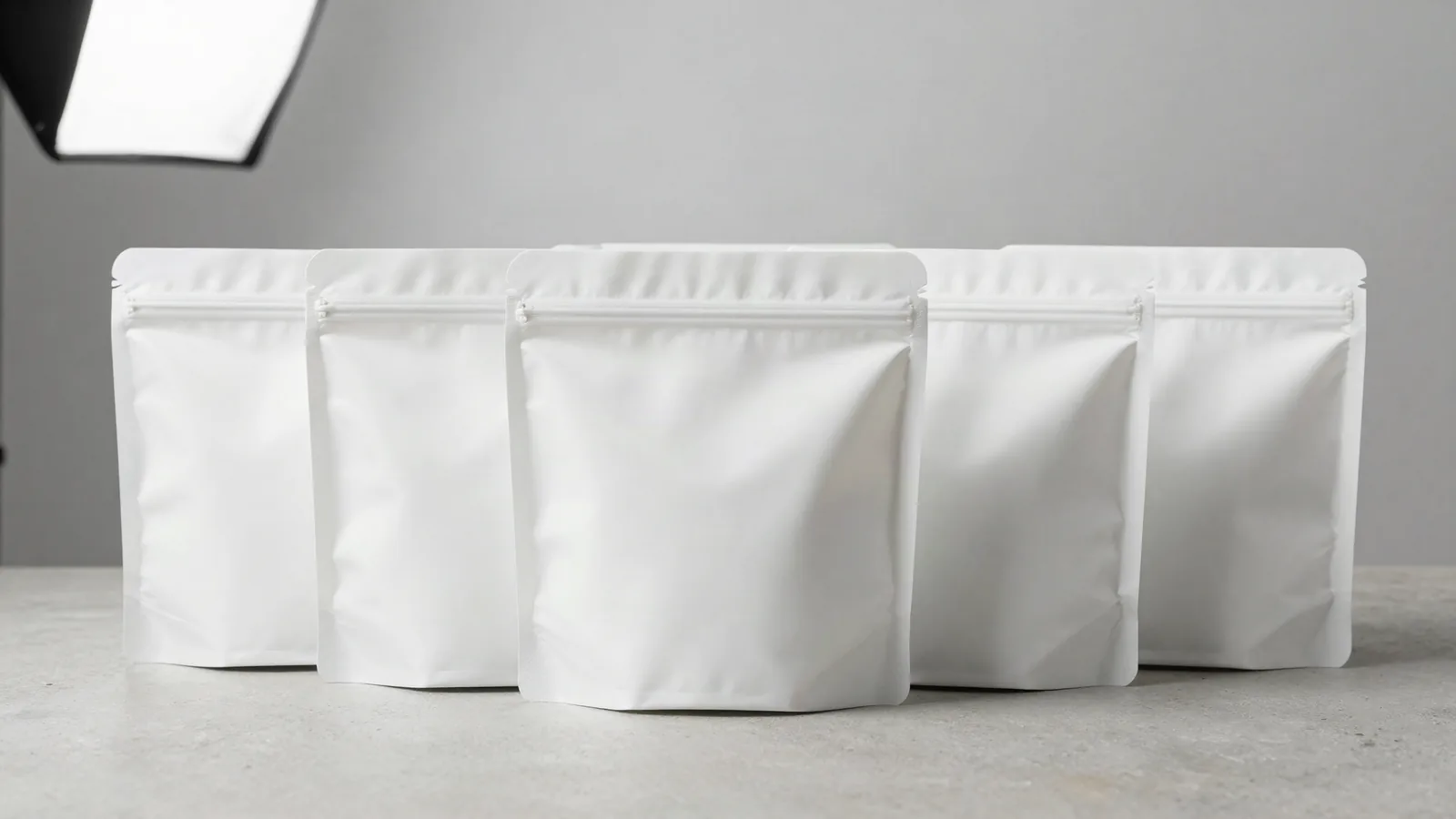
To seal a Mylar bag, choose the closure shown for the exact bag line, fill below the mouth, keep the sealing area clear, and close it with the specified zipper, heat-seal, or tin-tie method. A Mylar bag is a flexible film package, often with a metallized layer that blocks light and reduces moisture and odor transfer. The closure is part of the bag specification, not a detail to add after the artwork is finished.
What are the main Mylar bag seal types?
Zipper, heat seal, and tin-tie describe three different closing actions. A zipper uses a built-in track. A heat seal creates a closed seam across the bag mouth with heat and pressure. A tin-tie uses a folded top and tie feature. Check the closure shown for the exact size and product line before adding it to a purchasing brief.
| Seal type | How it closes | What to check |
|---|---|---|
| Zipper | Built-in track opens and closes | Track stays clear during filling |
| Heat seal | Heat and pressure close the mouth | Clean seal area and continuous seam |
| Tin-tie | Folded top secures around a tie | Enough top material for the fold |
| Unspecified | Closure is not identified | Pause and request the missing detail |
How do you heat seal a Mylar bag?
Place the product below the bag mouth, remove product residue from the seal area, align the top edges, and use the heat, pressure, and dwell settings required for the material and equipment. Inspect the seam after it cools. A clean, continuous seam is easier to check than one made across powder, crumbs, or a folded layer of film.
The bag size matters too. A large bag may need a different filling and handling routine than a smaller pouch. Keep the closure name, size, opening direction, and product line together in the quote request. If the package raises a food-contact question, ask us about food-contact options for your product.
When should you choose a zipper or tin-tie instead?
Choose a zipper when the customer needs to open and close the bag through a built-in track. Choose a tin-tie when the top is meant to fold and close by hand. Choose a heat seal when the filling workflow ends with a closed seam across the mouth. None of these closures is universal, so match the choice to filling, opening frequency, display, and bag size.
Which CPL Mylar bag line should you compare?
Use the exact product line and size as the reference, rather than borrowing a closure label from another pouch. Custom Mylar heat-seal bags give a direct reference for heat closure. Custom Mylar vacuum seal bags frame a workflow that removes air before closure. Mylar bags for freeze drying support a dry-product packaging brief, while large Mylar bags support a larger fill format. Confirm the closure shown for the selected size before treating any page as the final specification.
What should the proof show for a custom seal?
The proof should show the bag shape, closure location, opening direction, artwork panels, and area reserved for filling or sealing. Check that the zipper track, heat-seal zone, or tin-tie fold does not hide required copy. Check the top trim and fold as an assembled package, not only as a flat artwork file. CPL sends a digital proof before anything prints.
What does a custom Mylar seal order cost and how long does it take?
The MOQ is 100 units. Pricing is from $0.49 per unit at volume, quoted to spec. Free US shipping and free design support are available. The sample kit is $19.99 if you want to compare closure and material examples before approval.
Production is typically 8 to 10 business days after proof approval, plus delivery. This is a typical production window, not a promised completion date. Use wholesale custom packaging to start a defined purchasing brief. Send the product, filled dimensions, preferred closure, artwork status, quantity, destination, and exact catalog reference for a quote.
Frequently Asked Questions
What is the easiest way to seal a Mylar bag?
The easiest Mylar bag sealing method depends on the closure on the exact bag line. A zipper closes through its built-in track, a heat seal closes a clean mouth with heat and pressure, and a tin-tie folds the top around a tie. Keep product out of the closure area and confirm the format before filling.
Can I reseal a heat-sealed Mylar bag?
A heat-sealed Mylar bag has a closed seam after the sealing step, so repeat opening usually requires a separate reclosable feature or a new seal. A zipper supports repeated opening through its track, while a tin-tie supports repeated folding. Choose the closure based on how often the customer needs to reopen the bag.
How do I choose a Mylar bag seal type?
Choose a Mylar bag seal type from the filling method, opening frequency, bag size, and product line. Heat seal suits a clean mouth and a closing step after filling. A zipper suits repeat opening. A tin-tie suits a folded top. Confirm the closure shown for the exact size instead of copying a label from another pouch.
Does the seal type need to be shown on the proof?
The proof should show the Mylar bag shape, closure location, opening direction, artwork panels, and the area reserved for filling or sealing. Check that the zipper track, heat-seal zone, or tin-tie fold does not hide required copy. Ask CPL to revise the proof if the selected closure is unclear.
What is the MOQ for custom Mylar bags?
The minimum order for custom Mylar bags is 100 units. Pricing is from $0.49 per unit at volume, quoted to spec. Production is typically 8 to 10 business days after proof approval, plus delivery. Free US shipping and free design support are available, and the sample kit is $19.99.