








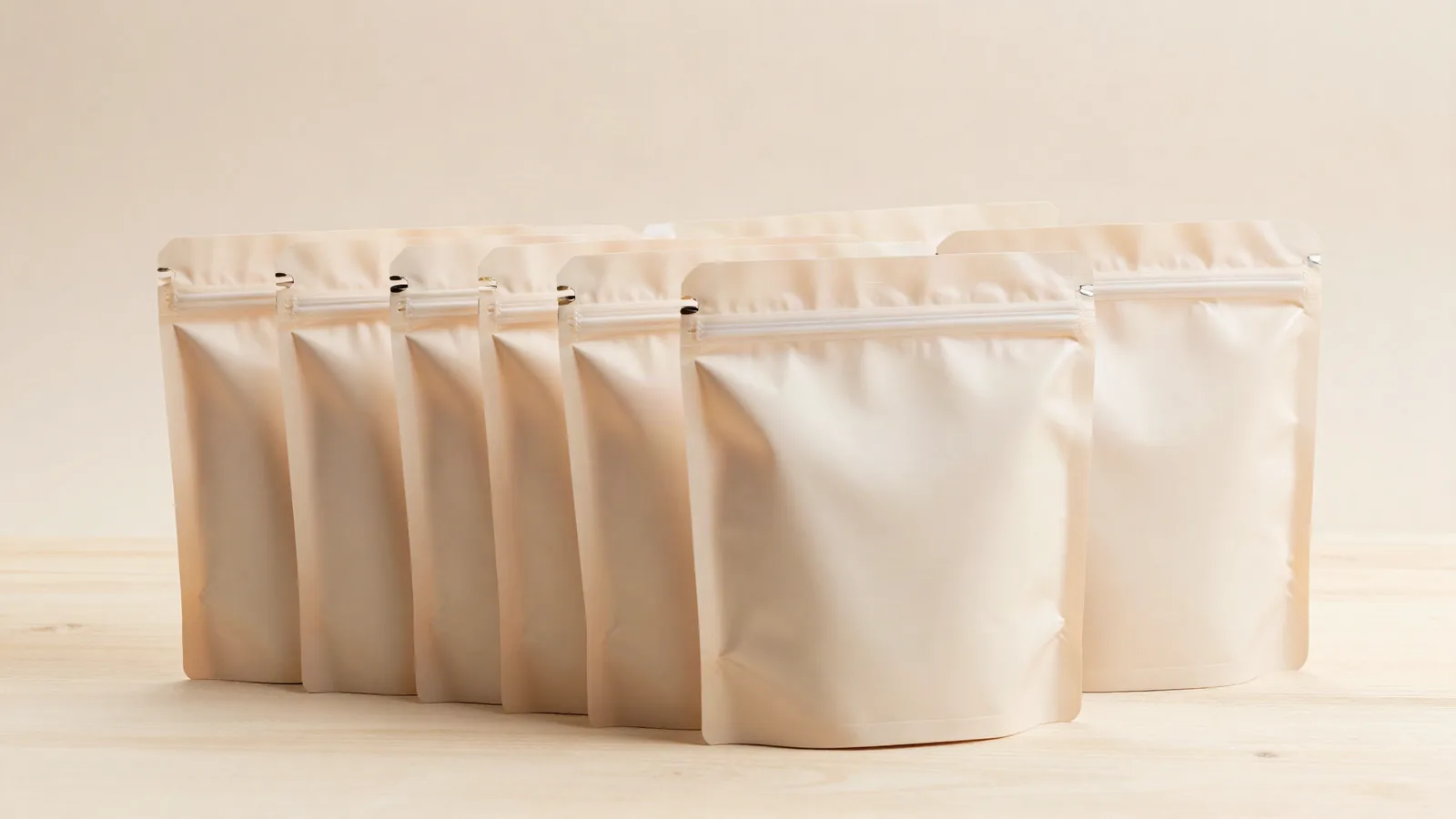









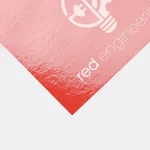



























Mylar is a polyester film used in flexible barrier bags. When a bag includes a metallized film layer, that layer blocks light and slows moisture and odor transfer. Vacuum sealing removes air from the bag, then closes the opening with a heat seal. The bag construction, seal area, product, and machine all have to match.
Start with the filled product and storage conditions. Then compare custom Mylar vacuum seal bags, custom Mylar heat seal bags, and Mylar bags for freeze-drying. The word Mylar alone does not tell you whether the opening, thickness, puncture resistance, or sealing method fits the job.
How do you vacuum seal Mylar bags?
To vacuum seal Mylar bags, load the product below the seal area, remove air with compatible equipment, close the opening with a consistent heat seal, and inspect the seam.
- Choose the bag format and size for the product.
- Keep the open edge flat, clean, and free of product particles.
- Load the bag without overfilling or folding material into the seal.
- Set up equipment that matches the bag material and sealing width.
- Inspect the full seam before the filled bag goes into storage or shipment.
Vacuum sealing changes the shape of the filled bag, so check corners, edges, and any product point that could press against the film. The empty bag is not the final test.
What should you compare in Mylar vacuum seal bags?
Compare the listed mil thickness, puncture resistance, bag dimensions, opening, and usable seal area before choosing a Mylar vacuum bag.
A mil is one thousandth of an inch. Mil thickness describes the film gauge, while puncture resistance describes how well the material withstands a point or edge before it breaks through. Thicker material can add handling strength, but the product still needs a size that leaves a clean seal area.
| Selection factor | What it affects | What to confirm |
|---|---|---|
| Mil thickness | Film gauge and handling strength | The listed thickness for the selected bag |
| Puncture resistance | Exposure to sharp edges and movement | The catalog detail and real handling conditions |
| Bag dimensions | Product fit and room above the fill | Product size, orientation, and seal clearance |
| Seal area | Where the machine closes the opening | A clean, flat section without folds or particles |
| Barrier layer | Light, moisture, and odor transfer | The selected construction and intended storage conditions |
What kind of vacuum sealer works with Mylar bags?
A suitable vacuum sealer must match the selected bag's material, opening, sealing width, temperature control, and operating method.
Before buying equipment, confirm whether the machine is built for the bag format you selected and whether it can create a consistent seal across the full opening. Tell CPL whether the job uses vacuum sealing, heat sealing, or both. A larger format can be discussed through large Mylar bags. A nonstandard product shape can point toward irregular-shape Mylar bags or another format.
How do you protect a Mylar seal during filling?
Protect a Mylar seal by keeping the top edge flat and clean before the machine closes it.
- Leave product particles out of the seal area.
- Avoid sharp folds that create channels across the seam.
- Keep the bag below its intended fill line.
- Inspect the entire seam for gaps, wrinkles, channels, or incomplete closure.
- Handle the filled bag according to the listed puncture-resistance detail and actual storage conditions.
For odor control, compare custom smell-proof Mylar bags. For a shaped opening or graphic profile, review die-cut Mylar bags. The bag shape changes how the material reaches the sealing area.
Can vacuum-sealed Mylar bags be used for storage?
Vacuum-sealed Mylar bags can be used for storage when the bag construction, product, seal, and storage conditions match the job.
Storage temperature, humidity, fill shape, handling, and the pressure placed on the seal all affect the result. Vacuum sealing does not remove the need to choose a bag with suitable puncture resistance. If the product involves freeze-drying, compare the dedicated Mylar bags for freeze-drying format and describe the process during quoting.
For food or another product that touches the packaging, ask us about food-contact options for your product.
What should you include in a custom Mylar quote?
Include the product, filled dimensions, bag orientation, fill weight, sealing method, requested mil thickness, puncture-resistance requirement, artwork, quantity, and delivery destination.
Custom projects use a 100-unit MOQ. Pricing is from $0.49 per unit at volume, quoted to spec. Production is typically 8 to 10 business days after proof approval, plus delivery. Free US shipping and free design support are available. The $19.99 sample kit is credited toward the first order. For a broader packaging request, use wholesale custom packaging. State the sealing equipment before the proof is approved.
Frequently Asked Questions
Do Mylar bags need a special vacuum sealer?
Mylar bags need equipment that matches the selected bag material, opening, sealing width, temperature control, and operating method. A machine that works with one bag format may not create the same seal on another. Confirm the equipment against the bag specification before using it for production or storage.
Does thicker Mylar always seal better?
Thicker Mylar changes film gauge and handling strength, but it does not by itself settle the sealing question. The bag size, opening, seal area, equipment, product shape, and puncture risk also matter. Compare the listed mil thickness with the filled product and tell CPL how the bag will be handled.
How do I keep crumbs out of a Mylar seal?
Keep the Mylar opening flat and clean before sealing, and load the product below the seal area. Avoid overfilling, sharp folds, and particles across the seam. After sealing, inspect the full closure for gaps, channels, wrinkles, or incomplete contact before the bag enters storage or shipment.
Can smell-proof or die-cut Mylar bags be vacuum sealed?
Smell-proof and die-cut Mylar bags need a format-specific check before vacuum sealing. The bag shape, opening, seal area, material thickness, and machine must work together. Tell CPL whether odor control, a shaped profile, or a larger format is part of the job so the selected construction can be quoted to spec.
What are CPL's order terms for custom vacuum bags?
Custom vacuum bag projects use a 100-unit MOQ, and pricing is from $0.49 per unit at volume, quoted to spec. Production is typically 8 to 10 business days after proof approval, plus delivery. Free US shipping and free design support are available, and the $19.99 sample kit is credited toward the first order.