








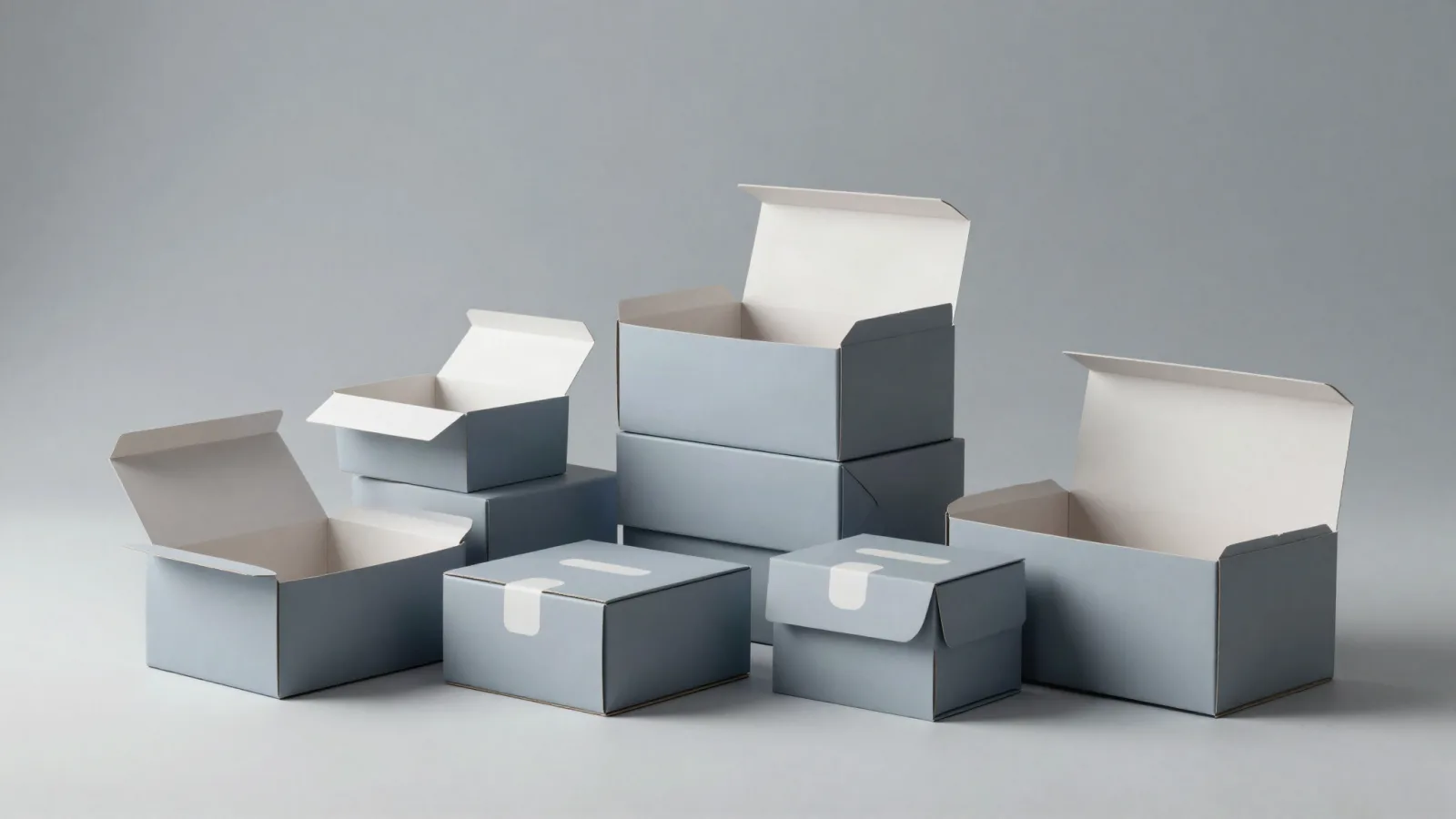












































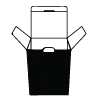

Void fill is the empty space between a product and the inside of its package. To optimize void fill, start with the product as it will ship, then set the box interior around the arrangement, closure, and insert. A larger outside carton does not fix a poor pack-out. It leaves room for movement and creates another job: someone has to add material or handle the order more carefully. CPL's mailer boxes, shipping boxes, rigid printed boxes, and protective insert options give you real formats to compare.
How do you measure void fill before choosing a box?
Measure the product after labels, caps, lids, and parts that ship with it are in place. Record length, width, and height, then record the orientation and number of units inside one package. Those are the dimensions that describe the pack-out, not the dimensions of the loose product on a desk.
A dieline is the flat cutting template used to print and cut a package. It shows panels, scores, glue tabs, and the finished fold. When the dieline is drawn from the packed dimensions, the box can be checked before art is locked. Leave room for the closure and any protective insert, but do not treat unused space as a place to hide missing measurements.
| Planning input | Record it this way | Why it changes fit |
|---|---|---|
| Product | Length, width, and height as packed | Sets the usable interior |
| Arrangement | Unit count and orientation | Changes the footprint and loading path |
| Insert | Footprint, cavities, and loading direction | Takes up interior space and fixes position |
| Closure | Lid, flap, sleeve, or other opening path | Prevents the box from closing against the product |
Why does an oversized box need more packing material?
An oversized box gives the product more distance to travel before it touches a wall or insert. That movement can damage corners, scuff surfaces, or put pressure on a closure during transit. Void fill can limit movement, but it also adds a packing step and does not correct a box that was drawn around the wrong arrangement.
Start with the package's inside dimensions. Then check how the product enters, where a hand grips the box, and whether the lid or flap closes without pushing on the contents. A close fit is useful only when the product can be loaded and removed without forcing it.
Which dimensions belong in a right-size box brief?
The brief should include finished product dimensions, unit count, orientation, insert footprint if one is planned, and closure direction. Use one unit system throughout. If the order has two arrangements, send both, because a box that fits a single unit may waste space when the pack-out changes.
- Measure the product with labels, caps, lids, and included parts in place.
- State whether the product stands, lies flat, or sits at an angle.
- Describe how many units share one box.
- Mark the insert position and the panel that should face the customer.
- Send artwork status and any areas that must stay clear of scores or folds.
Which CPL box formats can you compare for void fill?
The mailer box is a useful route when the product ships in its branded outer package. Custom mailer boxes can be compared against the packed size and opening path. A rigid printed box uses a formed structure that holds its shape, so its interior presentation and insert plan deserve their own check. Custom shipping boxes are a starting point when the outer shipped carton carries the pack-out. CPL catalogs dimensions for these routes, but the product arrangement decides which one fits.
How do inserts change the interior plan?
An insert changes the usable interior because it takes up space and fixes the product position. A fitted cavity can separate pieces, keep a lid from pressing on decoration, or stop a small item from sliding around. The insert should be drawn with the product, not added after the carton has already been approved.
Describe whether the insert supports one item, several items, or a fixed layout. A cavity that is too tight slows packing; a cavity that is too loose lets the product move. That simple check catches many void-fill problems before a sample or production run.
What happens after you send dimensions to CPL?
After you send the packed dimensions and artwork status, free design support can turn the information into a dieline and a digital proof. The digital proof is the screen file for the flat layout before anything prints. Check the interior, closure, scores, glue tabs, and insert position there. The clock starts at proof approval, not at the first inquiry.
The MOQ is 100 units. Pricing is from $0.49 per unit at volume, quoted to spec. Production is typically 8 to 10 business days after proof approval, plus delivery. Free US shipping is available. Use custom packaging solutions for the broader request, or order the $19.99 sample kit when you need a physical look at materials before the project is approved.
Frequently Asked Questions
What is the simplest way to reduce empty space in a shipping box?
To reduce empty space in a shipping box, measure the product as packed, record its orientation and unit count, then draw the box interior around that arrangement. Include the closure and insert before selecting an outside size. Custom Packaging Lane can compare those inputs with mailer, shipping, or rigid box routes. A close fit should still let the product load and the package close without pressure.
What measurements should I give for void-fill planning?
Void-fill planning needs the packed product length, width, and height, plus unit count, orientation, closure direction, and insert footprint when one is planned. Include labels, lids, caps, and components that ship with the order. Send both arrangements if the order can be packed in more than one way.
Can a mailer box replace loose packing material?
A mailer box can reduce unused space when its interior is drawn around the shipped product and opening path. It does not remove the need to check product movement, closure pressure, and any insert. Custom Packaging Lane can compare a custom mailer box with shipping and rigid printed box routes using the packed dimensions.
How do inserts affect box sizing?
An insert takes up part of the usable interior and fixes the product position. Include its footprint, cavity arrangement, and loading direction before the box is drawn. A cavity that is too tight slows packing, while a loose cavity lets the product move. The insert and carton should be planned as one pack-out.
What is the MOQ and timing for a right-sized package?
The MOQ for a right-sized packaging project is 100 units. Pricing is from $0.49 per unit at volume, quoted to spec. Production is typically 8 to 10 business days after proof approval, plus delivery. Free US shipping and free design support are available.