













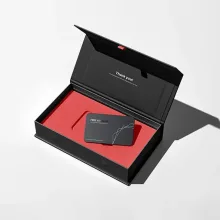






































Void fill packaging is loose or shaped material placed around a product to limit movement inside a box. The first question is the fit between the product and the box interior. A close-fitting custom box can reduce or remove loose filler when the assembled pack-out keeps the product positioned without making loading or removal difficult.
CPL's box-sizing records cover 562 products. Those records connect product dimensions with package interiors and can identify candidate close fits. They do not publish an order count or an elimination rate, so the record set should guide the physical test rather than stand in for one.
When can a custom box remove void fill?
A custom box can remove loose void fill when its interior dimensions match the product closely enough to control movement during the actual pack-out.
The fit has to work after the product enters the box, the closure is closed, and the package is handled in the way the team expects. A box that leaves a large empty zone may need loose paper, air pillows, an insert, or another support. A box that fits too tightly can slow loading, damage the product, or make removal awkward.
What does a box-sizing record tell you?
A box-sizing record shows the relationship between a product footprint and the usable space inside a selected package.
| Record field | What it can show | What still needs a pack-out check |
|---|---|---|
| Product footprint | The space the product occupies in its packed orientation | Shape changes, loading variation, and contact points |
| Box interior | The usable room inside the selected structure | Folds, closure movement, inserts, and assembly |
| Product position | Where the item sits inside the box | Movement after closing and during handling |
| Void space | Where empty room remains around the product | Whether support is needed for the actual product |
| Pack-out note | The fit question that belongs in the quote | Material, print, finish, quantity, and destination |
Pack-out means the loaded package, including the product, box, closure, and any interior support. Reading the record this way separates an observed dimension from the result that still needs to be checked with the product.
How do you test a close-fitting pack-out?
Test a close-fitting pack-out with the actual product or a representative substitute, loaded in the same orientation used for normal packing.
- Load the product without forcing it into the box.
- Close the box and check whether the product stays centered.
- Handle the closed package and note contact with the walls or closure.
- Open the box and check whether the product is easy to remove.
- Record any movement, rubbing, corner contact, or need for support.
The assembled package answers questions that outside dimensions cannot. If an insert, divider, or shaped support is part of the plan, test it with the product inside the box. A successful arrangement is evidence for that pack-out, not a promise about every product variation.
When is an insert better than loose filler?
An insert is better than loose filler when the product needs a fixed position, separated surfaces, or a controlled reveal after opening.
Loose filler can occupy empty room, but it can also shift during handling and change the way the customer removes the product. An insert keeps its shape inside the box and gives the quote a defined interior structure. The right choice still depends on product geometry, loading speed, closure, presentation, and the amount of movement observed in the sample.
Which CPL products are useful fit references?
Use catalog formats to describe the structure that needs review. Shoe box packaging gives a reference for a defined carton footprint. Wine box packaging gives a reference for a presentation-led arrangement. Towel packaging gives a reference for a softer or foldable product that occupies space differently during loading.
These pages do not set the final size for another product. Share the actual product dimensions, packed orientation, movement concern, and preferred presentation so the selected format can be quoted to the job.
What should a void fill quote include?
A void fill quote should include the product dimensions, packed orientation, box interior, movement concern, preferred structure, insert question, artwork status, material direction, finish, quantity, and delivery destination.
Custom Packaging Lane's custom packaging solutions team can frame the request around the actual pack-out. Projects use a 100-unit MOQ. Pricing is from $0.49 per unit at volume, quoted to spec. Production is typically 8 to 10 business days after proof approval, plus delivery. Free US shipping and free design support are available. The $19.99 sample kit is credited toward the first order. Send the product dimensions and movement concern for a fit-led quote.
Which void fillers work for different movement problems?
Crumpled kraft paper blocks uneven side gaps, air pillows occupy open volume around light items, corrugated partitions separate units, and paperboard fitments hold a repeatable position. Molded pulp can support fixed product geometry. A paperboard fitment is a cut and folded component that holds a product in a planned position. The useful choice follows the direction the product moves, the surfaces that can accept contact, and the amount of compression the packed item can tolerate.
| Void filler | Primary job | Suitable pack condition | Watchpoint |
|---|---|---|---|
| Crumpled kraft paper | Side and corner blocking | Irregular gaps around a stable item | Settling after handling |
| Air pillows | Open-volume fill | Light products with smooth edges | Puncture beside sharp corners |
| Corrugated partition | Unit separation | Several products in one case | Vertical travel above the cells |
| Paperboard fitment | Repeatable location | Light retail packs | Spring-back at folds |
| Molded pulp | Shaped support | Consistent product geometry | Loading and removal clearance |
Where should box void filler be placed to stop movement?
Material should sit in the path of travel: below an item that can strike the case seam, beside it when lateral movement is the problem, or above it when the closed flaps leave lift room. Corners, pumps, valves, and handles need open space so filler does not transfer force into a fragile projection.
Judge placement only after the outer box is fully closed. Too much paper can bow a wall or load a delicate surface, while a loose top pad can move away from the product when the package turns. Rotate the closed pack through its expected orientations and mark every contact point.
Which carton materials resist pressure from void fillers?
C-flute or B-flute corrugated can support broader shipping cases, with 32 ECT used as a common single-wall reference. For light retail fitments, one practical specification is 12 to 24 pt SBS; kraft alternatives commonly fall within 18 to 24 pt. Material selection still follows filled weight, wall span, stacking pattern, closure, and route because filler cannot correct a carton that deforms under the packed load.
A custom mailer box can organize a repeatable parcel arrangement, while custom folding cartons can contain lighter retail units inside an outer shipper.
When does packaging void filler need another handling check?
A product revision, new carton, changed filler, different packing sequence, alternate supplier, or new shipping route calls for another loaded trial. Look for scuffs, crushed corners, opened closures, migrated filler, and contact between units. A result belongs to the tested combination and should not be carried over to a changed pack.
How can packing teams keep filler use consistent?
A photographed packing pattern and a measured material allowance reduce guesswork at the bench. Record product orientation, loading order, filler position, closure sequence, and the finished top view. Printed paperboard fitments can use digital printing for short runs or offset for longer repeated graphics; heavy ink and matte or gloss lamination should be checked at scores for cracking and spring-back.
Count units in the master carton only after the complete pack closes squarely. Start the carton and support specification through custom packaging solutions, then use the sample kit to compare board and surface choices.
Frequently Asked Questions
Can a right-size box remove all void filler?
A right-size box can reduce or remove loose void filler when the product stays positioned during the actual pack-out, closure, and handling. A dimension record alone does not prove that result for every shipment. Test the assembled box with the product, then record movement, contact points, closure behavior, and removal.
What is measured in a box-sizing record?
A box-sizing record connects the product footprint with the usable interior of a package. It can show empty space and identify a candidate close fit, but it does not replace a loaded pack-out check. Product orientation, folds, closures, inserts, loading variation, and handling still need to be described.
How do you observe movement in a packed box?
Load the product in its normal orientation, close the box, handle the package, and note whether the product stays centered or touches the walls and closure. Then open the box and check removal. Record the actual product, package orientation, and any insert or support used during the test.
Which catalog formats can I discuss with CPL?
Shoe box packaging, wine box packaging, and towel packaging provide catalog references for different product arrangements. They are not universal size recommendations. Share the actual product dimensions, packed orientation, movement concern, preferred structure, quantity, and destination so CPL can quote the relevant package.
What terms apply to a void fill packaging project?
Void fill packaging projects use a 100-unit MOQ, and pricing is from $0.49 per unit at volume, quoted to spec. Production is typically 8 to 10 business days after proof approval, plus delivery. Free US shipping and free design support are available, and the $19.99 sample kit is credited toward the first order.