











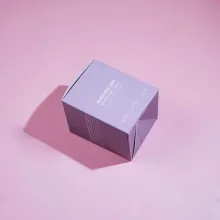
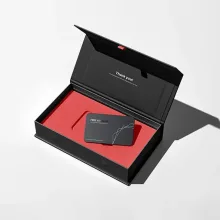
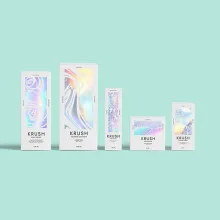
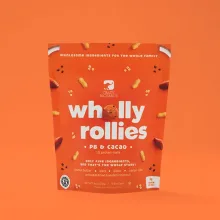









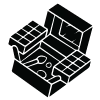
























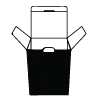

Perforated packaging uses a planned line of small cuts and uncut bridges so a panel can separate in a controlled path. A tear strip is a narrow opening path the user pulls or lifts to start that separation. Perforated box packaging can guide access, but it still has to respect scores, seams, closures, artwork, and the way the package is held. CPL discusses perforation options for boxes and bags by placement and approved specification.
What is perforated packaging?
Perforated packaging is a package with a controlled separation line that guides opening, tearing, or removal. The cuts are spaced by uncut bridges, and the cut-to-bridge pattern affects how readily the material separates. A tear strip is one version of the feature, while a perforated panel can use a different starting point or path.
The opening feature should be planned with the package structure. A straight line across a blank panel is a different job from a line that follows a score, passes near a seam, or crosses a printed instruction. State the action the customer should take before choosing the path.
Where should a tear strip go on a box?
A tear strip usually belongs where a person can find and grip it without turning the package over. On a box, choose the panel, direction, and starting point before artwork is finished. Keep it away from a score or glue tab unless the construction is drawn for that interaction.
Mark the path on the dieline. A dieline is the flat cutting template that shows panels, scores, folds, glue tabs, and trim. The marked path gives the printer a physical reference and gives the designer a clear boundary for logos, product names, instructions, and images.
| Package area | Check before approval | Physical reason |
|---|---|---|
| Starting point | Can the user find and grip it? | A hidden start makes the feature hard to use |
| Printed panel | Does the path interrupt copy or artwork? | The panel may need a different reading order |
| Score or fold | Does the line cross an existing change in direction? | Two separation paths can affect the fold and tear |
| Seam or glue tab | Does the construction stay closed until opening? | The feature must not weaken the closure by accident |
How should perforation interact with artwork and folds?
Build the perforation map with the artwork map. The map is a note that names the cut path, start point, and panel direction. Keep a product name, instruction, or barcode away from the line when it needs to remain intact. If the line crosses a printed panel, show that relationship in the proof instead of leaving it to interpretation.
Check the folded package as well as the flat file. Type set too close to a score can become hard to read after folding, and a line that looks centered on a flat panel may sit near a hand position in the finished package. Mark the opening direction with words, not only with a graphic line.
What changes between perforated box packaging and bag packaging?
Perforated box packaging is planned around rigid panels, scores, tabs, and closure. A bag adds a flexible surface, seams, and a different hand position. A path that feels easy on a front panel may not translate to a side fold or seam, so the format has to be named in the request.
Perforated packaging is the direct catalog reference when the opening feature drives the project. Wine box packaging frames a box discussion around orientation and visible panels. Wax packaging and towel packaging provide additional format references when the product and opening path call for a different layout.
Does a perforation option change the quote?
Perforation can affect a quote because it adds a cut path and placement requirement to the approved construction. The price is quoted to spec, based on the format, material, finish, artwork, quantity, and path. Send the marked path with the package dimensions so the feature is priced with the box or bag instead of being treated as a separate guess.
The MOQ is 100 units. Pricing is from $0.49 per unit at volume, quoted to spec. Production is typically 8 to 10 business days after proof approval, plus delivery. Free US shipping and free design support are available.
What should you approve in the digital proof?
A digital proof should show package orientation, panel boundaries, scores, closure, artwork, and perforation path before approval. A digital proof is the flat screen file used to check the package before anything prints. Check whether the line interrupts a logo, product name, instruction, or barcode, then check how the folded package will be held.
Mark changes on the proof. The clock starts after proof approval, not when the first artwork file arrives. Send the package type, dimensions, opening path, panel orientation, artwork status, quantity, material, and finish. Free design support can draw the dieline, and the $19.99 sample kit gives you a physical reference for material feel and handling. For a broader format request, use custom packaging solutions.
Frequently Asked Questions
What is a tear strip in packaging?
A tear strip is a narrow opening path that a person pulls or lifts to separate part of a package. It uses a planned perforation pattern, with cuts and uncut bridges, and its starting point should be easy to find. The strip must also fit the box or bag structure, artwork, seams, and closure.
Where should perforation go on a box?
Perforation should go on a panel where the user can find the starting point and follow the opening path without crossing an unwanted score, glue tab, logo, or instruction. Mark the direction on the dieline and check the folded package. Placement depends on the box construction and the action the package needs to guide.
Can perforation run through printed artwork?
Perforation can be planned across printed artwork, but the path must be shown with the logo, product name, instruction, image, or barcode in place. Keep copy intact when it needs to remain readable. If the path crosses a visible panel, decide whether the artwork should acknowledge it before the digital proof is approved.
Are perforated bags planned like perforated boxes?
Perforated bags are not planned exactly like perforated boxes because bags have flexible surfaces and seams, while boxes have panels, scores, tabs, and closures. A path that works on a rigid panel may not behave the same way near a bag seam. Name the package format and opening action in the request.
What are the starting terms for a perforated packaging project?
The MOQ for a perforated packaging project is 100 units. Pricing is from $0.49 per unit at volume, quoted to spec. Production is typically 8 to 10 business days after proof approval, plus delivery. Free US shipping and free design support are available, and the sample kit is $19.99.