





















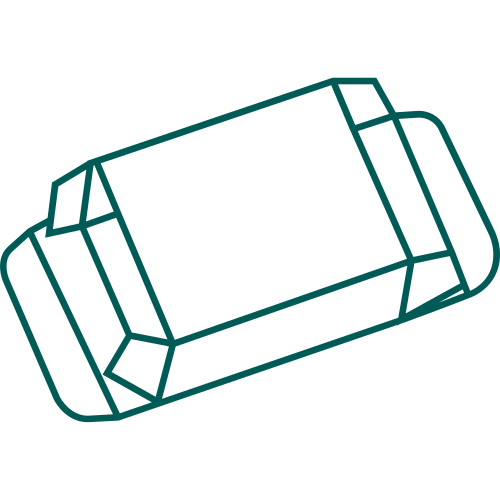





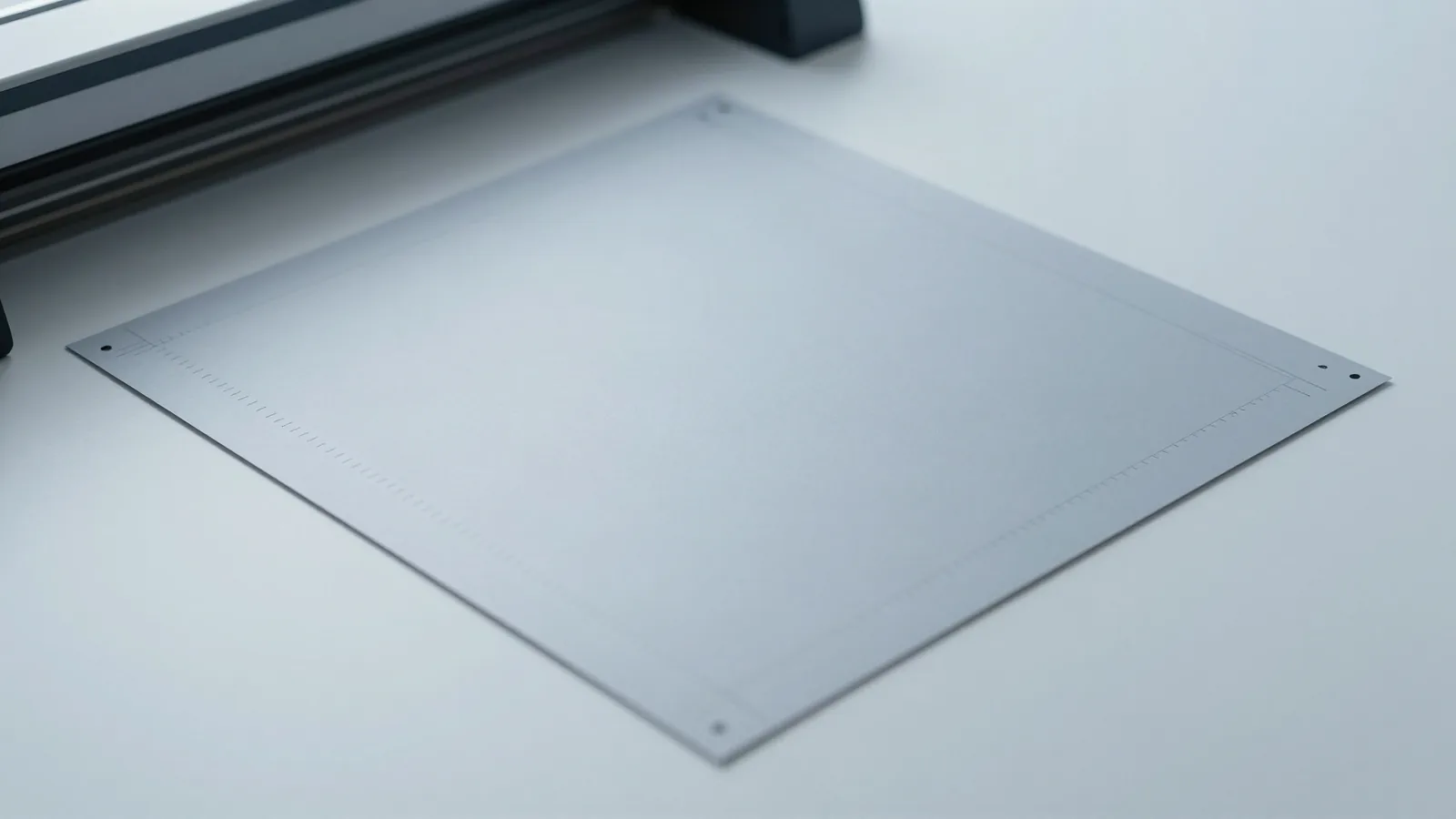
















































Independent custom printed boxes begin with the packing job. A small retail line may need flat storage, a readable front panel, and repeatable hand packing. A subscription or direct parcel may need a mailer structure with room for protective material. A dieline is the flat cutting, folding, and glue map that turns those choices into printable panels. Send the actual product, packed set, and opening direction. Compare custom printed macaron packaging boxes for a compact format.
What should an independent brand settle before choosing a printed box?
Start with the product, packed components, opening action, and place where the box will be used. Shelf presentation needs a readable front panel and controlled folds. Parcel delivery adds movement, outside dimensions, and closure questions. If variants share one format, decide which panels change and which stay fixed before artwork is built.
That decision controls the dieline, setup, proof review, and future file handling. Write dimensions as length x width x depth. Separate inside clearance from outside targets. Include inserts, tissue, cards, protective wraps, and any accessory that will ship inside the box.
Which box structure fits the way I pack and sell?
A mailer with a roll end tuck top, commonly identified with FEFCO 0427, suits a parcel-oriented presentation because the closure and base are part of the flat pattern. Straight tuck end and reverse tuck end cartons use different panel and tuck layouts. Auto-lock bottom and crash-lock structures form a locking base during packing. A sleeve wraps an inner carton or tray.
| Structure | Common trade use | What to decide |
|---|---|---|
| Straight tuck end | Lightweight folding carton | Front panel, tuck direction, and glue area |
| Auto-lock bottom | Carton with a formed base | Base closure and hand-packing sequence |
| Mailer, FEFCO 0427 | Parcel-oriented box | Product movement and opening access |
| Two-piece rigid | Firm lid and base presentation | Fit, insert position, and storage footprint |
For a firm presentation, compare rigid printed boxes. For a bottle-shaped product, custom Woozy bottle boxes show why product geometry drives folds and inserts. The structure should follow the product and packing sequence, not only the preferred front panel.
Which board and finish choices make sense for my line?
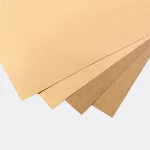
SBS, C1S, and C2S paperboard are commonly discussed in the 12 to 24 pt range for folding cartons. Kraft board is commonly discussed in the 18 to 24 pt range when its surface is part of the visual direction. Rigid chipboard is commonly 1.5 to 3 mm thick and can be wrapped in 100 to 157 gsm art paper.
These are general trade ranges. Caliper changes folds, edge feel, insert clearance, storage footprint, and closure behavior. A thicker board can stiffen a folding carton while taking more room at glue tabs and pockets. Custom printed macaron packaging boxes are a compact-format reference, but the actual product controls the dieline.
How do print and finish decisions affect the box proof?
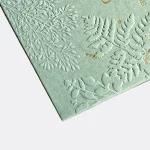
Offset CMYK is commonly used for detailed paperboard artwork. Digital printing is commonly considered for short runs or multiple artwork versions. Flexo is commonly associated with corrugated packaging. Matte or gloss lamination changes surface appearance and glare. Soft-touch changes hand feel. Spot UV, foil stamping, embossing, and debossing belong on named artwork areas, not in a vague finish note.
Keep type, codes, fine rules, scores, glue tabs, cut edges, and closure folds visible during proof review. Low-resolution art can blur. RGB art can shift when converted for press. Missing bleed leaves the trim exposed. The proof should show panel order and finish placement together.
What should I test before approving independent custom printed boxes?
The real product and every included component belong in the proposed structure before approval. Check inside clearance, closure force, insert retention, panel orientation, scuff contact, and how the boxes nest for storage. A physical check catches a box that looks correct flat but pinches the product after folding.
For a compact candle format, compare custom votive candle boxes. The catalog reference can inform the format, but the packed product still decides the final cavity and fold pattern.
What belongs in the project brief?
The brief should give the dieline enough information to draw the package without guessing.
- Product and packed set dimensions, written as length x width x depth.
- Inside clearance, insert needs, opening direction, and target structure.
- Board direction, print coverage, artwork status, and finish areas.
- Quantity, delivery destination, and whether variants share one dieline.
For a small-brand route, use custom packaging for small business. Custom Packaging Lane quotes to spec from a 100-unit minimum. Pricing is from $0.49 per unit at volume, quoted to spec. Production is typically 8 to 10 business days after proof approval, plus delivery. Free US shipping, free design support, and a free dieline are available. The $19.99 sample kit is credited to the first order.
Frequently Asked Questions
What should I measure for independent custom printed boxes?
Measure the product or packed set as length x width x depth, then note inside clearance, inserts, opening direction, and the panel that needs the main artwork. Include every accessory that ships inside the box. A physical component or dependable sketch gives the dieline a more useful starting point than a product name alone.
Which folding carton structure is easiest to compare?
Straight tuck end, reverse tuck end, auto-lock bottom, and crash-lock are common folding-carton directions. Compare how each closes, where glue areas sit, how the base supports the product, and how the box is packed by hand. A mailer with a roll end tuck top, commonly identified with FEFCO 0427, follows a parcel-oriented closure path.
When does rigid chipboard make sense?
Rigid chipboard suits a box that needs a firm lid and base, a structured opening, or an insert-supported presentation. A common construction range is 1.5 to 3 mm chipboard wrapped in 100 to 157 gsm art paper. Compare product fit, storage footprint, assembly, and delivery exposure before selecting a rigid format.
Which artwork defects show up after folding?
Low-resolution art can blur, RGB art can shift when converted for press, and missing bleed can expose the trim. Type or fine rules placed too close to scores, glue tabs, cut edges, or closure folds can become hard to read or interfere with assembly. The proof should show panel order and finish placement together.
Which details can a flat file hide?
A flat file can hide tight insert clearance, a wrong panel order, blocked closure movement, a misplaced finish, or a box that pinches the product after folding. Compare the flat dieline with the folded package and the actual product. Confirm cut lines, scores, glue zones, safe areas, insert position, and every variant's artwork before release.