




























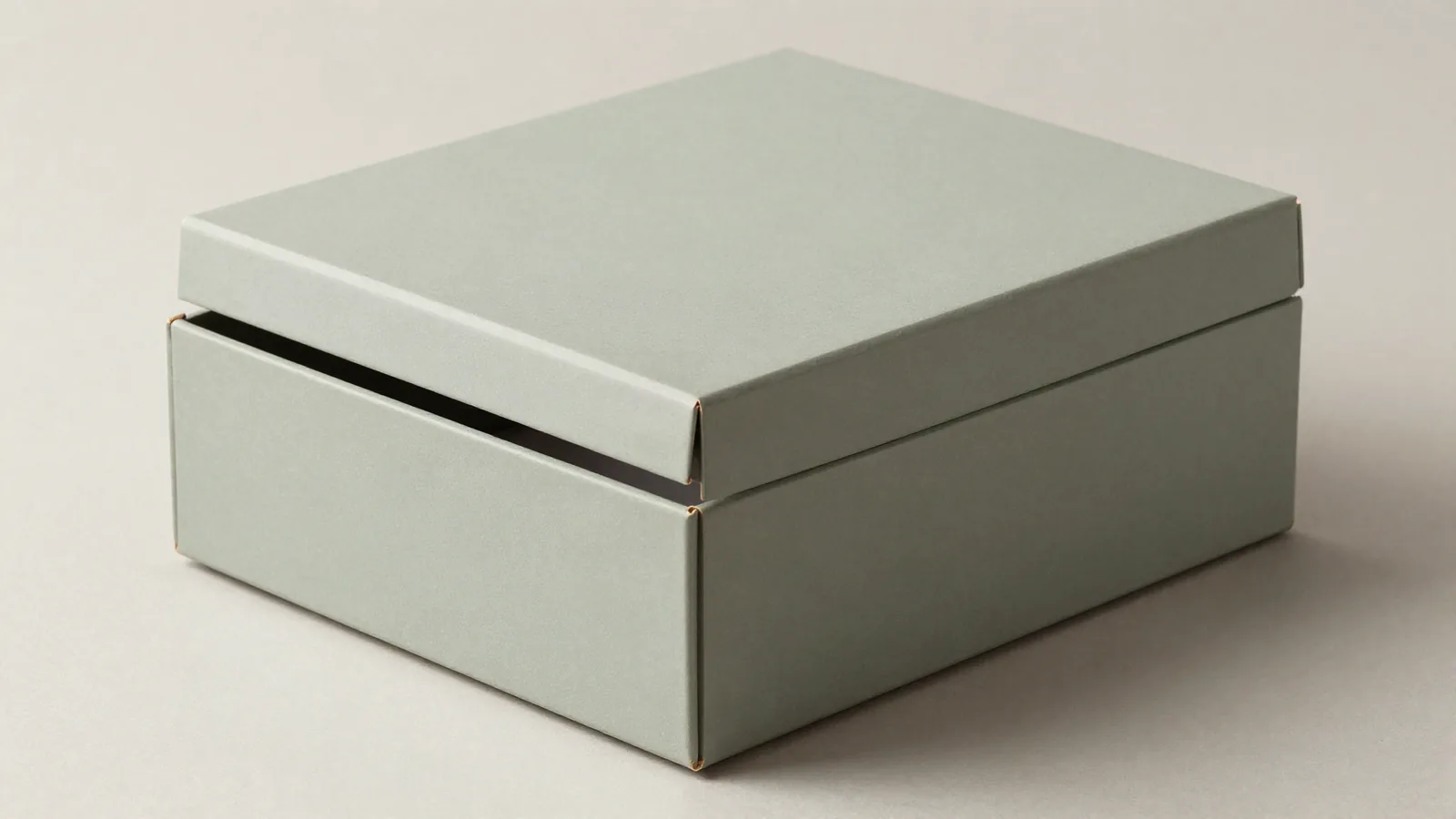




















































Jewelry box packaging should be sized around the piece and its support. An insert is the shaped support that holds the jewelry in position. A ring, necklace, or bracelet can share an outer shape and still need a different interior because the insert, chain path, clasp, and opening view are different. The finished product footprint is the starting record. The box is then drawn around the assembled presentation.
How should I size jewelry box packaging?
Choose jewelry box packaging size from the piece, insert or tray, opening direction, and removal path. Measure the product in the position it will occupy, then add support, lid clearance, and room for fingers to lift the piece. A ring may need a narrow slot and cushion. A necklace may need a card and chain route. A bracelet may need a longer tray.
| Jewelry format | Primary size question | Interior planning point | Proof check |
|---|---|---|---|
| Ring | What does the ring insert need? | Slot, cushion, stone height, and lid clearance | Check centered presentation and removal |
| Necklace | Where will the chain and pendant rest? | Card, hooks, chain route, and depth | Check visibility and tangling risk |
| Bracelet | What is the finished length and clasp shape? | Tray, support, side clearance, and lift point | Check placement and movement |
| Compact comparison | Could a small square package work? | 4 x 4 x 4 inch product reference | Confirm the actual jewelry footprint |
The 4 x 4 x 4 inch reference is a comparison point, not a universal jewelry box size. A thick insert, high stone, wide bracelet, or necklace card can reduce the usable interior. Check the closed box and the open box together because an outer dimension that looks efficient can leave too little clearance for the actual presentation.
What should ring box dimensions include?
Ring box dimensions should include the ring profile, insert material, stone height, lid clearance, and intended reveal. Measure the ring with the cushion or slot in place, then check that the lid closes without pressing on the stone or band. The insert is part of the package size. Keep the ring centered in the open view and give the fingers a clear lift point.
A rigid box is built from wrapped chipboard, so it holds its shape when opened. Paperboard folds from a scored sheet and can use a lighter structure. Kraft changes the printed surface and how ink reads on the paper. The material choice affects the fold, wall, insert fit, and finish, so it belongs in the brief before the proof.
How much room does a necklace box need?
A necklace box needs room for the chain route, pendant, display card, support points, and lid clearance. Measure the chain as it will rest in the open box, not only when it is fully extended. A card-led format may need a wider interior, while a tray-led format may need more depth for the support and pendant.
Keep the pendant visible after opening. If the chain can cross the pendant or catch on the insert, change the interior arrangement before artwork is locked. The proof should show the card position, chain path, closure, and visible panel in the same check.
What does bracelet box packaging need?
Bracelet box packaging should account for finished length, width, clasp shape, support height, and the path used to remove the piece. A tray or cushion keeps the bracelet arranged, but it also uses interior room. Decide whether the bracelet sits open, folded, or around a support. That decision controls the box length and visible presentation.
Which materials and finishes fit jewelry boxes?
Paperboard gives the box a folded structure and a printable face. Kraft has a natural paper appearance and changes how ink reads on the surface. Rigid board uses wrapped chipboard for a more structured opening. Inserts can be card, foam, or another selected support based on the jewelry and presentation.
Matte reduces reflection, gloss increases surface reflection, embossing raises selected artwork, debossing presses it into the surface, and foil adds a reflective accent. These are finish directions, not substitutes for measuring the insert. Select the surface after the product position and opening are settled.
Which CPL products can I compare?
Private-label packaging is a useful route when several jewelry formats need one brand system. Wax packaging gives a compact product format for comparison, and wine box packaging shows a more structured opening reference. These are adjacent catalog routes, not fixed jewelry dimensions.
Use custom packaging design when the artwork system, insert, and box structure need to be checked together. For physical comparisons, the $19.99 sample kit can show board feel, surface direction, and opening references before proof approval. The sample kit is credited toward the first order.
What should I send for a jewelry box quote?
Send the finished jewelry footprint, insert or tray preference, closure, opening direction, material, finish, artwork status, quantity, and US destination. Include a photograph or physical reference for a delicate chain, wide bracelet, raised setting, or unusual profile. A dieline is the flat cutting template used to place artwork and define the finished box shape.
| Order point | CPL reference | Project input |
|---|---|---|
| Quantity | 100-unit MOQ | Run size and format count |
| Pricing | From $0.49 per unit at volume, quoted to spec | Box, insert, material, finish, artwork, and destination |
| Production | Typically 8 to 10 business days after proof approval, plus delivery | Proof approver and receiving destination |
| Support | Free design support | Logo, artwork, dieline, or rough direction |
| Shipping | Free US shipping | US delivery address |
Production is typically 8 to 10 business days after proof approval, plus delivery. The clock begins after the digital proof is approved. Check the piece, insert, closed box, and open box before that decision.
Frequently Asked Questions
What determines the right jewelry box size?
The right jewelry box size comes from the piece, insert or tray, opening direction, lid clearance, and removal path. Measure the assembled presentation rather than the jewelry alone. Ring, necklace, and bracelet packages often need different interiors because their product shapes, supports, and visible opening positions are different.
Is 4 x 4 x 4 inches a standard ring box size?
A 4 x 4 x 4 inch product reference can start a jewelry box comparison, but it is not a universal ring box size. The ring profile, stone height, insert, cushion, wall, closure, and lid clearance set the finished package. Place the actual ring in its assembled insert before approving the structure.
How should necklace packaging hold the chain?
Necklace packaging should hold the chain along a planned route with the pendant visible after opening. Record the chain length, pendant footprint, clasp position, display card, support points, and lid clearance. A card-led package and a tray-led package can need different footprints, so the interior arrangement should be settled before artwork approval.
Can a bracelet box include a tray?
A bracelet box can include a tray or insert, with the finished length, width, clasp, support height, opening style, and removal path included in the plan. The tray keeps the bracelet arranged but uses interior room. Jewelry box projects use a 100-unit MOQ, and free design support is available for the structure and proof.
What are the price and production terms for jewelry box packaging?
Jewelry box packaging has a 100-unit MOQ, with pricing from $0.49 per unit at volume, quoted to spec. Production is typically 8 to 10 business days after proof approval, plus delivery. Free US shipping and free design support are available, and the $19.99 sample kit is credited toward the first order.












