




























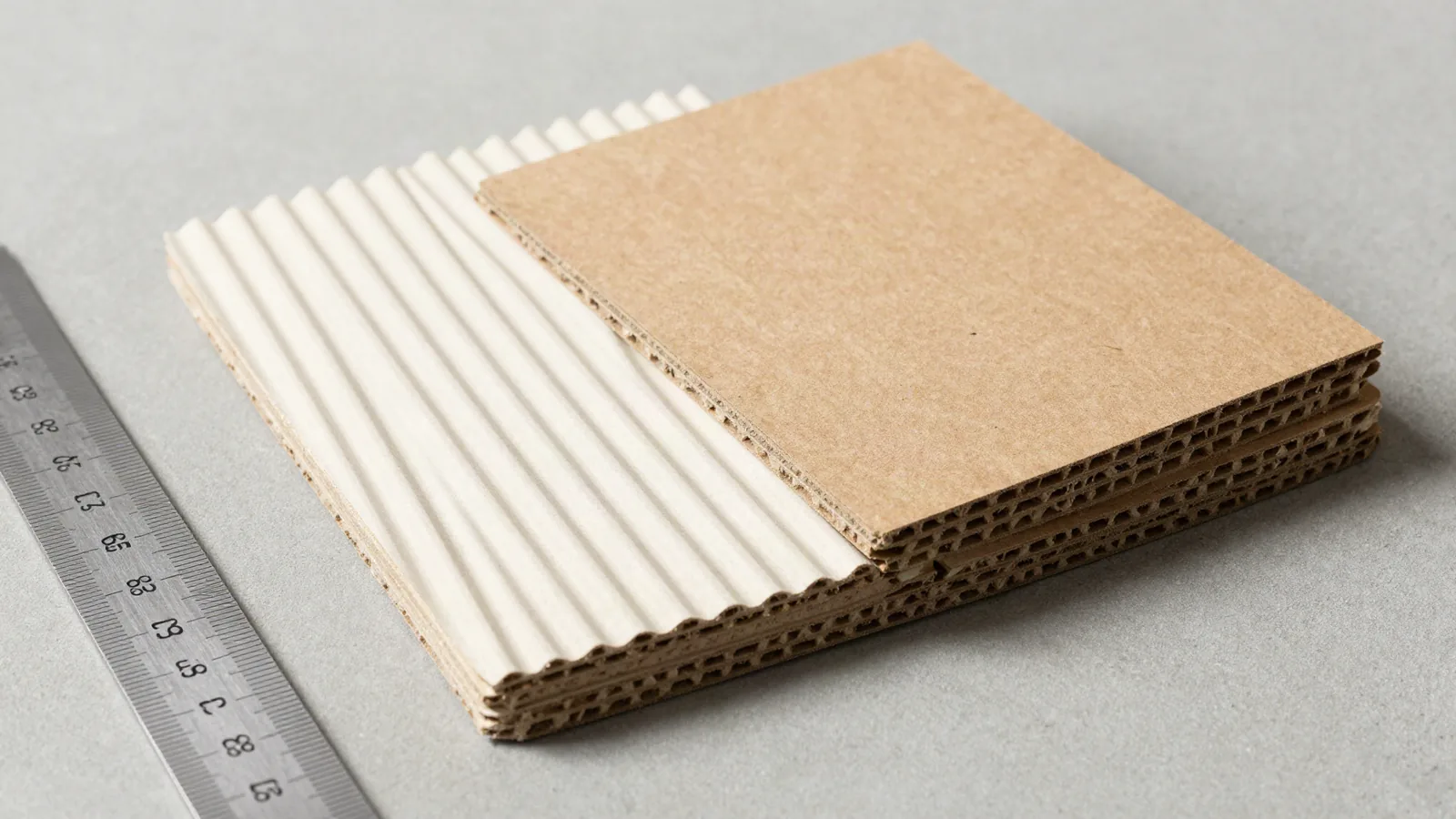




















































Wine box sizes start with the bottle, not the outer carton. A wine box's internal dimension is the open space around the bottle; the external dimension is the finished outside measurement. Record both. A dieline is the flat cutting template used to mark panels, scores, glue tabs, and cut lines. The bottle's height, widest point, base, neck, closure, and label position give the structural brief.
What wine box dimensions should buyers measure first?
Measure the bottle in the position it will occupy inside the wine box. Record the full height, widest body point, base diameter or footprint, neck profile, closure, and label position. If the bottle has a foil neck or another part that changes the fit, include it in the measurement.
Measure the complete arrangement when the package includes tissue, an insert, a card, confectionery, or another bottle. A box built around the bottle alone can leave an insert too tight or an accessory loose. The folded package should also be checked against the bottle before the proof is approved.
Which wine box sizes work as planning references?
For early planning, the chart below gives common starting dimensions for one bottle, two bottles, and gift layouts.
| Planning format | Size in inches | Approximate size in mm | Useful starting use |
|---|---|---|---|
| Single upright bottle | 4.5 x 4.5 x 13 | 114 x 114 x 330 | One bottle with fitted presentation space |
| Two bottle horizontal | 10 x 4.5 x 13 | 254 x 114 x 330 | Two bottle gift layout |
| Bottle and accessory | 6 x 5 x 14 | 152 x 127 x 356 | One bottle with a card or compatible gift item |
| Wide gift set | 13 x 5 x 14 | 330 x 127 x 356 | Bottle presentation with divider or accessory space |
These are planning dimensions, not universal bottle or retail standards. Confirm whether a quoted measurement is internal or external, then check the fit with the actual bottle and insert. The metric values are rounded conversions for early planning.
How do bottle orientation and window placement change the fit?
Upright and horizontal bottles need different panel proportions. An upright bottle creates a taller front, while a horizontal pair needs more width and a divider plan. Choose the direction from the bottle shape, storage position, opening sequence, and gift layout.
Place a window after the bottle and label position are known. The visible area should line up with the part of the bottle the buyer needs to see. A sleeve needs a clear pull direction, and a cover needs enough clearance to pass over the insert. Board thickness, scores, and glue tabs also affect the outside measurement.
What should a wine box dieline show before printing?
Before printing, the wine box dieline should show panels, scores, glue tabs, cut lines, the window opening, and the insert position. A score is a crease line that guides a fold. Keep small type and barcodes away from scores and cut edges.
Bleed is artwork that extends past the cut line so a small cutting shift does not leave an unprinted edge. Include it in the file. RGB artwork can shift when it is converted for press, so check the converted colors in the proof. The digital proof is the point to catch a label that sits too close to a fold.
Which CPL products help compare wine packaging formats?
Wine box packaging is the direct starting point when bottle presentation drives the project. Custom foam box inserts help compare controlled internal positioning. If the gift includes confectionery, chocolate tin boxes give you a separate component to consider. An embossed tin box is another format for a metal presentation piece.
How should the sample kit fit the wine box decision?
The $19.99 sample kit gives the team a physical reference for bottle presentation, insert direction, cover fit, window placement, and surface choices. Use it beside the actual bottle and any gift components. The project proof still needs to confirm the finished dimensions, artwork, structure, and opening sequence.
What does CPL need before quoting wine box sizes?
A useful wine box quote identifies internal and external dimensions, bottle orientation, insert position, window or cover design, artwork version, quantity, and destination. CPL uses a 100-unit MOQ. Pricing is from $0.49 per unit at volume, quoted to spec. Production is typically 8 to 10 business days after proof approval, plus delivery.
Free US shipping and free design support are available. If any component may touch food, ask us about food-contact options for your product. For broader planning, use the custom packaging solutions hub, then carry the bottle measurements into the quote.
Frequently Asked Questions
How much extra room should a wine box leave around a bottle?
The required room depends on the bottle, insert, and opening structure, so measure the actual bottle before choosing a wine box size. Record the internal and external dimensions in the quote. The insert should hold the bottle in its intended position without making the package difficult to close.
Can a single wine box hold two bottles?
A single wine box can be planned for two bottles when the internal width, divider, and opening direction match the complete arrangement. The two-bottle horizontal planning example is 10 x 4.5 x 13 inches. Confirm the actual bottle pair and insert before proof approval.
Can a wine box include a window and sleeve?
A wine box can include a window, sleeve, or cover when the structure leaves room for the bottle, insert, and opening motion. Place the window after the label position is known. The proof should show the visible area, pull direction, panel artwork, and final structure together.
What is the smallest custom wine box order?
The smallest custom wine box order from CPL is 100 units. Send the bottle measurements, orientation, insert plan, artwork status, finish direction, and destination with the request. Pricing is from $0.49 per unit at volume, quoted to spec, and free design support is available.
When does wine box production time begin?
Wine box production typically takes 8 to 10 business days after proof approval, plus delivery. The clock starts after the approved proof, not when the first inquiry arrives. Allow time before approval for bottle measurements, insert decisions, artwork checks, and confirmation of internal and external dimensions.












