

































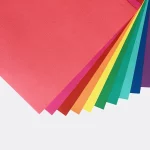


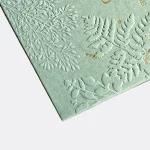
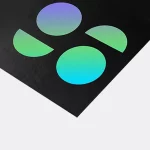
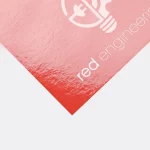






























For a buyer typing box metalized, the question is usually about a reflective finish on a printed paperboard box. A metalized box uses a reflective film or foil-laminated surface; foil lamination means a reflective layer is bonded to the board before the box is cut and folded. That layer changes how light hits the package, but it does not choose the board, closure, dimensions, or insert. Those decisions still come from the product.
What is a metalized box?
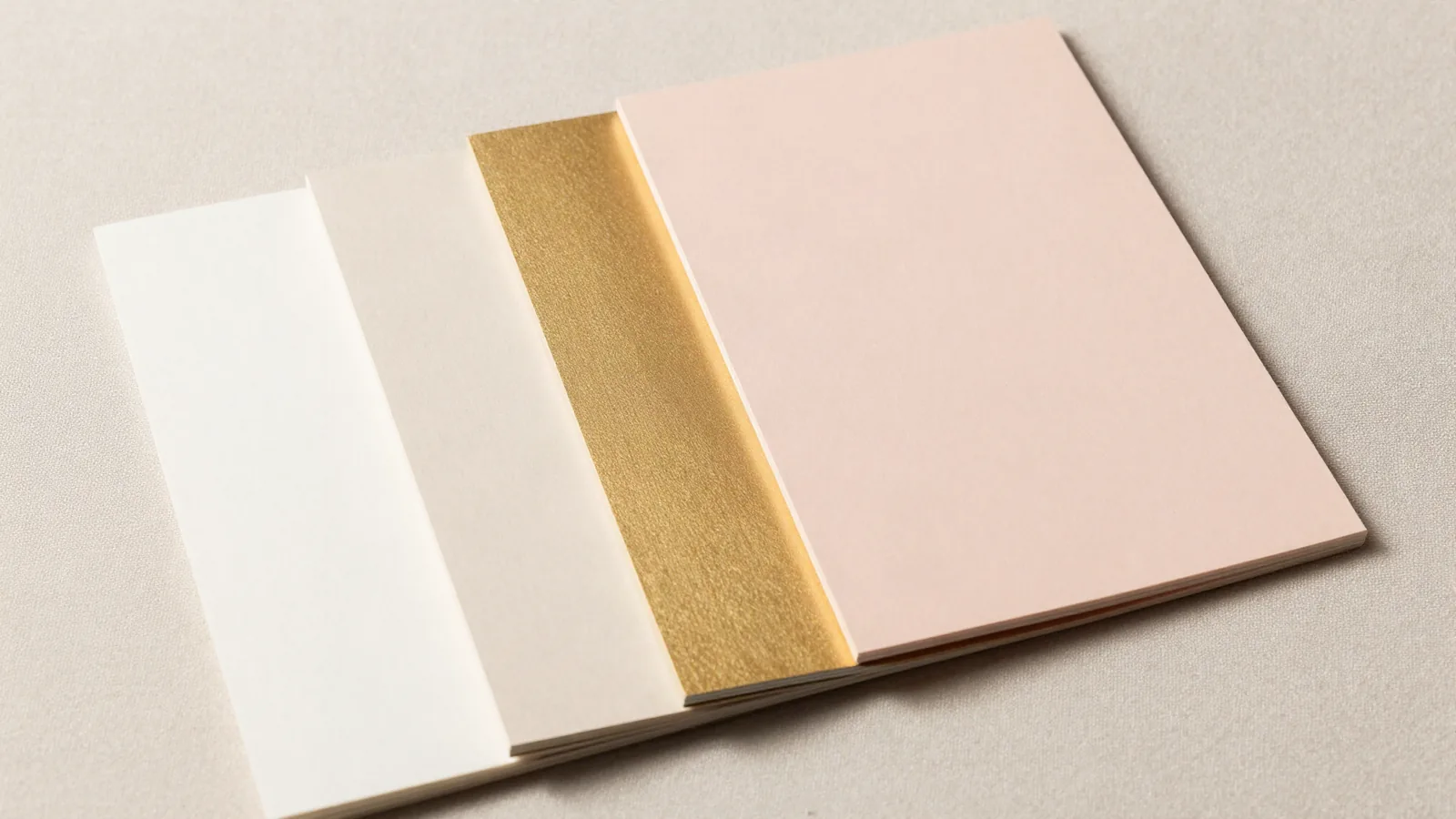
A metalized box is a converted paperboard package with a reflective surface treatment. The box can still have tuck flaps, glue tabs, scores, locking panels, or an insert. The metalized layer changes the face of the package. It does not turn the package into a metal container.
Printed ink over a reflective ground can look brighter, darker, or more transparent than the same ink on white board. Large solid panels show the difference first. Small type and thin rules need a close proof check because reflectivity can reduce contrast at one viewing angle and increase it at another.
How does foil lamination change printed color?
Foil lamination changes the surface underneath the ink, so color decisions need to account for the material below the artwork. Ask the proof to show reflective areas, covered areas, white underprint where available, and panels that fold away from the front. A color that reads cleanly on a flat PDF can shift once the box is folded and light moves across the score lines.
| Area | What can change | Proof check |
|---|---|---|
| Reflective front panel | Light changes perceived contrast | Check solid fields and fine type |
| Score and fold | Surface bends at the crease | Inspect the assembled opening |
| Glue tab | Adhesive area can cross artwork | Confirm tab position and coverage |
| Interior panel | Reflective surface may face the product | Check insert, product fit, and handling |
Which box formats can use a metalized finish?
A metalized finish can be discussed for several box formats, but the product dimensions and opening sequence set the starting point. Wine box packaging fits a bottle-oriented package brief. Shoe box packaging fits a footwear presentation. Metalized boxes give a direct format reference. An embossed tin box is a different material, useful only as a comparison for surface feel and structure. Product pages describe formats, not a promise that every format carries the same finish.
What should the dieline show?
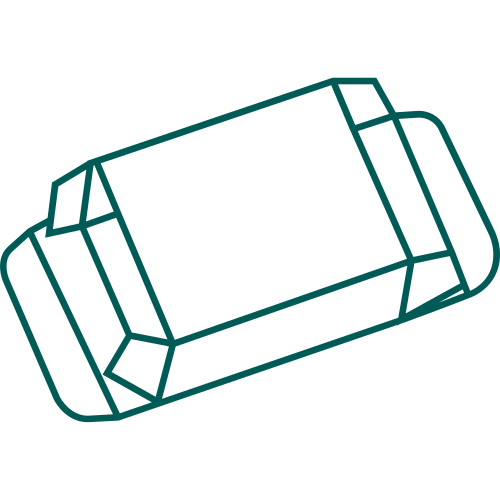
A dieline is the flat cutting template that shows the panels, cut lines, scores, bleed, glue tabs, and closure points before production. Send the product dimensions first. A dieline drawn from the outside of a package can leave the product tight; one drawn from the wrong inside dimension can leave movement. The insert deserves the same check. If its cavity is too loose, the product rattles before the carton ever reaches a customer.
Keep type away from scores and glue areas, and carry artwork past cut lines where the file requires bleed. Low-resolution art and RGB color can look acceptable on screen, then lose detail or shift during press preparation. The digital proof is the point to catch those errors.
Does the finish replace the need for the right board?
The board and structure still decide how the box folds, stacks, and protects the product. A reflective face cannot fix a weak score, a glue tab that lands on artwork, or a closure that rubs against a finished panel. Board thickness, flute or caliper, and interior support belong in the same discussion as finish, even when the buyer's first request is metalized color.
How should a buyer check the finished surface?
Check the front, side, top, and interior panels under the light the package will see. Look at large ink fields, fine type, barcode placement, scores, tabs, and the opening sequence. If a second finish such as matte or gloss lamination is part of the brief, inspect where those surfaces meet. A sample is useful because a flat screen cannot show the hand feel or the way a reflective panel catches light.
What are the MOQ, price, and production terms?
The MOQ is 100 units. Pricing is from $0.49 per unit at volume, quoted to spec. Production is typically 8 to 10 business days after proof approval, plus delivery. Free US shipping and free design support are available. CPL draws the dieline and sends a digital proof before anything prints.
Send the product dimensions, box format, artwork, finish direction, quantity, and delivery location for a quote. The custom packaging design service can help draw the dieline. If you want to inspect the surface before approval, order the $19.99 sample kit and compare reflectivity, print contrast, and fold behavior.
Frequently Asked Questions
What does metalized mean on a paperboard box?
Metalized on a paperboard box means the package uses a reflective film or foil-laminated surface as part of its finish. The box remains a converted paperboard structure with its own board, folds, scores, tabs, closure, and artwork. Metalized describes the surface treatment, not a metal container or a complete box specification.
Is a metalized box made from metal?
A metalized box is usually a paperboard box with a reflective film or foil-laminated layer, so the name does not mean the package is made from metal. The material, dimensions, closure, and insert still need their own specifications. If the project needs a tin container, ask for that as a separate format.
Will foil lamination change printed color?
Foil lamination can change how printed color reads because the reflective layer sits under the artwork. Large solid areas, small type, thin rules, and dark or light panels can look different from the same art on white board. Review the finish treatment, ink coverage, folds, and interior panels in the proof before approval.
Can a shoe box or wine box have a metalized finish?
A shoe box or wine box can be discussed with a metalized finish when the selected board, structure, artwork, and conversion details work together. The finish does not choose the box shape. Product dimensions, scores, glue tabs, closure points, and the intended opening should be supplied before the final treatment is quoted.
What is the MOQ for metalized box packaging?
The MOQ for Custom Packaging Lane metalized box packaging is 100 units. Pricing is from $0.49 per unit at volume, quoted to spec. Production is typically 8 to 10 business days after proof approval, plus delivery. Free US shipping and free design support are available, and the sample kit is $19.99.