












































































What makes a shirt mailer work for apparel?
The folded garment, rather than the flat shirt size, sets the inside cavity. A shirt mailer is a box or carton built around a folded garment, its packing layers, and its opening. Record the folded length, width, thickness, collar or button profile, tissue, card, belly band, and any insert. Too little room compresses the garment. Too much room lets it shift and arrive with a poor fold.
Box dimensions are conventionally written as length x width x depth. Use inside measurements for the folded shirt and every packing layer. About 1/16 in, or 1.5 mm, is a common planning tolerance reference. Fabric loft changes by knit, weave, weight, and finishing treatment, so check the largest folded sample in the actual mailer.
Which mailer structure should I compare?
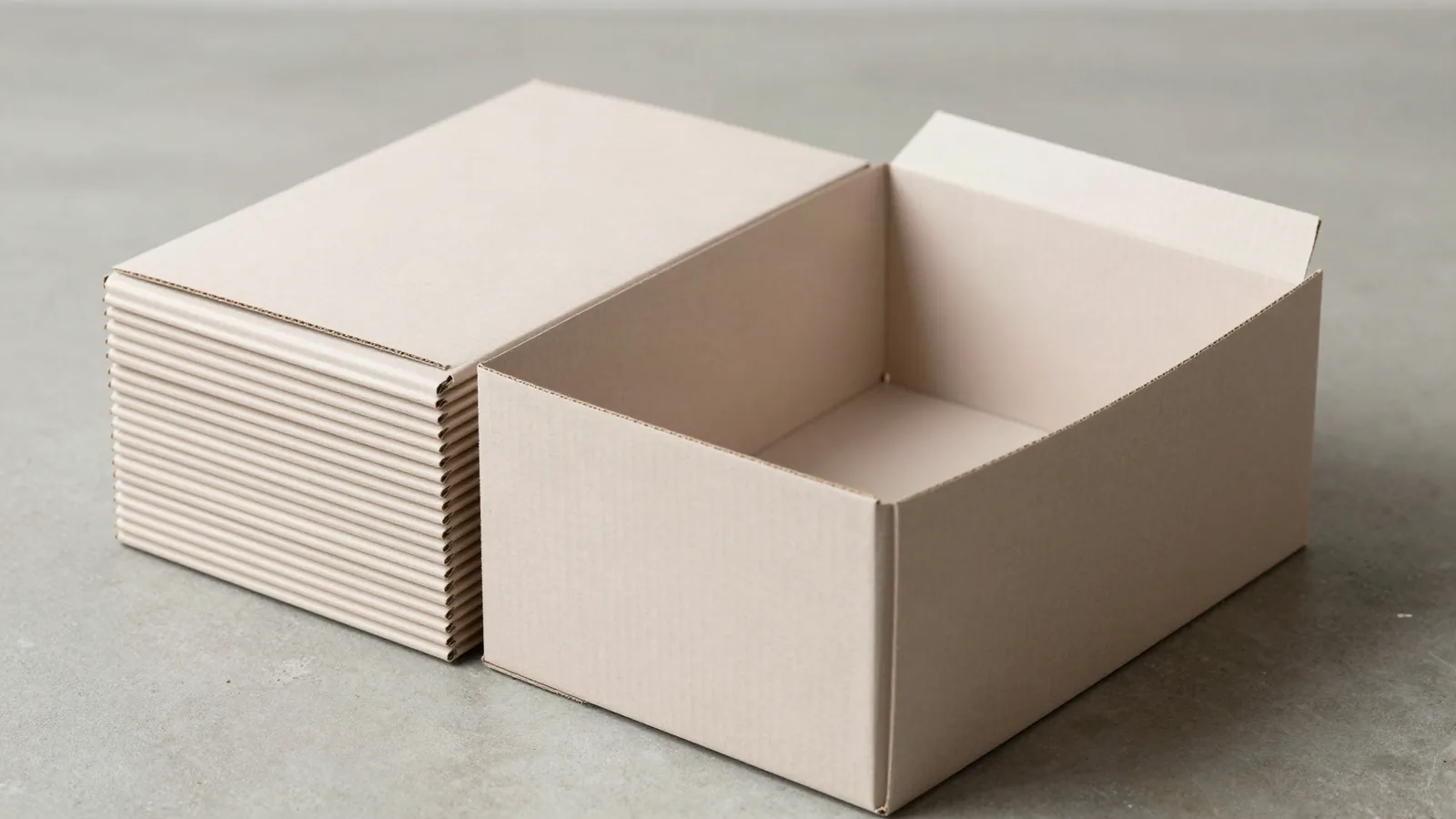
A roll end tuck top links the opening motion and closure in one construction. Compare the tuck, crease, front panel, and inner clearance before choosing a style.
| Structure | Typical use | What to check |
|---|---|---|
| Mailer, roll end tuck top | Direct-to-consumer apparel presentation | Closure, opening force, and front-panel graphics |
| FEFCO 0427 style mailer | Self-locking ecommerce formats | Crease accuracy and tuck engagement |
| Straight tuck end carton | Retail-ready folded shirts | Top and bottom closure, side seams, and shelf direction |
| Sleeve over inner carton | Gift presentation or seasonal collections | Sleeve alignment after handling |
FEFCO 0427 is a commonly referenced mailer style. Structure names alone do not determine how the package will work. Board caliper, crease layout, closure geometry, and the choice between a parcel mailer and a protected secondary shipper all change the result.
Which board and print choices fit a shirt mailer?
Board caliper controls how the mailer folds and how much the front panel flexes. SBS paperboard is commonly specified around 12 to 24 pt. C1S has one coated printable side, while C2S has coated surfaces on both sides, which matters when the inside is part of the unboxing. Kraft board is commonly around 18 to 24 pt and gives a more fibrous surface direction.
Offset CMYK suits detailed apparel graphics, small copy, color blocks, and repeated color across several panels. Digital printing is commonly considered for short runs or several seasonal versions. Matte or gloss lamination changes sheen and surface protection. Soft-touch changes hand feel. Spot UV isolates a logo or pattern. Foil stamping, embossing, and debossing create separate surface effects that should appear on the proof. Compare shirt boxes when the same folded garment must work in a retail carton and a mailer.
How do I stop a folded shirt from shifting?
The folded shirt needs a repeatable pack method before the insert is drawn. A belly band, tissue wrap, paperboard insert, or folded card can set the presentation, but the added piece should not press into a collar or button. Check that the tuck flap does not catch fabric and that printed surfaces do not rub against decorations.
A physical sample can expose bowed panels, tight corners, weak tucks, excessive headspace, or a flap that is hard to open without damaging the package. Compare shirt box fit guidance with the selected mailer. Then load the shirt the same way a packer will load it, including tissue, cards, bands, and any folded insert.
What should a shirt mailer quote request include?
The largest folded configuration and the smallest one should both be named when a mailer will cover several garment sizes. Send shirt size range, folded dimensions, fabric type, packing layers, opening style, artwork status, destination, and whether the package needs a printed inside, sleeve, or secondary shipper. A size range that looks close on paper can produce a loose small shirt or a stressed large one.
How should the shirt mailer proof be checked?
A flat dieline cannot show whether a collar catches a tuck flap. Check the folded garment in a sample or mock pack, then review:
- Inside length x width x depth, folded thickness, and packing-layer clearance.
- Closure engagement, opening force, corner fit, side seams, and fold direction.
- Logo, product copy, barcode, and artwork bleed away from scores, glue tabs, and trim.
- Board, offset CMYK or digital print, lamination, spot UV, foil, embossing, and debossing layers.
- Whether the smallest and largest folded configurations both sit squarely inside the mailer.
Low-resolution art can soften small type and RGB art can shift when converted for press. Catch missing bleed and type too close to a score while the proof is still editable.
How do I request shirt mailer samples and a quote?
Start with a folded shirt sample and the opening style you want to compare. The shirt boxes page gives an apparel-specific product reference. Use custom packaging solutions for design coordination, send the garment measurements, and request the sample kit when board, closure, print, or finish needs a physical check.
Custom Packaging Lane is a US-based packaging supplier. Shirt mailer projects start at a 100-unit minimum, with pricing from $0.49 per unit at volume, quoted to spec. Production is typically 8 to 10 business days after proof approval, plus delivery. Free US shipping, free design support, and a free dieline are available. The $19.99 sample kit is credited to the first order. Send the largest folded shirt before approving the proof.
Frequently Asked Questions
How should I measure a shirt before choosing a mailer?
Fold the shirt exactly as it will be packed, then record the folded length, width, and thickness. Repeat the measurement for the largest size or heaviest fabric in the range. Include tissue, cards, belly bands, or inserts. The mailer should hold the garment squarely without compressing the fold or leaving excessive headspace.
Are roll end tuck top mailers suitable for ecommerce shirts?
A roll end tuck top can suit ecommerce shirts when the folded dimensions, board stiffness, closure, and shipping route match the pack-out. Check tuck engagement, crease accuracy, corner fit, opening force, and whether a secondary shipper is needed. A physical sample shows problems that a flat dieline cannot show.
What is the difference between C1S and C2S paperboard?
C1S paperboard has one coated printable side, while C2S paperboard has coated surfaces on both sides. C1S can suit a mailer designed mainly around outside graphics. C2S can support a printed or smoother interior. Both are commonly discussed within the 12 to 24 pt SBS range, subject to structure and load.
Which finishes work on a shirt mailer?
Matte or gloss lamination changes sheen and surface protection. Soft-touch changes hand feel. Spot UV isolates a logo or pattern, foil stamping adds a reflective mark, and embossing or debossing adds relief. Keep the finish plan away from scores, glue tabs, and high-contact edges, then show each finish as a separate proof layer.
Can one shirt mailer fit several garment sizes?
One shirt mailer can cover a size range, but the smallest folded garment may look loose while the largest may stress the closure. Measure the smallest and largest packed configurations with the same layers. If the range is broad, separate mailer sizes or a flexible insert can keep the presentation more consistent.