








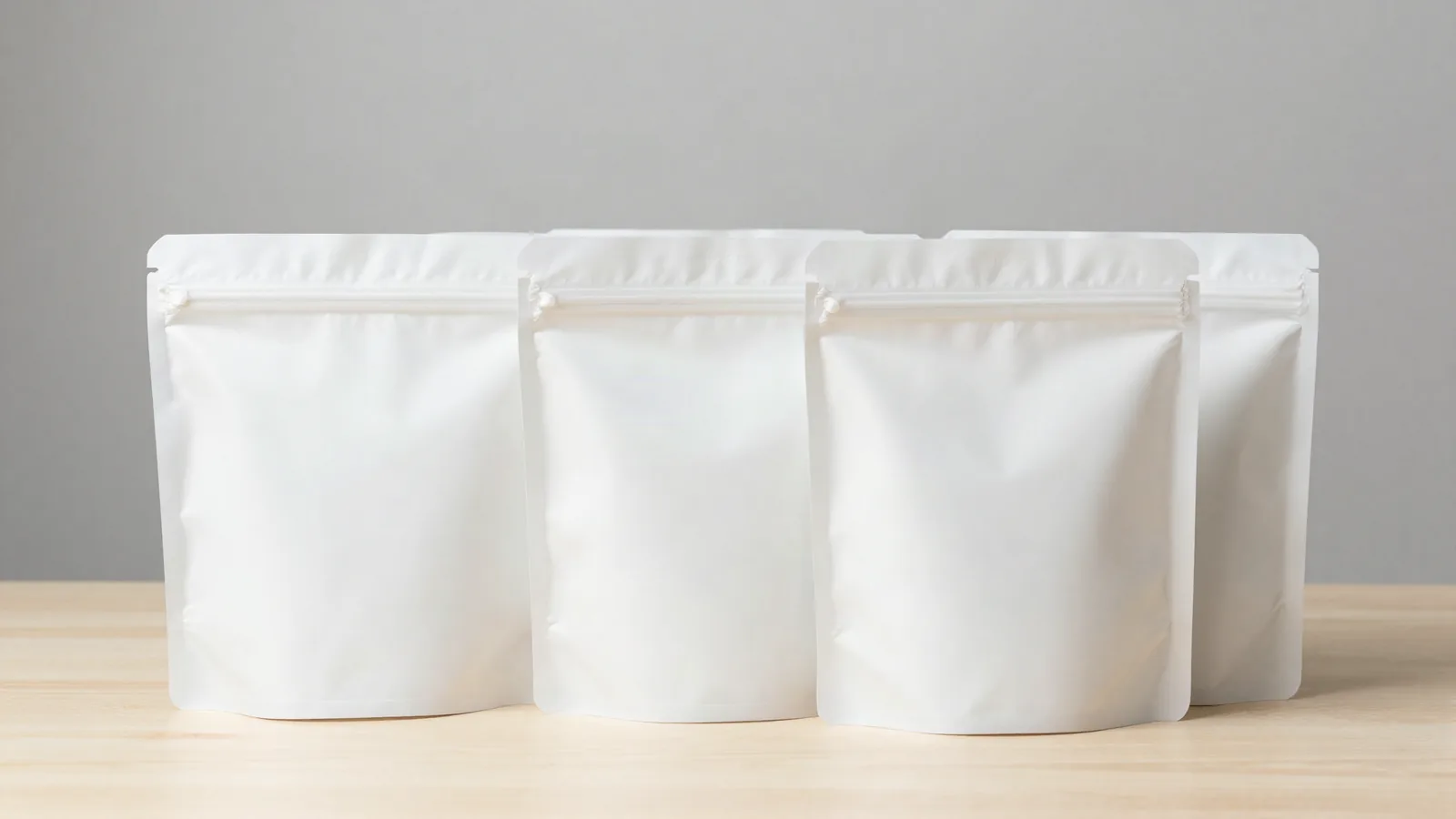


































A Mylar bag is a flexible laminated film pouch, and its size label only works when it is checked against the product's shape, density, fill level, closure, and gusset. CPL's published chart gives capacity and dimension references from small portions through larger storage formats. Use the rows to choose a starting direction, then confirm the usable space and finished construction against the product that will go inside.
What are the standard Mylar bag sizes?
CPL's published Mylar bag size references run from 1g at 3 x 4.5 inches to 448g at 14.6 x 16.4 inches. The middle rows provide comparison points, but a capacity label does not fix the fill weight for every product because density and shape change the usable volume.
| Capacity reference | Published dimensions | Planning use |
|---|---|---|
| 1g | 3 x 4.5 inches | Small sample or portion |
| 3.5g | 3.7 x 5 inches | Small retail portion |
| 7g | 4.5 x 6.5 inches | Medium portion comparison |
| 14g | 5 x 8.1 inches | Half-ounce comparison |
| 28g | 6 x 9.3 inches | Ounce comparison |
| 56g | 12 x 9 inches | Larger storage reference |
| 448g | 14.6 x 16.4 inches | Large-capacity reference |
How do I choose the right Mylar bag size?
Choose a Mylar bag size by starting with the product's actual length, width, height, and expected fill, then adding the space needed for sealing and headspace. Headspace is the empty area above the fill line that lets the bag close without pressing into the product. The fill line belongs in the size discussion.
Record the opening method, resealable closure, tear notch, window, hanging need, and artwork area. If the product is irregular, measure the widest point and the loaded shape. A bag that holds the listed capacity may still be the wrong choice if the product cannot enter the opening or the seal area is too short.
What does a gusset change on a Mylar bag?
A gusset is a folded side or bottom panel that gives a flexible bag more depth and can help it stand. It changes the usable volume, front-panel width, seal layout, and finished footprint, so a flat bag size cannot be compared directly with a stand-up bag size.
Tell the supplier whether the bag must lie flat, stand on a bottom gusset, or hang from a header or punched hole. Send the loaded shape and the intended fill height. A gusset that is too narrow can reduce the front panel, while one that is too deep can change the way the filled bag sits.
What material should I discuss for a custom Mylar bag?
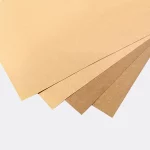
Mylar packaging is a flexible film package, and its barrier depends on the film layers selected for the job. PET or clear PET can support a visible product direction, metalized Bo-PET adds a light-blocking barrier layer, kraft paper changes the paper-facing appearance, PE supports flexible film and seal discussions, and PLA is a plant-based film option to ask about for the intended use.
| Material family | Practical question |
|---|---|
| PET or clear PET | How much visibility and surface treatment are needed? |
| Metalized Bo-PET | Is a light-blocking barrier direction needed? |
| Kraft paper | Should the bag have a paper-facing appearance? |
| PE | What flexible-film and sealing needs apply? |
| PLA | Is a plant-based film option appropriate to discuss? |
If the contents involve food contact, ask us about food-contact options for your product before selecting the film, inks, or finish. Put that question in the first material conversation, not after the artwork is complete.
Which custom Mylar format fits the bag size?
Large Mylar bags fit the larger capacity discussion. For a non-rectangular silhouette, compare irregular shape Mylar bags with die-cut Mylar bags. A printed retail surface points to custom printed Mylar bags, while film and closure questions can include custom plastic Mylar bags and custom Mylar ziplock bags.
What should I check on a Mylar bag proof?
Check the finished bag orientation, seal area, tear notch, zipper position, gusset fold, window, and artwork panel on the proof. Low-resolution art, RGB files converted for press, and type placed too close to a seal or cut line are easier to correct before the production run.
Send the product dimensions, expected fill, density or loaded shape, opening, closure, gusset, artwork area, finish, and standing or hanging requirement. The MOQ is 100 units, and pricing is from $0.49 per unit at volume, quoted to spec.
What commercial terms apply to custom Mylar bags?
Production is typically 8 to 10 business days after proof approval, plus delivery. Free US shipping and free design support are available. The $19.99 sample kit can help compare material and finish directions before proof approval.
For a small-business packaging brief, use custom packaging for small business after the product fit is defined. Send the quantity by size and artwork version with the first request so the quote reflects the actual bag family.
How do you turn a Mylar size chart into custom dimensions?
Build a filled prototype and mark the seal land before converting chart dimensions into a production drawing. Seal land is the clear band at a pouch edge where film layers join. A layflat size records the finished, unfilled pouch rather than its loaded footprint. For a stand-up format, about 3 to 7.5 in wide is a common planning range, but the actual fill trial sets the final width.
| Pouch format | Dimension convention | Drawing check |
|---|---|---|
| Flat pouch | Finished width x finished height | Usable area inside side and top seals |
| Stand-up pouch | Finished width x finished height x bottom gusset | Loaded base opening and front-panel curve |
| Side-gusset pouch | Finished width x finished height x side gusset | Expansion on both folded sides |
| Die-cut pouch | Overall finished width x height plus shaped outline | Seal continuity around the shaped edge |
Do not mix finished outside dimensions with the internal usable area. Zippers, top seals, tear features, and bottom folds occupy part of the layflat. Mark the expected fill line on the prototype, close it with the intended method, then measure the loaded width, height, and depth for shelf and carton planning.
Does the laminate change a custom Mylar bag's fit?
Yes, a PET / AL / PE construction can feel stiffer and open differently from a clear film structure. PET is the outer polyester carrier, AL is aluminum foil, and PE is the inner polyethylene sealant. A laminate is a structure made by bonding film layers together. Layer thickness and stiffness affect how sharply a gusset opens, how the pouch springs back, and how much pressure reaches the seals.
Clear and opaque structures should be prototyped separately because a window or metal layer changes the construction. Check the packed sample after it has rested in the intended orientation. A pouch that stands immediately after filling can lean later when particles settle or trapped air moves upward.
When does digital printing make sense for multiple bag sizes?
Digital print suits shorter or versioned runs because it does not require a separate plate for each color. Flexography uses raised flexible plates and can become more economical when setup is spread across a repeat run. Gravure uses engraved cylinders and belongs in a different tooling discussion. Repeat length is the artwork interval repeated around a press cylinder. The crossover depends on quantity by size, artwork versions, ink coverage, repeat length, and film construction.
Each size needs its own artwork map because seals and folds move relative to the front panel. Check small type at the curved gusset, color alignment near shaped edges, and changing product names across every version. A single approved front panel should not be copied to a smaller pouch until its printable area has been checked.
What affects the quote for a nonstandard bag size?
Film construction, print coverage, quantity breaks, tooling, number of artwork versions, and closure features are the direct cost drivers. Tooling may include a cutting die for die-cut Mylar bags, printing plates for flexography, or engraved cylinders for gravure. Heat-seal requirements should also be specified when comparing custom heat-seal bags.
List quantities by finished size rather than as one combined total. A family with several widths may share artwork elements, but it does not share one shaped outline, gusset layout, or repeat. That distinction keeps the quote tied to the actual production plan.
How should custom-size pouches be packed after production?
Keep counted bundles in a stated direction so zippers, shaped corners, and gusset folds do not take a permanent bend. For each master carton, record units per bundle, bundles per case, closed case dimensions, case weight, stacking direction, and pallet pattern.
Open the custom Mylar bag range after the drawing and fill trial agree. Compare film and print surfaces with the sample kit, then approve the final proof for each size rather than treating one version as the master for every pouch.
Frequently Asked Questions
What are the standard Mylar bag sizes?
The standard Mylar bag references in CPL's published chart run from 1g at 3 x 4.5 inches to 448g at 14.6 x 16.4 inches. Additional rows cover 3.5g, 7g, 14g, 28g, and 56g. Use the chart for planning, then confirm product density, fill level, closure, gusset, and usable space.
How do I choose a Mylar bag size?
Choose a Mylar bag size by starting with the product's actual dimensions and expected fill, then checking headspace, seal area, opening, closure, gusset, and loaded shape. Capacity labels are references, not universal fill rules. Provide the product and filling details before selecting the final custom size.
Which materials can be discussed for custom Mylar bags?
Custom Mylar bag material discussions can include PET, clear PET, metalized Bo-PET, kraft paper, PE, and PLA directions. Each changes visibility, barrier, appearance, flexibility, or sealing considerations. If the contents involve food contact, ask us about food-contact options for your product before finalizing the film or finish.
Can custom Mylar bags use unusual shapes or zip closures?
Custom Mylar bags can be discussed with die-cut or irregular shapes, printed surfaces, and zip closures. Include the silhouette, opening method, gusset, tear notch, finish, artwork area, and loaded product shape. The final size still needs to give the product enough entry space, headspace, and seal area.
What commercial terms apply to custom Mylar bags?
Custom Mylar bags have a 100-unit MOQ and pricing from $0.49 per unit at volume, quoted to spec. Production is typically 8 to 10 business days after proof approval, plus delivery. Free US shipping and free design support are available, and the sample kit costs $19.99.