



















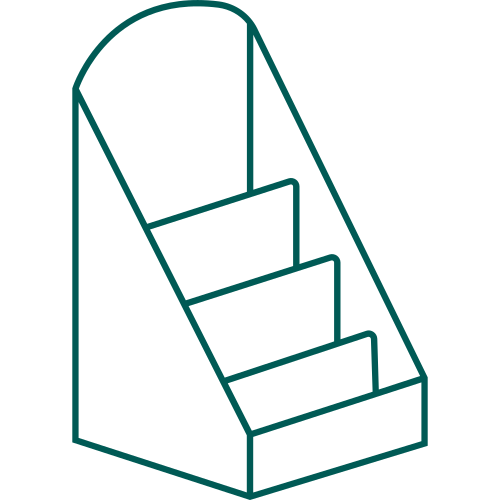






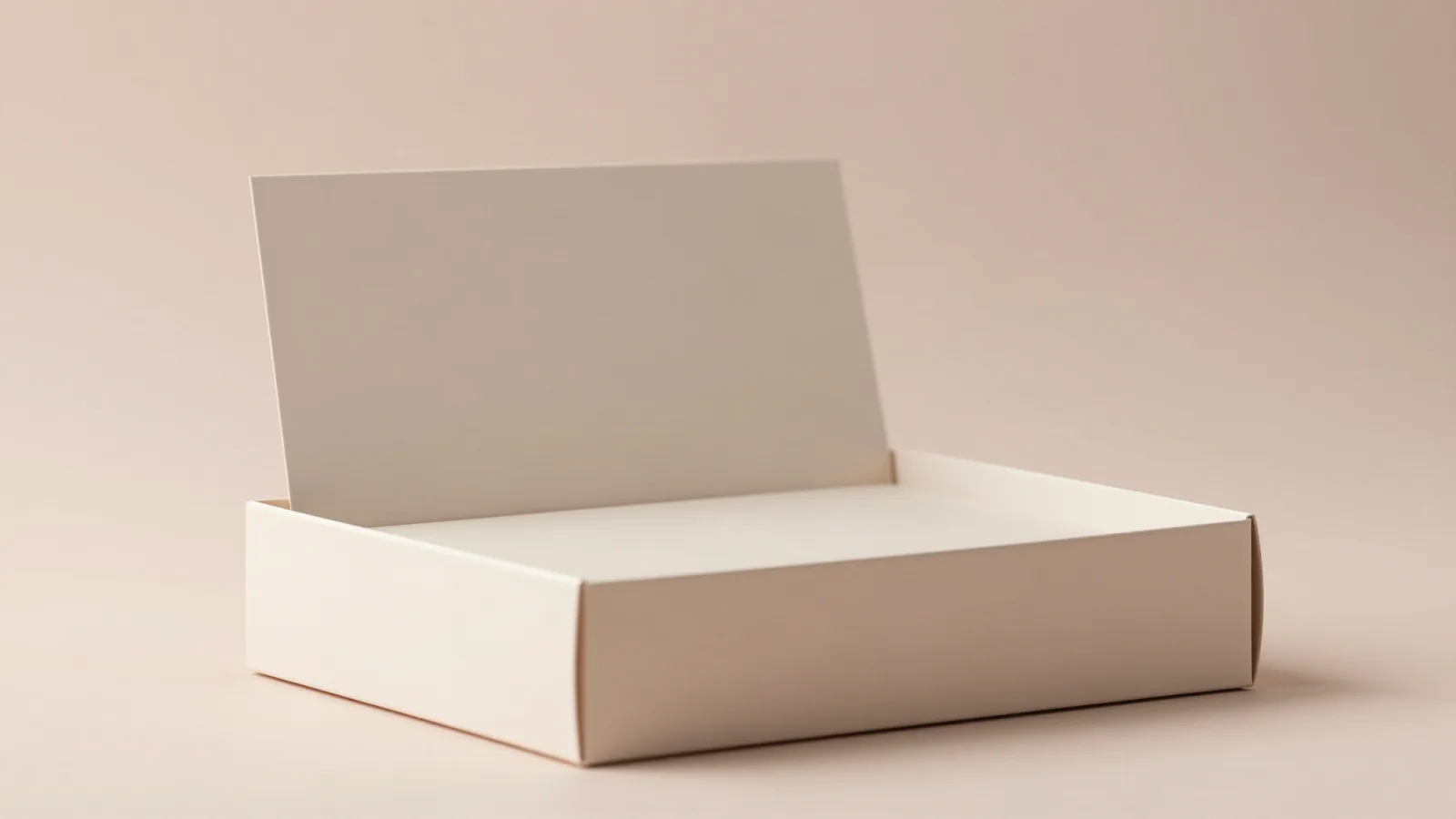





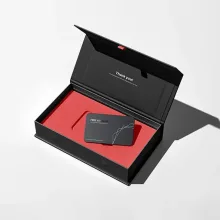












































Display box sizes start with the product and the fixture where the package will sit. A countertop display, shelf carton, window box, pop-up structure, and jewelry display can use different proportions even when the product is small. The useful record separates inside space, outside footprint, viewing direction, opening, and replenishment access.
What display box sizes are common planning references?
Common public planning references include compact counter, front-facing shelf, window, and taller retail formats.
| Display format | Reference size | Useful starting point |
|---|---|---|
| Compact counter display | 4 x 4 x 6 in, 102 x 102 x 152 mm | Small item presented on a counter or service surface |
| Front-facing shelf carton | 8 x 4 x 10 in, 203 x 102 x 254 mm | Retail shelf presentation with a clear front panel |
| Window display carton | 10 x 6 x 4 in, 254 x 152 x 102 mm | Low-profile product display with a visible face |
| Tall retail display | 12 x 8 x 16 in, 305 x 203 x 406 mm | Products needing more vertical panel space or height |
These are planning references, not universal fixture requirements. A retail shelf may impose limits that differ from a countertop. Product count, insert depth, replenishment access, window placement, and neighboring packages can also change the useful size. Confirm the available footprint and intended product-facing area before using a row as a quote dimension.
How do I choose a display box size?
Choose a display box size by measuring the product in its intended facing and then recording the available shelf or counter footprint. Interior dimensions answer whether the product fits. Exterior dimensions answer whether the completed display fits the retail setting.
Record the product count, insert depth, opening direction, and replenishment method with those dimensions. A package that opens from the top needs a different access record from a front-loading display. A pop-up structure may need a stable base and a defined height. The format name alone cannot answer those questions.
What should I measure before drawing a display box dieline?
A dieline is the flat cutting template used to mark panels, scores, cuts, glue tabs, and openings. Measure the product length, width, height, and shopper-facing side before the dieline is drawn. Then measure the shelf, counter, peg area, or other fixture where the completed display will sit.
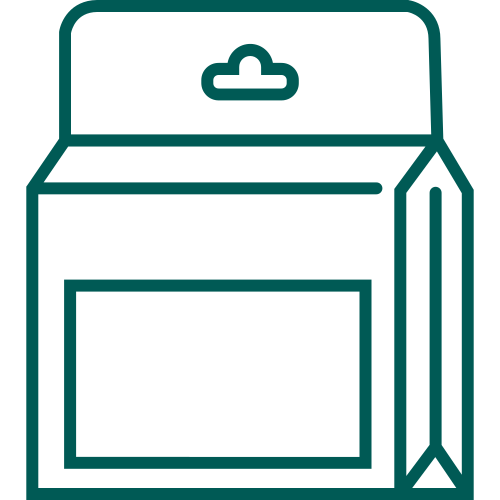
Window placement belongs in the same drawing. The clear area should show the intended product face without covering the logo, supplied product copy, seams, or closure. If an insert or divider is part of the package, record its height and footprint before the outer panels are finalized.
How do window, open-front, and shelf formats differ?
Window display boxes keep more of the product enclosed while creating a planned viewing area. Open-front formats prioritize quick visibility and access. Shelf cartons need a readable front panel, a controlled base, and an arrangement that stays clear beside neighboring packages.
- Identify the primary viewing direction.
- Record the fixture footprint.
- Measure the product count and any divider or insert.
- State whether shoppers or staff open the package.
- Reserve the main panel for the product name, brand, and supplied information.
The same product can need different dimensions when the presentation changes from an enclosed carton to a replenishable display. Draw the package in the position where it will be used.
Which CPL display box formats match each use?
Use window display boxes when visibility is the main requirement. Compare retail display boxes for shelf and counter presentation, and review product display boxes when the package needs to frame one item. A vertical or replenishable structure can be explored through pop-up display boxes. Jewelry display boxes fit small-item presentation and insert planning.
What should a display box quote include?
A display box quote should connect the structure to the fixture, product count, artwork, and delivery destination.
| Project point | CPL reference | Buyer information |
|---|---|---|
| Quantity | 100-unit MOQ | Number of displays and product units per display |
| Pricing | May be from $0.49 per unit at volume | Selected structure, dimensions, artwork, material, and finish |
| Production | Typically 8 to 10 business days after proof approval, plus delivery | Proof approver, fixture check, and receiving plan |
| Design | Free design support | Logo, product copy, artwork status, and panel priorities |
| Shipping | Free US shipping | US delivery destination |
What should the final display box proof confirm?
The final display box proof should confirm the inside and outside dimensions, product position, front-facing area, window or opening, artwork hierarchy, base stability, replenishment path, and fixture footprint. Review the assembled structure from the shopper side and the operator side. A proof is the point to catch a blocked logo, a shallow base, or an opening that cannot be used as planned.
The $19.99 sample kit can help compare general structure, surface feel, opening access, and display direction before proof approval. Use custom packaging solutions to organize the broader brief, then send the fixture dimensions with the display request.
Frequently Asked Questions
What are common reference dimensions for display boxes?
Common display box planning references include 4 x 4 x 6 inches for a compact counter display, 8 x 4 x 10 for a front-facing shelf carton, 10 x 6 x 4 for a window format, and 12 x 8 x 16 for a taller display. Confirm the product, fixture, opening, and outside footprint before choosing a final size.
How should I measure a display box for a shelf or counter?
Measure the product in its intended facing, then record the available shelf or counter footprint, product count, insert depth, opening direction, and replenishment method. Interior dimensions answer whether the product fits. Exterior dimensions answer whether the completed display fits the fixture. The display box size comes from both records.
Do window display boxes need a different size record?
Window display boxes need a size record that includes the product-facing area, window position, seams, closure, and outside footprint. The window uses part of the front panel and must show the intended product face without covering supplied copy or the logo. Measure the assembled product before setting the opening.
What is the MOQ for custom display boxes?
Custom display box projects use a 100-unit MOQ. State whether that quantity refers to finished display units or individual products placed into each display. The request should also identify the structure, dimensions, artwork, finish, fixture needs, and destination so the quantity has a clear meaning.
What pricing and timing apply to display packaging?
Display packaging pricing may be from $0.49 per unit at volume, quoted to spec. Production is typically 8 to 10 business days after proof approval, plus delivery. Free US shipping and free design support are available, and a $19.99 sample kit can support early review of the display format.