




























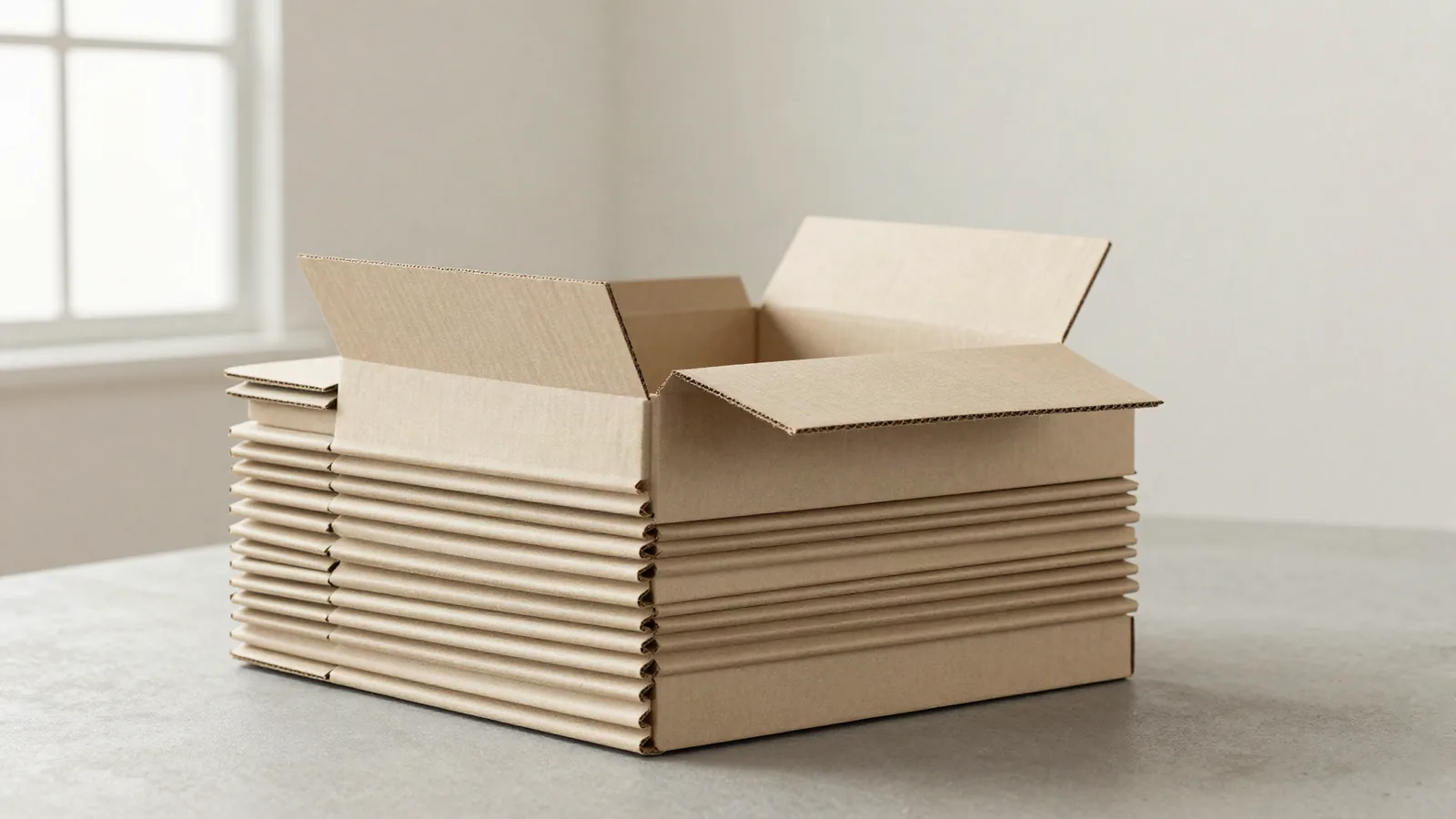




















































Standard shipping box sizes in cm are metric planning references, not universal stock specifications. The table converts inch dimensions from CPL shipping and mailer box planning records into centimeters so a buyer and a US supplier can discuss the same box. Length, width, and height are listed in that order. A dieline is the flat cutting template used to print and cut the box, and its folds, closure, and panels determine the finished structure.
Which shipping box sizes in cm are useful starting points?
The following rows are rounded inch-to-centimeter conversions for common shipping and mailer box planning discussions. Choose a starting row from the packed product, then check the opening, board folds, insert, and protection plan.
| Planning size in inches | Metric reference in cm | Starting use |
|---|---|---|
| 6 x 4 x 2 in | 15.2 x 10.2 x 5.1 cm | Compact apparel order or small parcel |
| 8 x 6 x 4 in | 20.3 x 15.2 x 10.2 cm | Branded parcel for a compact product |
| 12 x 9 x 4 in | 30.5 x 22.9 x 10.2 cm | Folded clothing assortment or flat product |
| 14 x 10 x 6 in | 35.6 x 25.4 x 15.2 cm | Parcel where extra depth matters |
| 16 x 12 x 8 in | 40.6 x 30.5 x 20.3 cm | Larger apparel or mixed product parcel |
These are reference dimensions. They are not a promise that every product in the category fits the row. A sleeve, tissue, insert, or second product takes up interior room, and a folded box has its own panel and closure geometry.
How should you read shipping box dimensions in centimeters?
Read the dimensions as length x width x height, with height describing vertical clearance in the assembled box. The order matters: 12 x 9 x 4 is a different packout from 12 x 4 x 9. Write the order in the brief and say whether the measurement is internal or external.
One inch equals 2.54 centimeters, so the metric values above are rounded planning conversions. Keep both versions in the request when a US supplier and a metric-based buyer are working together. Also state whether the package opens from the top, side, or a hinged panel. That detail affects the panel layout and the space needed around the product.
What is the difference between a mailer and a shipping box?
A mailer box is the package the recipient opens, while a shipping box can act as an outer carton around a product, a group of items, or another package. The difference changes the brief. A mailer needs an opening direction, closure clearance, and panel plan for the branded exterior. An outer shipping box needs a clear packout and room for the product or inner package.
For a folding format, review custom folding shipping boxes. For a broader outer-box brief, compare custom shipping boxes. If the product needs a fixed position, add custom foam box inserts to the discussion. A specialized parcel can be considered through when that product role is relevant.
What should you measure before choosing a shipping box size?
Measure the product in the actual arrangement that goes into the box. Include the sleeve, tissue, card, insert, and any secondary package. Then record the longest side, widest side, packed height, opening direction, closure clearance, artwork panels, and delivery destination.
- Measure the finished packout, not the bare product.
- Record length, width, and height in a stated order.
- Label every dimension as inside usable space or outside assembled space.
- Include inserts and protective layers in the interior plan.
- For food-contact use, ask us about food-contact options for your product.
If the artwork arrives in RGB, colors can shift when it is converted for press. Low-resolution images can look soft, and missing bleed can leave an unprinted edge after trimming. The digital proof is the point to catch a panel, score, opening, or artwork issue before anything prints.
If the structure needs a child-resistant feature, describe the intended use and ask what can be built into the package. The feature belongs in the structural brief, alongside the product dimensions and opening direction.
What are the MOQ, price, and production timing?
The MOQ for custom shipping boxes is 100 units. Pricing is from $0.49 per unit at volume, quoted to spec. Production is typically 8 to 10 business days after proof approval, plus delivery. Free US shipping and free design support are available. The sample kit is $19.99.
Use custom packaging solutions when the metric dimensions are ready to turn into a product brief. Send the packed product, the measurement order, and the opening direction. The quote can then follow the box the shipment actually needs.
Frequently Asked Questions
Are these standard shipping box sizes in cm final specifications?
The centimeter rows are rounded planning conversions, not final specifications. The finished box depends on the packed product, sleeves, inserts, protective layers, closure, board, and approved dieline. Keep the source inch dimensions with the metric reference, and confirm whether the requested measurements describe usable inside space or outside assembled dimensions.
How do I convert shipping box sizes from inches to centimeters?
To convert shipping box sizes from inches to centimeters, multiply each inch measurement by 2.54 and round the result for planning. For example, 6 x 4 x 2 inches becomes 15.2 x 10.2 x 5.1 centimeters. Confirm the final product fit and measurement order before approving a custom box.
What order should shipping box dimensions use?
Shipping box dimensions should use a consistent length x width x height order, with the brief stating whether the measurements are internal or external. The opening direction and any insert should also be recorded. A labeled measurement order keeps a metric buyer and a US supplier discussing the same box.
Which shipping box size fits folded clothing?
A folded clothing order may start with the 12 x 9 x 4 inch reference, or 30.5 x 22.9 x 10.2 centimeters, when the packed arrangement is similar. That row is only a starting point. Measure the folded garment with its sleeve, tissue, or insert before approving the box.
What is Custom Packaging Lane's minimum order for metric shipping boxes?
Custom Packaging Lane's MOQ for metric shipping box projects is 100 units. Pricing is from $0.49 per unit at volume, quoted to spec, and production is typically 8 to 10 business days after proof approval, plus delivery. Free US shipping and free design support are available.












