































































How should buyers interpret standard pillow box sizes?
Standard pillow box sizes are size conventions, not one universal list of finished dimensions. The product, packed depth, curved ends, tuck closure, and presentation layer determine the usable cavity. Start with the product class, then confirm the actual inside and outside measurements for the box.
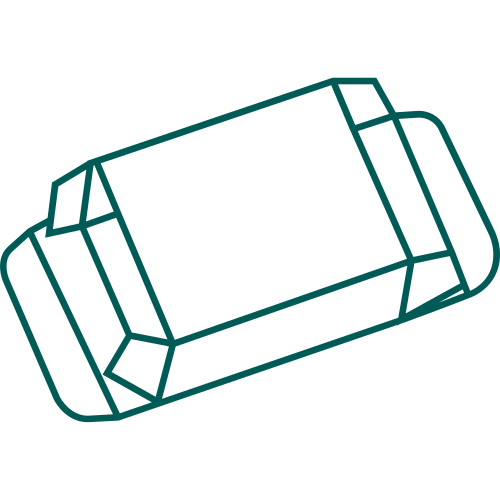
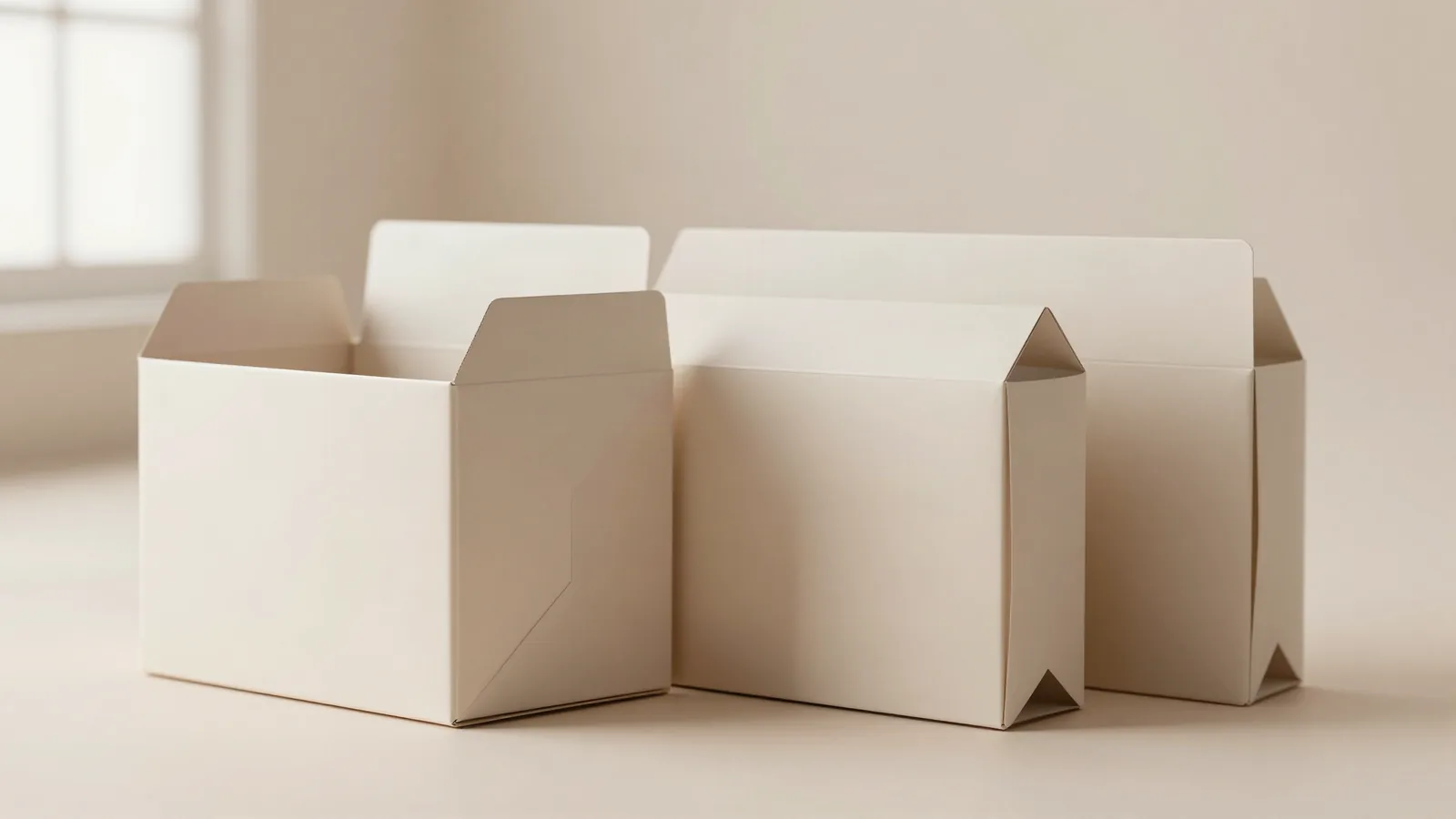
A pillow box is a folded carton with curved side panels and tucked ends. The curved profile gives the format its shape, but those panels and closures also take up room. Measure the longest point, widest point, and packed depth before choosing a size label.
The size name should stay separate from the final dieline. A mini, retail, gift, or large label can organize a conversation, but it does not replace the product measurements. The finished box must close without pressing against the contents.
Which pillow box size convention matches the product?
| Size convention | Typical fit focus | CPL product path | Question to answer |
|---|---|---|---|
| Mini or sample | Compact item or light accessory | Custom pillow boxes | Does the item clear the curved ends? |
| Retail or jewelry | Slender product and clear front | Custom kraft pillow boxes | What material direction fits the presentation? |
| Gift or favor | Small gift, event piece, or candy group | Custom gift pillow boxes | How should the package open and hand over? |
| Large or bundle | Longer accessory, soft good, or several items | Large pillow boxes | What clearance does the full bundle need? |
These public conventions help organize a quote, but they do not assign one fixed dimension to every CPL product. Send the actual product length, width, depth, packed arrangement, and desired clearance before the dieline is drawn.
Why do curved ends change the usable pillow box space?
Curved ends reduce the rectangular area available to the product, and the tuck ends need room to close without pressing against the contents. A product can fit across the center and still catch on a curve or closure. Measure the packed item, then check the end clearance on the proof.
Also state whether the item is wrapped, sleeved, placed on a card, or grouped with another item. Each layer changes the profile. The proof should show the product position and opening sequence, not only the artwork on the flat panels.
If the product rattles inside the box, the insert or packed arrangement needs another review. An insert cut to the exact product size can hold the item in place, but its own thickness must be included in the interior brief.
Which material and finish choices belong in the size brief?
Kraft board can support a natural material direction, while coated board gives artwork a different print surface. Matte or gloss lamination changes the surface feel. Foil, embossing, debossing, and a window add layout decisions even when the pillow shape stays the same, so include the finish request before the proof is prepared.
If the item may touch food, ask us about food-contact options for your product. Keep the intended use in the quote request so the packaging direction is reviewed against the actual contents.
How should a small brand plan pillow box quantity and proof?
CPL's MOQ is 100 units. Pricing is from $0.49 per unit at volume, quoted to spec. Production is typically 8 to 10 business days after proof approval, plus delivery. Free US shipping and free design support are available.
The $19.99 sample kit gives a small team a physical format reference before approving the size, material, finish, closure, and artwork. Free design support includes help with the dieline and a digital proof before anything prints.
What should a pillow box quote request contain?
Send the product length, width, and packed depth, plus the arrangement, desired clearance, closure preference, material, finish, artwork status, quantity, and delivery destination. State whether measurements are inside or outside.
The custom packaging for small business hub can help organize the request when the pillow box is part of a small launch or test assortment. End the brief with the product use and the proof questions that need an answer.
Frequently Asked Questions
Are pillow box sizes standard?
Pillow box sizes are standard conventions, not one universal set of width, length, and depth measurements. The curved ends, tuck closure, product shape, and presentation layer change the usable cavity. Use the size class as a starting point, then send the packed product measurements and confirm the final structure on the proof.
What dimensions should I send for a pillow box quote?
For a pillow box quote, send the longest product length, widest point, packed depth, desired clearance, and any wrap, card, sleeve, or insert inside the package. State whether measurements are inside or outside. Include the opening direction, material, finish, artwork status, quantity, and delivery destination.
Which pillow box works for a larger bundle?
A large pillow box is the relevant CPL product path for a longer accessory, soft good, or group of smaller items. The correct dimensions still come from the full packed bundle and closure clearance. Measure the bundle as it will ship, then confirm the interior and opening on the proof.
Can pillow boxes use kraft material?
Custom Packaging Lane lists custom kraft pillow boxes for projects that want a kraft material direction. Share the product, print treatment, finish, and intended use before selecting the stock. If the item may touch food, ask us about food-contact options for your product.
What quantity and timing should I plan for pillow boxes?
Custom Packaging Lane's MOQ for pillow boxes is 100 units. Pricing is from $0.49 per unit at volume, quoted to spec. Production is typically 8 to 10 business days after proof approval, plus delivery. Free US shipping and free design support are available, and the sample kit costs $19.99.