
















































































What belongs in a tofu packaging brief?
The first line should name the tofu format and the package layer being designed. Record whether the job surrounds an existing tray or tub, groups several containers, or adds an outer shipper. A primary package is the layer that holds the product, while a secondary package carries presentation and handling information. This split keeps a printed carton from being mistaken for the food-contact container.
Use the custom packaging solutions hub for broader structure and artwork planning. The catalog references for private label packaging, perforated packaging, and wine box packaging can help compare presentation, opening behavior, and grouping. They are comparison points, not tofu-specific constructions.
How should tofu brands separate primary and secondary packaging?
Measure the primary container while it is filled and closed. Include length, width, height, lid profile, seal profile, label or overwrap, and insertion clearance. Then describe the outer package as a sleeve, carton, multipack, or shipper. If cold handling or condensation is expected, state that condition at the start. If any layer may touch tofu, ask us about food-contact options for your product.
| Package layer | Details to record | Why it matters |
|---|---|---|
| Primary container | Format, filled dimensions, lid, seal, profile | Sets the cavity and insertion path |
| Grouping layer | Unit count, orientation, dividers, pads | Controls movement and presentation |
| Outer package | Carton, sleeve, pouch, or shipper | Sets the branding and handling direction |
| Distribution context | Cold handling, condensation, parcel, pallet | Frames material and outer-size questions |
Which structure suits a tofu assortment?
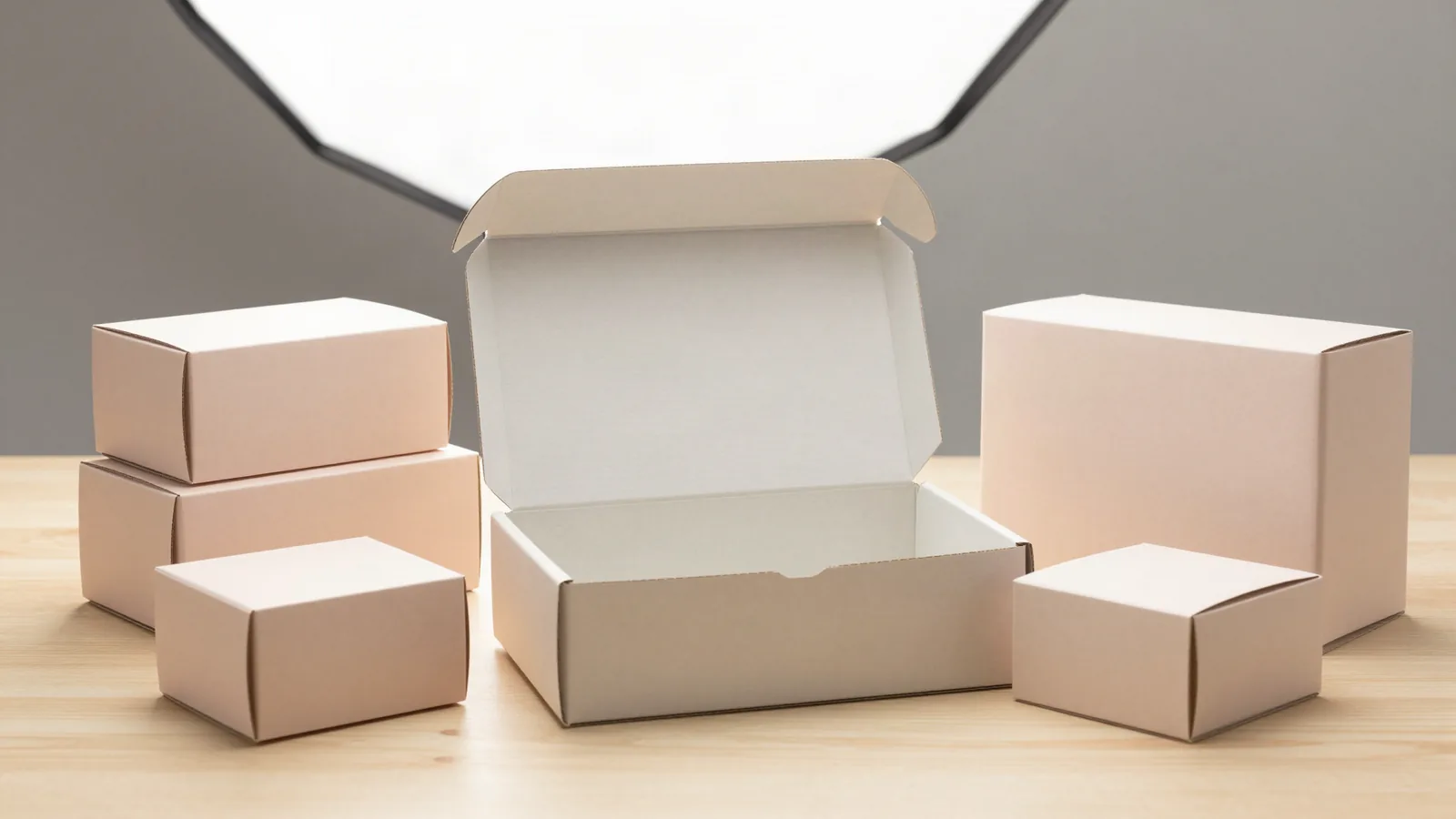
A sleeve leaves selected surfaces of an existing tray or tub visible, while a folding carton creates a defined opening around one unit or a multipack. A corrugated shipper shifts the discussion toward packed support. Straight tuck end, reverse tuck end, auto-lock bottom, and crash-lock bottom are common carton terms. A drawer or slide format changes the opening path and needs room for the inner component to travel.
PET window material around 0.2 to 0.3 mm is a common reference when the product needs a clear view. The cutout, patch, fold lines, glue zones, and artwork all belong in the same structural file. A window affects the panel, but it does not answer whether the primary layer is suitable for direct contact.
How should tofu package information be arranged?
Place the product name and variant on a stable panel, away from folds, seams, seals, and closures. A label hierarchy is the order in which the eye finds the brand, product, and supporting information. Small type too close to a score can split across the fold, and a seam under the brand mark can make the front look accidental.
Offset CMYK is a common reference for detailed carton graphics. Digital printing can suit short runs or tests, while flexographic printing is common on corrugated applications. Matte or gloss lamination changes reflectivity. Spot UV, foil stamping, embossing, and debossing can be reserved for accents so the product information remains readable.
Which material references are useful for tofu packaging?
SBS, C1S, and C2S paperboard are commonly discussed in a 12 to 24 pt range. Kraft board is commonly discussed around 18 to 24 pt. Corrugated packaging may use E, B, or C flutes, with 32 ECT as a common board-strength reference for shipping discussions. Flexible packaging may use mylar or foil laminates built from PET, AL, and PE layers. These are general industry references, not a fixed formula.
State length x width x depth as inside measurements when fit matters. A common packaging convention allows about 1/16 in, or 1.5 mm, tolerance. For US ground shipping, dimensional weight uses L x W x H / 139. The calculation is only useful after the unit grouping and outer-package dimensions are defined.
What should a tofu packaging quote request include?
Send the primary-container type, filled dimensions, unit count, orientation, moisture or condensation context, package family, artwork status, and delivery destination. Add any window, divider, pad, shipper, liner, coating, or resealable requirement. The sample kit helps compare board and surface references before the structure is fixed.
Custom Packaging Lane quotes tofu packaging from a 100-unit minimum, with pricing from $0.49 per unit at volume, quoted to spec. Production is typically 8 to 10 business days after proof approval, plus delivery. Free US shipping and free design support include a free dieline. The $19.99 sample kit is credited to the first order. Ask about food-contact options before finalizing any package layer that may touch food.
Frequently Asked Questions
Can tofu packaging be built around an existing tray or tub?
Yes. Tofu packaging can use a sleeve, folding carton, multipack, or shipper around an existing tray or tub. Start with filled length, width, height, lid profile, seal profile, label, and insertion clearance. State cold handling or condensation early, and ask about food-contact options for your product if any package layer may touch tofu.
How can tofu packaging group several containers?
A sleeve can group existing tofu containers while leaving selected surfaces visible. A folding carton can organize one unit or a multipack, while a corrugated shipper addresses transport support. Dividers, pads, and controlled internal spacing affect the result. Choose the structure from the loading and unloading path as well as the shelf-facing panel.
What board ranges are common for tofu cartons?
Tofu cartons commonly use SBS, C1S, or C2S paperboard in the 12 to 24 pt range. Kraft board in the 18 to 24 pt range is another reference. Corrugated options include E, B, or C flutes, with 32 ECT as a common strength reference. These ranges guide the brief, while load and structure set the final choice.
How should product information be placed on tofu packaging?
Product information on tofu packaging should sit on stable panels, away from folds, seams, seals, and closures. Keep the product name and variant separate from decorative finishes. Matte or gloss lamination changes reflection, while spot UV or foil can mark accents. Include cold handling or condensation context so the surface discussion matches the package environment.
What should I send before requesting a tofu packaging quote?
Send the tofu format, primary-container type, filled dimensions, unit count, orientation, moisture or condensation context, desired structure, artwork status, and delivery destination. Identify any window, divider, pad, shipper, liner, coating, or resealable requirement. If direct food contact is possible, state it clearly and ask about food-contact options before material selection.












