




























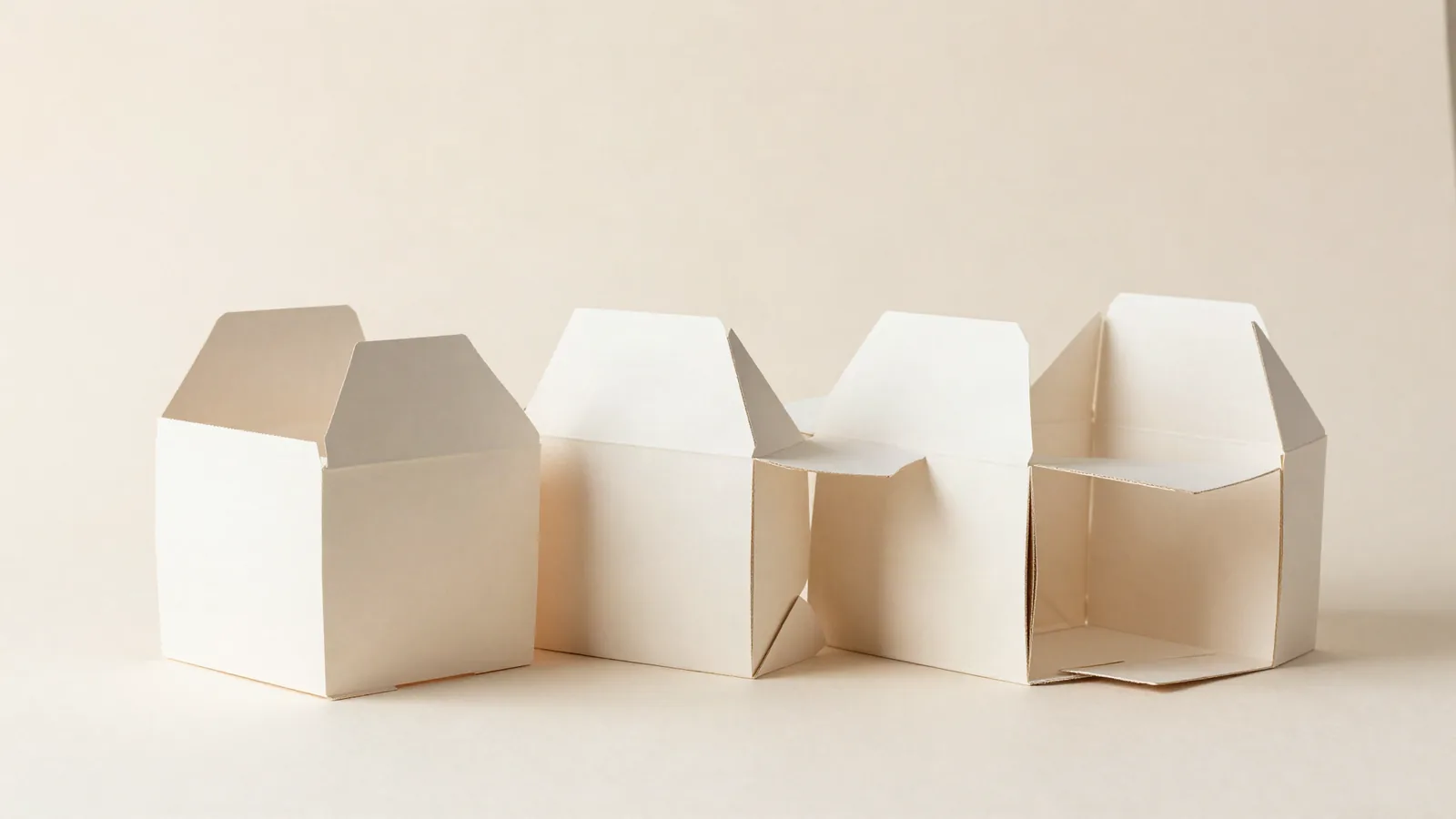




















































A tuckbox is a folding carton that closes when one or more flaps fold into the carton body. The term names a closure family, not one universal shape. A dieline is the flat cutting template that sets the panels, scores, glue flap, bleed, and tuck closures. CPL's catalog groups straight tuck, reverse tuck, and tuck top styles so a buyer can start with the opening sequence before sorting the artwork.
What is a tuckbox?
A tuckbox is a folding carton with a tuck flap closure. The flap folds into a slot or against the inside of the carton, and the score line controls the fold. Straight tuck, reverse tuck, and tuck top are different ways to arrange that closure. The product dimensions, board choice, panel order, and glue seam still belong in the same brief.
A tuckbox suits a folding carton job where the buyer needs a printed package that folds flat before assembly. It is different from a rigid box, which uses chipboard wrapped in printed paper and holds its shape without the same scored folding pattern. It is also different from a shipping box planned around a heavier transit routine.
How does a straight tuck box close?
A straight tuck box has its top and bottom tuck flaps folding in the same direction. That gives the carton a consistent end sequence, but the assembled result still depends on the panel width, score placement, glue flap, and board. Check which panel faces forward after folding. A front panel that looks centered in the flat file can move when the side panels wrap around it.
Keep type away from scores. A word set too close to a fold can look crooked or become difficult to read when the board bends. The digital proof should show the folded front, the top opening, and the bottom closure before the file is approved.
What changes in a reverse tuck box?
A reverse tuck box has end flaps that fold in opposite directions. One end may open toward the front while the other opens toward the back, which changes the loading and closing sequence. That can matter when the packed product has a preferred insertion direction or when the visible panel needs a specific orientation on a shelf.
The reverse tuck label is not a shortcut around the proof. Show both ends. Check the glue seam, the flap clearance, the score depth, and the way the printed panels meet after folding. A small shift in the panel order can put the logo across a score or put the opening on the wrong side.
When does a tuck top box fit the brief?
A tuck top box fits when the upper opening needs its own tuck flap and the top panel is part of the package presentation. The top flap may carry the brand mark, opening instruction, or product name, but the bottom construction still has to be selected. Ask for the complete dieline instead of approving a top view alone.
Board and finish affect the top opening. Matte lamination reduces glare. Gloss lamination reflects more light. Spot UV adds a localized gloss area, while foil and embossing change the surface and can need clearance around scores. The closure direction stays a construction decision. Finish is a separate proof decision.
What should a tuckbox proof show?
A tuckbox proof should show the flat dieline and an assembled view of every closure. Use the table as a short inspection list.
| Style | Closure direction | What to inspect |
|---|---|---|
| Straight tuck | Top and bottom flaps fold in the same direction | Front panel, flap order, score lines, and bottom fit |
| Reverse tuck | End flaps fold in opposite directions | Both ends, loading sequence, glue seam, and panel alignment |
| Tuck top | The upper flap tucks into the carton body | Top opening, top artwork, bottom construction, and product fit |
When should you choose a mailer, shipping box, or rigid box?
Choose a folding tuckbox when the opening and printed panels are the main packaging brief. Choose custom mailer boxes when the box itself is planned around shipment and recipient opening. Compare custom shipping boxes when the packing routine and transit path lead the project. A rigid printed box uses wrapped chipboard and a fixed form, so its presentation and folding behavior differ from a tuckbox.
What belongs in a tuckbox dieline brief?
Start with the packed product dimensions and the desired opening direction. Bleed is artwork that runs past the cut line so trimming does not leave an unprinted edge. RGB artwork can change when it is converted for press. Type, barcodes, and fine rules need enough distance from scores and folds. If the product uses an insert, check that the insert holds it without loose movement or forced packing.
- Name straight tuck, reverse tuck, or tuck top.
- Mark the front panel and the preferred opening side.
- Provide product dimensions and the loading sequence.
- Check bleed, color conversion, barcode space, scores, and glue tabs.
What order terms apply to a tuckbox project?
The MOQ is 100 units. Pricing is from $0.49 per unit at volume, quoted to spec. Production is typically 8 to 10 business days after proof approval, plus delivery. Free US shipping and free design support are available. We draw the dieline free and send a digital proof before anything prints. Order the $19.99 sample kit to compare opening directions, then use custom packaging design to send the product dimensions, artwork, material, finish, quantity, and destination.
Frequently Asked Questions
What exactly is a tuckbox?
A tuckbox is a folding carton that closes when a flap folds into the carton body. Straight tuck, reverse tuck, and tuck top describe different closure arrangements. The dieline still controls panel order, score lines, glue flap, and final fit, so the assembled proof should be checked before printing.
Do straight tuck and reverse tuck use the same flap direction?
Straight tuck and reverse tuck use different flap directions at the two ends. Straight tuck folds the end flaps in the same direction, while reverse tuck folds them in opposite directions. That difference changes how the carton loads and closes, so both ends belong in the proof review.
When should a tuck top be used?
A tuck top box is a folding carton whose top opening closes with a tuck flap. Choose that direction when the top panel and opening need to carry the package presentation. The bottom construction still needs its own check, along with product fit, score placement, artwork, and the assembled closing sequence.
What is the minimum order for a tuckbox?
A tuckbox project starts at 100 units. Pricing is from $0.49 per unit at volume, quoted to spec, and production is typically 8 to 10 business days after proof approval, plus delivery. Free US shipping and free design support are available.
How long does tuckbox production take?
A tuckbox project uses 8 to 10 business days after proof approval, plus delivery, as the typical production window. The clock starts after proof approval, not when the quote is requested. Confirm the closure, product loading, artwork, and dieline before approval so the production window starts from a settled file.












