




























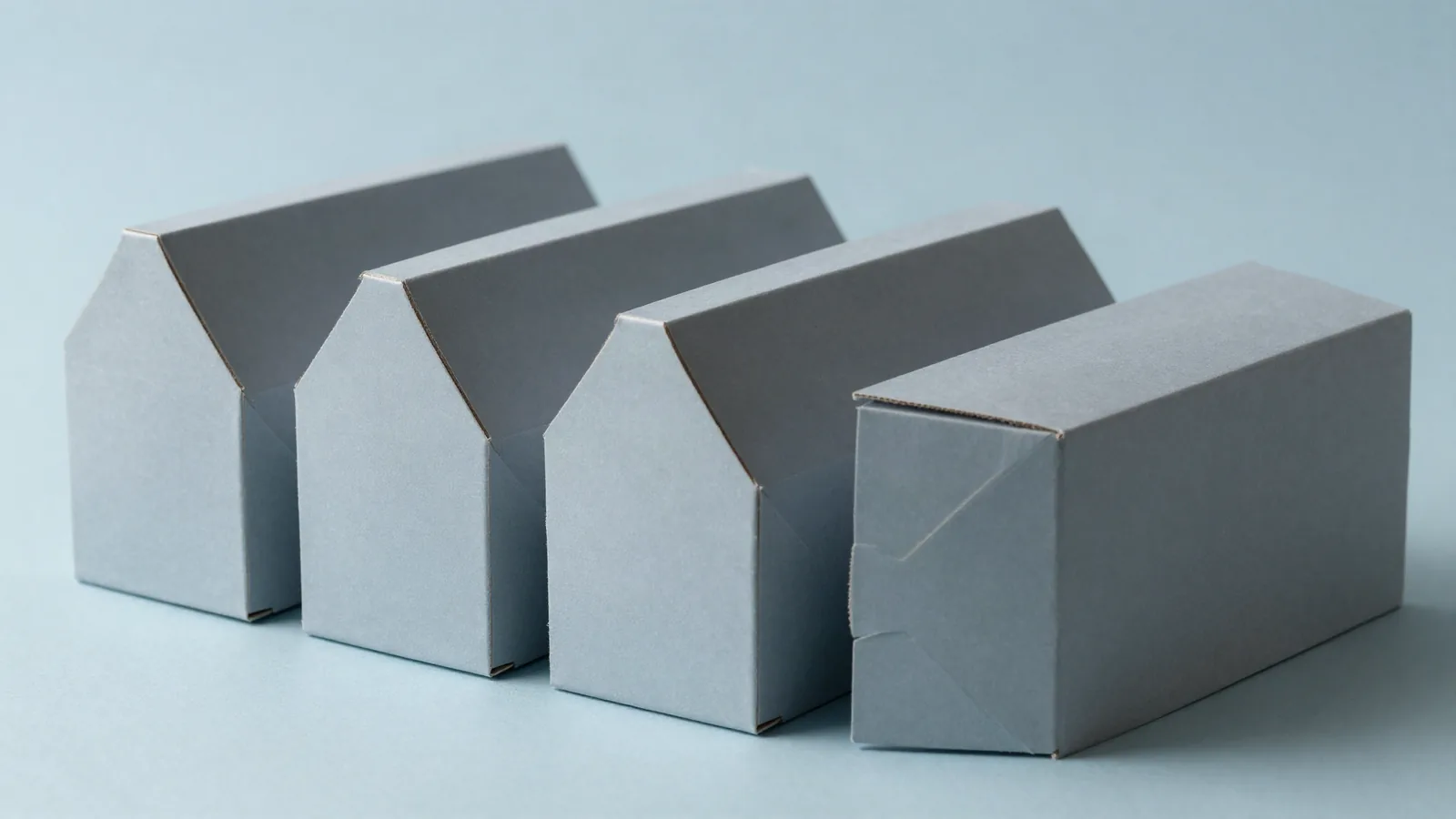




















































A tuck box is a folding carton with a flap that closes into the box body. The name tells you where the flap folds and sometimes what the box is used for. It does not tell you the final size, board, print, finish, or pack-out. Start with the product and the closing direction, then carry those choices into the dieline, proof, and production record.
What does tuck mean in packaging?
Tuck means a panel folds into an opposing panel or slot to close the carton. In a straight-tuck box, the top and bottom tuck flaps close in the same direction. A reverse-tuck box closes from opposite ends. A roll-end tuck front wraps around the product and sends the front flap into the front panel. A dieline is the flat cutting and folding template that shows each panel, score, cut, and glue tab.
| Format | Catalog reference | Closing-panel pattern |
|---|---|---|
| Straight tuck | Custom straight-tuck boxes | Top and bottom tuck flaps close in the same direction. |
| Reverse tuck | Reverse-tuck candle boxes | Top and bottom flaps close from opposite directions. |
| Tuck top | Custom tuck-top boxes | The top panel controls the main closure. |
| Tuck end | Custom tuck-end boxes | An end panel carries the tuck closure. |
| Roll-end tuck front | Roll-end tuck front boxes | The front flap closes a box body that rolls around the product. |
Which tuck styles differ by opening direction?
Tuck top and tuck end differ by the panel that closes, while straight tuck, reverse tuck, and roll-end tuck front describe the folding path. That distinction affects how the box is loaded, where the customer starts opening it, and which panel carries the front artwork.
- Compare tuck top and tuck end when the closure location changes the pack station.
- Compare straight tuck and reverse tuck when the flaps need to close from the same or opposite ends.
- Compare roll-end tuck front when the front closure should fold over the product face.
- Record the selected direction in the quote so artwork is not built on the wrong panel arrangement.
The product name is a useful starting point, but the approved proof should show the finished orientation. A flat file can make two tuck styles look similar until the scores and glue tabs are folded.
Which tuck boxes are tied to a specific product?
Product-led names add fit and handling context to the structural label. Hair extension tuck boxes identify a product-specific route. Reverse-tuck candle boxes attach a candle format to the reverse-tuck structure. The product still needs its own dimensions, interior clearance, and loading sequence.
For a gift presentation, one-piece color-tinted kraft tuck-top gift boxes combine a tuck-top opening with a kraft-led surface direction. Kraft board begins with a brown base, so artwork color should be checked against the material before approval. The gift label does not replace the need to confirm the actual product fit.
When should you choose a mailer or gift tuck box?
Choose a mailer route when the top closure and delivery path are part of the brief, and choose a gift route when the outer presentation and material are central. A custom tuck-top mailer box needs a clear loading and closing sequence for the packed product. A gift box needs the same structural check, plus a deliberate outside view.
State whether the box will travel through parcel handling, sit on a shelf, or be handed over as a gift. That answer affects the board discussion, the artwork on the closing panel, and whether an insert or clearance note belongs in the proof.
What should the quote and proof show?
The quote and proof should identify the exact tuck direction, finished dimensions, board, print, finish, quantity, and delivery destination. Artwork should include bleed beyond the cut line, keep type away from scores, and show the correct panel orientation. RGB art can shift when it is converted for press, so keep the working file and review the digital proof before anything prints.
Check glue tabs, closure panels, and any insert against the actual product. An insert cut from guessed dimensions can leave the item loose or make loading difficult. The approved proof is the place to catch that problem.
How long does a tuck box order take?
Production is typically 8 to 10 business days after proof approval, plus delivery. The clock starts after the tuck direction, artwork, material, quantity, and proof are settled. Custom Packaging Lane uses a 100-unit MOQ, and pricing is from $0.49 per unit at volume, quoted to spec. Free US shipping and free design support are available. The $19.99 sample kit can help compare board feel, tuck movement, and finish. For the wider catalog route, use custom packaging solutions.
Frequently Asked Questions
What are the main tuck box formats?
The main tuck box formats include straight tuck, reverse tuck, tuck top, tuck end, and roll-end tuck front. Product-led names such as candle, gift, mailer, and hair-extension boxes add context. Compare the closing-panel direction with the product fit, artwork orientation, material, and loading sequence before approving the proof.
What is the difference between straight tuck and reverse tuck boxes?
Straight-tuck boxes close their top and bottom tuck flaps in the same direction. Reverse-tuck boxes close those flaps from opposite ends. The difference changes the folding path, panel arrangement, and loading sequence. Record the selected direction in the dieline and digital proof so the artwork follows the actual construction.
Are tuck-top boxes suitable for mailer packaging?
Tuck-top mailer boxes are a catalog format for a package whose top panel controls the closure. Confirm the packed product dimensions, board direction, closure, artwork, and delivery path before selecting the structure. A mailer brief should show how the box loads and closes, not only the product name.
What details should a tuck box quote include?
A tuck box quote should identify the tuck direction, finished dimensions, board or material, print coverage, finish, quantity, delivery destination, and proof process. Include product orientation, insert needs, glue tabs, scores, and closure panels. Those details prevent artwork from being prepared for a similar-looking but different tuck construction.
What are the starting terms for custom tuck boxes?
Custom Packaging Lane uses a 100-unit MOQ. Pricing is from $0.49 per unit at volume, quoted to spec. Production is typically 8 to 10 business days after proof approval, plus delivery. Free US shipping and free design support are available, and the sample kit is $19.99.












