




























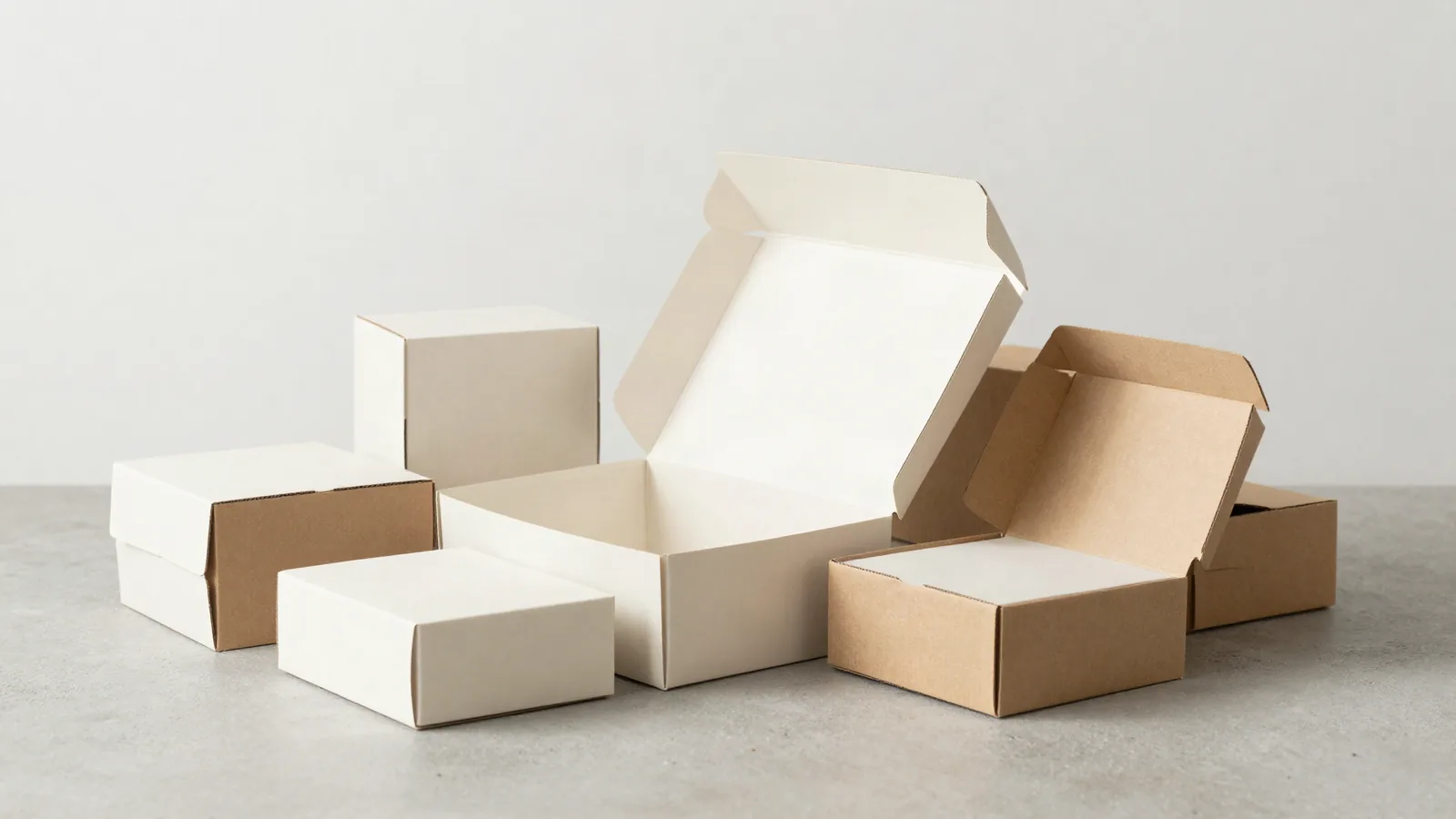




















































3.5 packs with box usually means a flexible inner pack paired with an outer package. The phrase does not define one pouch size or one finished box dimension. The box has to fit the filled pouch, its closure, and any insert, while leaving the intended panels clear for artwork and handling marks.
What does 3.5 packs with box usually mean?
The pouch format determines the first fit questions: a stand-up pouch has a base gusset, a zipper pouch has a closure zone, and a flat bag has a different seal and fold pattern. The outer package may be a folding carton, sleeve, tray, or rigid box, depending on how the pouch is loaded and opened.
Use the filled or representative pouch as the starting object. Width, gusset, zipper, seal area, fill shape, label position, and any window can change the cavity. A loose pouch needs a different fit review from a pouch held in an insert. State whether the box is opened by the customer or only during packing.
Which materials should I compare for the inner and outer pack?
Material choice changes both the pouch behavior and the box surface. Mylar or foil laminates commonly use PET, AL, and PE layers. PET supports print and handling, AL limits light transmission, and PE provides a sealant surface. Folding cartons commonly use SBS, C1S, or C2S paperboard. Rigid boxes use chipboard wrapped in printed art paper.
| Package part | Typical industry reference | Fit or artwork issue |
|---|---|---|
| Flexible inner pouch | Mylar or foil laminate with PET, AL, and PE layers | Check barrier direction, sealant side, closure, and fill shape. |
| Stand-up pouch | Typically 3 to 7.5 inches wide | Filled width, height, gusset, and top seal set the cavity. |
| Printed folding carton | SBS, C1S, or C2S paperboard, typically 12 to 24 pt | Panels carry product information, seams, folds, and closure. |
| Rigid presentation box | Chipboard typically 1.5 to 3 mm, wrapped in 100 to 157 gsm art paper | A tray, sleeve, or magnetic opening changes the cavity plan. |
For flexible-format references, compare custom 3.5 g mylar bags and 3.5 mylar bags. For presentation formats, compare rigid boxes with sleeve and tray and rigid boxes with magnetic closure. The small-business packaging guide is the single hub link for the project.
How should the pouch and box fit together?
Measure the filled pouch at its widest area, across the base or gusset, and through the closure or seal zone. Those measurements set the cavity conversation. An insert adds its own thickness and contact points, so draw the insert around the actual packed profile rather than the product name.
Box dimensions are commonly written as length x width x depth. Use inside measurements for the cavity, then record outside measurements separately when shelf or shipper planning matters. About 1/16 inch, or 1.5 mm, is a common planning tolerance reference, not a universal finished-box rule.
Which box structure gives the right opening?
A straight tuck end and reverse tuck end create familiar carton openings, while an auto-lock bottom or crash-lock base changes how the carton forms at the packing bench. A sleeve and tray gives a pull-out opening. A magnetic flap or two-piece rigid structure changes the opening sequence and the way the box presents the pouch.
Choose the structure after the loading method is clear. A box that looks suitable on a flat dieline can be awkward when the pouch has to be inserted, removed, or kept upright. Mark the glue tabs, scores, closure panels, insert edges, and any window before approving the structure.
How should I plan print and finish across both layers?
Offset CMYK is commonly used for detailed folding-carton artwork. Digital printing can suit a short run or several artwork versions. Matte or gloss lamination changes reflection, while soft-touch changes hand feel. Spot UV, foil stamping, embossing, and debossing need clear panel marks because each treatment has a defined area.
Keep pouch artwork separate from box artwork. Check logo placement, product text, barcode size, bleed, seal areas, zipper zones, scores, and glue tabs on the proof. Type placed too close to a score can fold into the crease, and RGB art can shift when converted for press. A digital proof catches those issues before printing.
What should I clarify before requesting a coordinated quote?
The quote is easier to scope when the pouch and box are described as one pack-out. Send the filled pouch or a dependable representative, then list the material, width, gusset, closure, seal area, box structure, insert, artwork coverage, finish zones, quantity, and delivery location.
- Show the filled pouch profile and the intended orientation.
- Mark seams, folds, glue areas, windows, closures, and visible panels.
- State how the pouch is loaded, removed, and held in the box.
- Separate required choices from optional finishes or inserts.
Custom Packaging Lane quotes 3.5 packs with box to spec from a 100-unit minimum. Pricing is from $0.49 per unit at volume, quoted to spec. Production is typically 8 to 10 business days after proof approval, plus delivery. Free US shipping and free design support include a free dieline. The $19.99 sample kit is credited to the first order. Send the combined pouch and box brief through Custom Packaging Lane.
Frequently Asked Questions
Does 3.5 packs with box identify a finished box size?
No, the phrase describes a paired pouch and box concept, not a universal carton dimension. The filled pouch width, gusset, closure, seal area, insert, and opening direction set the outer cavity. A representative filled pouch or dependable drawing gives the dieline a usable starting point, and inside and outside measurements should be recorded separately.
Should I design the pouch or the box first?
The filled pouch should set the first fit review because its width, gusset, closure, and seal area control the cavity. The pouch and box still need to be treated as one assembly. Finalize the outer structure, insert, window, and artwork after the pouch profile and loading method are clear.
What is a common laminate construction for a flexible pouch?
A common flexible-pouch laminate uses PET, AL, and PE layers. PET supports print and handling, AL limits light transmission, and PE provides the sealant surface. The exact layer direction depends on the application, seal, opening, and intended fill, so the material brief should identify the print side and sealant side.
Which box formats work for a presentation pack?
A sleeve and tray creates a guided pull-out opening, while a magnetic flap or two-piece rigid box creates a separate presentation sequence. A folding carton gives a different forming and storage profile. Compare the pouch cavity, loading method, opening motion, insert, artwork panels, and storage needs before selecting the outer format.
How should I describe a coordinated pouch and box request?
A coordinated pouch and box request should include the filled pouch profile, material direction, width, gusset, closure, seal area, outer structure, insert, artwork coverage, finishes, quantity, and delivery location. Separating fit information from visual choices gives the quote a clear scope and keeps the proof focused on the assembled package.












