











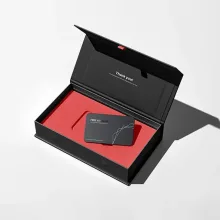





























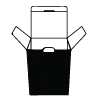

Aesthetic jewelry packaging ideas begin with the packed piece, then move to the box, insert, printed surface, and finish. A lid-and-tray box has a separate lid and base tray, so the opening happens in layers. An insert is the interior support that holds the jewelry in a planned position. Choose those parts together before artwork is finalized, because the insert changes the usable space and the way the box opens.
What should aesthetic jewelry packaging do when it opens?
The package should show the jewelry in its intended position as soon as the lid or sleeve is removed. A lid-and-tray structure creates a layered reveal, while a fitted insert keeps a ring, necklace, bracelet, pendant, or earring from sitting loose inside the box.
Decide where the piece rests, how it is lifted, and where a card or message sits. A necklace may need a longer path and a place to hold the chain. A ring may need a narrow holder. A set needs a layout that keeps each piece visible without making the tray feel crowded.
Which box, insert, and finish combinations fit different jewelry looks?
The box, insert, and finish should point in the same direction. These combinations give you practical starting points for the proof.
| Box direction | Insert direction | Finish direction | What the buyer sees |
|---|---|---|---|
| Lid and tray | Defined placement for one piece or a set | Matte or soft-touch surface | Layered opening with a quiet surface |
| Box with insert | Fitted support for a ring, necklace, bracelet, pendant, or earring | Gloss or printed artwork | Clear product focus with stronger color |
| Printed rigid format | Compartments or a shaped interior | Foil, embossing, or debossing | Tactile emphasis on a logo or short message |
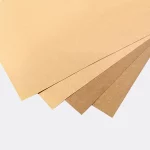
| Kraft gift direction | Cardboard support or simple interior layout | Natural paper surface with restrained print | Visible paper texture around the product |
How should an insert fit a ring or necklace?
The insert should follow the jewelry piece and the order in which the customer sees it. Describe the product arrangement before choosing the cutout, holder, slot, or compartment. A ring may need one narrow position, while a necklace may need a longer path that keeps the chain from crossing the focal piece.
If the package contains a set, identify which piece sits first and where the customer can lift it. Check the insert with the actual jewelry. A cutout that covers a logo, presses on a delicate part, or leaves the piece moving inside the tray needs a structural change before the proof is approved.
Which materials and finishes suit jewelry packaging?
Paperboard keeps the package light and gives printed artwork a broad surface. Rigid construction uses wrapped chipboard, so the box holds its shape without a fold. Kraft paperboard keeps a visible paper texture and works with restrained print. Choose the material with the insert, print coverage, and handling plan in mind.
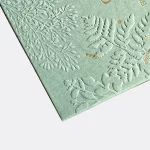
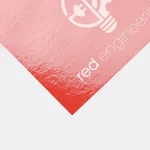
Matte reduces surface glare, while gloss reflects more light and gives printed color a sharper surface. Soft-touch changes the hand feel. Foil isolates a logo or short line, and embossing or debossing gives that mark a raised or pressed profile. Small jewelry boxes get busy when every effect appears on the same panel.
Which CPL products can anchor jewelry packaging ideas?
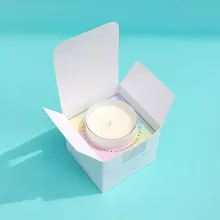
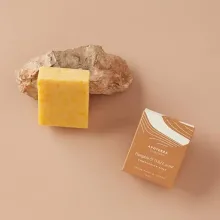
Jewelry boxes with lid and tray are the clearest starting point for a layered opening and defined presentation area. Jewelry boxes with inserts help organize the fit around a specific piece or set. For another compact product reference, wax packaging gives you a way to compare print, finish, and interior presentation. Sock packaging is another small-format reference for branded presentation.
How should you plan jewelry packaging with free US shipping?
Production is typically 8 to 10 business days after proof approval, plus delivery. Free US shipping is available, but shipping remains separate from the production window. Set the internal deadline before the boxes are needed, then leave room for product measurements, insert decisions, artwork, proof approval, and delivery.
The clock starts at proof approval. It does not start when the first inquiry arrives. That distinction gives the jewelry team a usable schedule without turning production timing into a fixed arrival promise.
What should go into the jewelry proof?
The jewelry proof should show the box structure, insert position, jewelry arrangement, material, finish, artwork, visible panels, quantity, and destination. Send the piece or accurate measurements with the request. Custom packaging design support can help connect the visual idea to the physical structure.
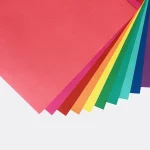
CPL uses a 100-unit MOQ. Pricing is from $0.49 per unit at volume, quoted to spec. Free design support is available, and the $19.99 sample kit can help compare surfaces before approval. Send the packed jewelry arrangement with the design request.
Frequently Asked Questions
What jewelry box works for a first collection?
A jewelry box with an insert is a practical starting point when the first collection includes a defined ring, necklace, bracelet, pendant, or earring arrangement. A lid-and-tray box gives the opening more layers. Choose the structure after measuring the piece and deciding how it should sit in the tray.
Do inserts change the size of a jewelry box?
Jewelry inserts change the usable interior because the support, cutout, holder, or compartment takes up space. Measure the jewelry and the complete insert arrangement before selecting the box. The proof should show the insert position, lift access, product clearance, and artwork around the tray.
Can I combine foil with embossing on jewelry packaging?
Foil and embossing can be combined on jewelry packaging when the artwork and selected surface have room for both effects. Keep the treatment to a logo or short message if the panel is small. Check the proof at the actual box size so the mark remains clear.
How much jewelry packaging can I order?
Custom jewelry packaging from CPL uses a 100-unit MOQ. Pricing is from $0.49 per unit at volume, quoted to spec. Send the jewelry arrangement, box structure, insert plan, artwork, finish direction, and destination so the quote matches the package you intend to approve.
Does free US shipping include the production period?
Free US shipping is available, but it does not replace production time. Jewelry packaging production is typically 8 to 10 business days after proof approval, plus delivery. Plan backward from the needed arrival date and leave time for measurements, insert decisions, artwork, proof approval, and transit.