






























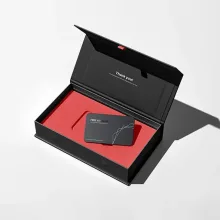
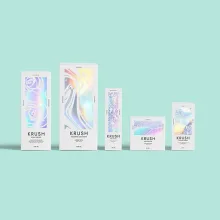
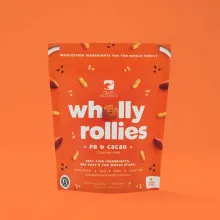

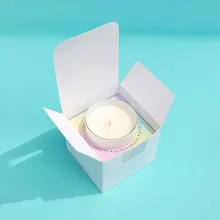






































All custom packaging is easier to quote when each package part has a defined job. Map what contains the product, what presents it, what separates components, and what protects the finished order in transit. Cartons, rigid boxes, tins, pouches, bags, and corrugated shippers should be listed as separate parts before they are compared.
How should I organize an all custom packaging project?
A layer map gives the project a usable starting point: primary container, display layer, insert or divider, and outer shipper. Record product dimensions, required inside space, clearance, opening direction, visible panels, surface treatment, quantity, and destination. When a package has several parts, label each part instead of describing the whole assembly as one box.
Box dimensions are commonly written as length x width x depth. Label each value as product, inside, or outside. About 1/16 inch, or 1.5 mm, is a common planning tolerance reference. The final fit still depends on board caliper, insert geometry, crease pattern, and surface treatment.
Which packaging family matches the product job?
Material and converting method narrow the shortlist quickly. Folding cartons fold from paperboard, rigid boxes hold chipboard in a wrapped shell, corrugated packages use flutes for structure, flexible packs use sealed film, and reusable bags depend on the fabric weight and handle construction.
| Packaging family | Typical industry reference | First decision |
|---|---|---|
| Folding carton | SBS, C1S, or C2S paperboard, typically 12 to 24 pt | Panels need a print, closure, and product-support map. |
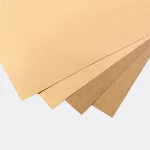
| Kraft carton | Kraft board, typically 18 to 24 pt | Decide whether the kraft tone remains visible under the ink. |
| Rigid box | Chipboard typically 1.5 to 3 mm, wrapped in 100 to 157 gsm art paper | The lid, base, drawer, or sleeve sets the opening. |
| Corrugated package | E, B, or C flutes, with 32 ECT as a common reference | Match flute and structure to packed support in transit. |
| Flexible package | Mylar or foil laminates can use PET, AL, and PE layers | Check barrier, seal, opening, and print-side requirements. |
| Reusable bag | Non-woven polypropylene typically 80 to 120 gsm, or cotton canvas 8 to 12 oz | Set the carry, fold, handle, and print requirements. |
These are general packaging references, not a promise that every format suits every product. A wrapped rigid box, folding carton, laminate pouch, and corrugated shipper each have different converting steps. When a project includes an insert, window, closure, or secondary container, review the complete assembly.
Which structures should I compare across formats?
Opening motion is the practical comparison. Straight tuck end and reverse tuck end use familiar carton folds. Auto-lock bottom and crash-lock constructions change forming at the packing bench. A roll end tuck top mailer is commonly referenced as FEFCO 0427. Two-piece rigid, magnetic flap, drawer or slide, sleeve, gable, and pillow formats each change access, presentation, and storage.
Assign a job to every part in a multi-part program. An insert can hold the product, a sleeve can frame an inner box, and a window can reveal a panel or product area. A drawer needs a measured pull path. A window consumes panel space, which can affect a lock, seam, or information block.
How should print and finish be selected?
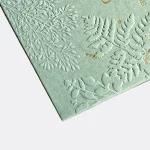
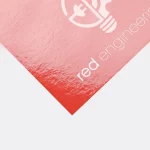
Printing method follows the surface and the run. Offset CMYK is commonly used for detailed folding-carton graphics. Flexographic printing is common on corrugated surfaces. Digital printing can suit short runs or several versions. Matte or gloss lamination changes reflection, soft-touch changes hand feel, and spot UV, foil stamping, embossing, or debossing isolate selected areas.
Window patching adds a clear opening that must be drawn into the panel plan. Mark print coverage on the actual panel map, including full exterior ink, selected faces, inside graphics, variable artwork, seams, glue areas, windows, crease lines, handles, and closure parts. Low-resolution art can look acceptable on a screen and fail at print size. RGB art can shift when converted for press. A digital proof should show the assembled relationship, not just a flat rectangle.
Which CPL product pages help me build a shortlist?
Compare custom tin packaging when the metal container is part of the presentation. custom taper candle packaging gives a long-product reference, while custom stevia packaging covers small-unit organization. For irregular products, compare custom scissor packaging and custom drone packaging boxes. A display option is custom greeting card packaging.
What should be in a complete packaging request?
The request should separate physical information from visual choices. Send the product or reliable drawing, labeled dimensions, inside clearance, layers, structure, material, insert, window, print coverage, finish, artwork versions, packing method, quantity, and delivery location.
- Describe the product, orientation, packaging layers, and inside clearance.
- Name the structure, closure, insert, window, handle, or divider under consideration.
- State material, board caliper, print coverage, artwork versions, and finish areas.
- Explain how the package will be packed, displayed, stored, and shipped.
- Share quantity and destination so the quote covers the intended scope.
How does CPL turn a broad request into a quote?
Custom Packaging Lane quotes all custom packaging to spec from a 100-unit minimum. Pricing is from $0.49 per unit at volume, quoted to spec. Production is typically 8 to 10 business days after proof approval, plus delivery. Free US shipping and free design support include a free dieline. The $19.99 sample kit is credited to the first order. For volume planning, compare wholesale custom packaging and send one consolidated brief.
Frequently Asked Questions
How do I compare different custom packaging formats?
Compare custom packaging formats against the same product dimensions, inside clearance, opening motion, print coverage, finish, quantity, and delivery scope. A folding carton, rigid box, tin, pouch, bag, and corrugated shipper solve different physical jobs. Separating primary, secondary, and shipping layers keeps a sleeve from being compared with a complete package assembly.
Which material references help start a packaging brief?
Useful material references include SBS, C1S, or C2S paperboard at 12 to 24 pt, kraft board at 18 to 24 pt, rigid chipboard at 1.5 to 3 mm with 100 to 157 gsm art paper, and corrugated E, B, or C flutes. Flexible and bag projects need separate decisions for seals, handles, print, and surface direction.
What structure options should a broad packaging request mention?
A broad packaging request can name straight tuck end, reverse tuck end, auto-lock bottom, crash-lock, sleeve, mailer, two-piece rigid, magnetic flap, drawer or slide, gable, or pillow structures. Structure affects loading, access, display, storage, and forming, so naming the likely opening gives the dieline review a real starting point.
How do print and finishing choices change the scope?
Print and finishing choices change the production surface and the artwork map. Offset CMYK suits detailed carton graphics, flexographic printing is common on corrugated surfaces, and digital printing can suit short runs or versions. Lamination, soft-touch, spot UV, foil, embossing, debossing, and window patching each need a marked area on the proof.
What information makes an all custom packaging quote useful?
An all custom packaging quote needs the product or reliable drawing, labeled dimensions, inside clearance, layers, structure, material, insert, window, print coverage, finish, artwork versions, packing method, quantity, and delivery location. Separating required choices from optional finishes gives the supplier one consistent scope across cartons, rigid formats, tins, bags, and shippers.