








































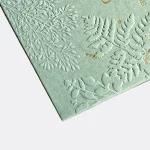
































What is a book slipcase?
A book slipcase is a rigid outer sleeve with an open end that holds a book or book set. It adds a structured presentation layer around the publication while leaving the book accessible. The dieline is the flat cutting template used to print and cut the sleeve. The interior is sized to the finished book, including the cover, page block, closed thickness, and any wrap or accompanying component.
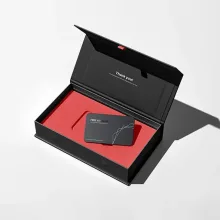
Start with custom slipcase boxes when the sleeve is the main packaging piece. Compare book-style rigid boxes when the project needs a separate base and lid. Book boxes provide another reference for a publication package, but a slipcase has a different opening and fit requirement.
How do I size a slipcase for a book?
Size the slipcase from the finished book that will slide inside it. Send the book length, width, and closed thickness, then note whether the book has a wrap, ribbon, insert, or companion item. The opening direction and wall construction affect the interior fit, so the book should be measured in its final bound state.
| Project input | What it sets |
|---|---|
| Book length and width | Interior footprint of the sleeve |
| Closed book thickness | Sleeve depth and opening fit |
| Rigid board weight | Wall thickness, structure, and finished outside size |
| Print and finish plan | Outer artwork treatment and proof requirements |
CPL's rigid box spec data shows slipcase dimensions and board weights used by publishers and subscription-box clients. Use that information as a starting point, then confirm the final specification from the actual book and physical sample requirements. A generic stock size is risky when the book has a heavy cover, unusual proportions, or multiple volumes.
Which board and finish suit a book slipcase?
Rigid slipcases use chipboard, a dense paperboard panel, wrapped with printed paper. The chipboard supplies the shape, while the wrap carries the artwork and finish. Heavier board increases wall thickness and changes the finished dimensions, so board weight belongs in the size discussion rather than as a late cosmetic choice.
Custom printing can carry the title, series identity, publisher mark, or pattern across the sleeve. Matte lamination reduces sheen and gives the wrap a quieter surface. Gloss lamination increases reflection and makes color appear brighter. Spot UV adds glossy contrast to selected areas, but it should stay clear of scores and opening edges where the wrap flexes.
Request a digital proof before production. Check panel alignment, spine treatment, opening orientation, bleed, and artwork near scores. Free design support is available for dieline preparation. The $19.99 sample kit can help compare board feel, wrapped paper, and finish directions before the full specification is approved.
What are the MOQ, price, and production terms?
The MOQ for custom book slipcases is 100 units. Pricing is from $0.49 per unit at volume, quoted to spec. The approved book dimensions, board weight, construction, printing, finish, artwork, and quantity shape the final quote, so the volume figure is not a flat price for every slipcase.
| Commercial point | Term |
|---|---|
| Minimum order quantity | 100 units |
| Volume pricing reference | From $0.49 per unit at volume, quoted to spec |
| Production | Typically 8 to 10 business days after proof approval, plus delivery |
| Shipping | Free US shipping |
What should I send for a slipcase quote?
Send the finished book length, width, and closed thickness, plus quantity, artwork status, preferred construction, board direction, finish, delivery destination, and target in-hand date. State whether the slipcase holds one book, a set, or a book with an accompanying item. Free design support can then turn the brief into a dieline and digital proof.
Use custom packaging design as the planning hub for the structural brief and artwork. After proof approval, production is typically 10 to 14 business days, plus delivery. The schedule starts at approval, so a publication date should be planned around proof preparation as well as production.
Frequently Asked Questions
What is a book slipcase used for?
A book slipcase is a rigid outer sleeve that holds a book or book set and adds a structured presentation layer. It can be planned for a special edition, publisher program, subscription-box release, journal, catalog, or other publication. The sleeve is sized to the finished item and has an open end for access.
Can a slipcase be made for a specific book size?
A custom book slipcase is sized to the finished book length, width, and closed thickness. Include any wrap, insert, ribbon, companion item, or multi-volume requirement in the brief. The final interior fit should be checked in the digital proof and against a physical sample when the project needs that check.
What quantity is required for custom book slipcases?
The minimum order quantity for custom book slipcases is 100 units. Pricing is from $0.49 per unit at volume, quoted to spec. The final quote depends on the approved book dimensions, rigid construction, board weight, printing, finish, artwork, and quantity.
How long does book slipcase production take?
Production for custom book slipcases is typically 8 to 10 business days after proof approval, plus delivery. This is a production planning window, not a guaranteed arrival date. Free US shipping and free design support are available, and the schedule should include time for proof preparation before approval.
Can I check materials before ordering?
The $19.99 sample kit can help you compare board feel, wrapped paper, surface finish, and print direction before approving a custom book slipcase. Free design support is also available for artwork preparation, dieline questions, and structural planning during the quote.