




























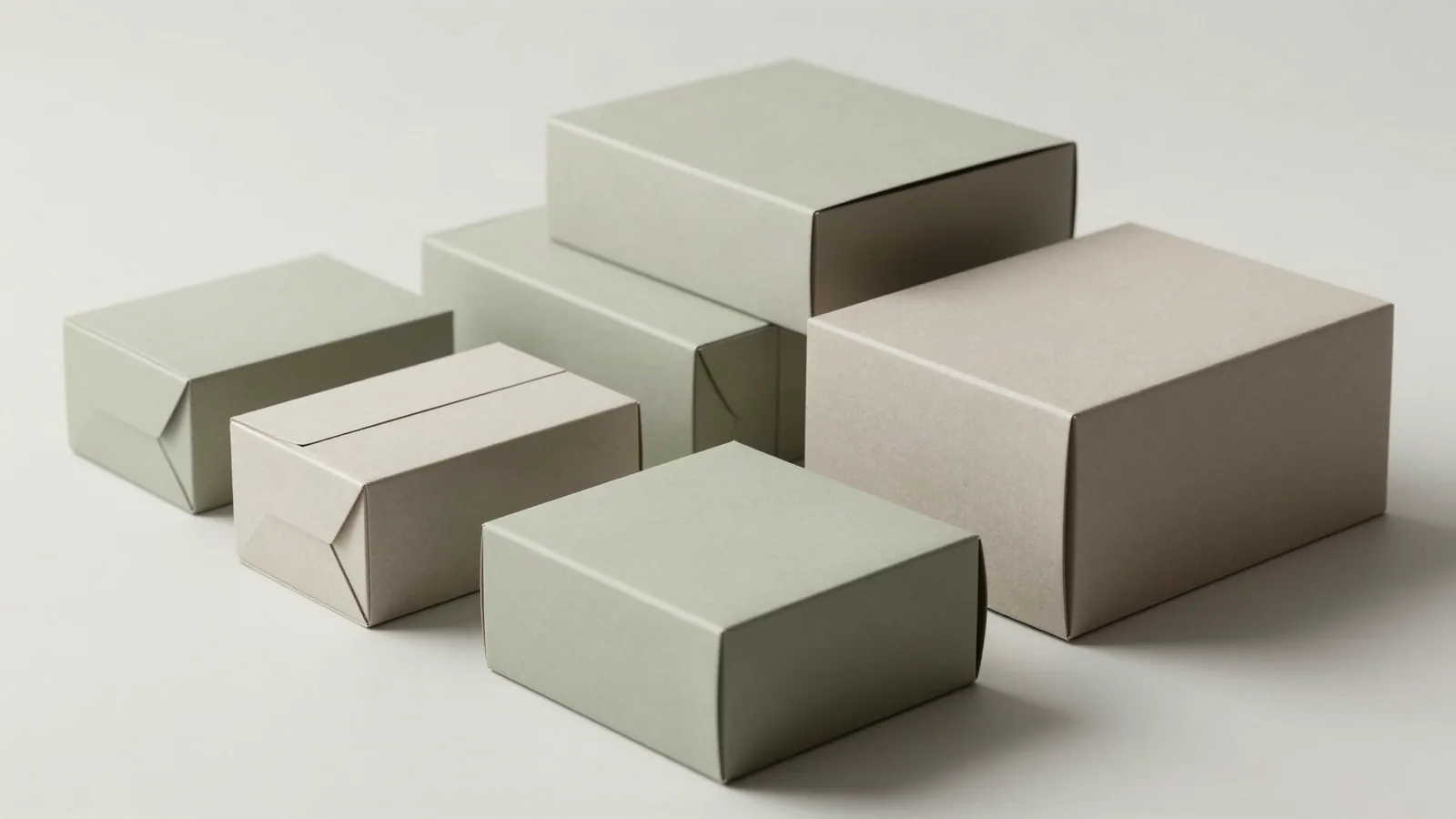




















































What should branded packaging fulfillment solve?
The handoff from approved artwork to the pack station is the real test. Each package needs to present the brand, hold the packed product, and enter a shipper or tote in a repeatable way. Start with the SKU, or stock-keeping unit, list, packed dimensions, closure, insert, label location, and opening motion. A logo alone cannot specify the pack-out.
Use inside measurements and write length x width x depth. About 1/16 in, or 1.5 mm, is a common tolerance reference, but an insert, wrap, and closure need their own clearance. Measure the packed item instead of the bare product. For several SKUs, keep one line per finished pack-out so each artwork file stays attached to the right physical structure. A dieline is the flat structural layout used to check panels, folds, glue areas, and the opening.
Which structure fits the packing station?
The pack station usually needs a structure that closes in a repeatable motion with the filled product inside. FEFCO 0427 is a common reference for a roll end tuck top mailer.
| Structure | Common planning use | Fulfillment check |
|---|---|---|
| Straight tuck end | Folded retail cartons | Can the packer load and close it in one motion? |
| Auto-lock bottom | Cartons with a formed base | Does the base lock with the actual board and product? |
| Roll end tuck top, FEFCO 0427 | Self-closing mailer presentation | Will the tuck panel stay aligned after loading? |
| Sleeve | Printed outer layer over an inner pack | Does the sleeve clear corners and labels? |
A straight tuck end is a folding-carton format for lighter retail items. An auto-lock bottom changes the base-forming motion, so check it with the filled product. A roll end tuck top mailer is a self-closing style. A sleeve is a printed outer layer over an inner pack when the visual layer needs to stay separate from the product pack.
Which board and print process fit the pack-out?
SBS, C1S, and C2S paperboard commonly fall in the 12 to 24 pt range for folding cartons. Kraft board commonly falls in the 18 to 24 pt range. A rigid presentation package commonly uses 1.5 to 3 mm chipboard wrapped in 100 to 157 gsm art paper. Corrugated programs compare E, B, and C flutes, with 32 ECT as a common compression reference. These are industry references, not a substitute for testing the finished pack-out.
Offset CMYK suits detailed paperboard artwork. Flexo is commonly used for corrugated board. Digital print can suit short runs or versions that change often. Matte or gloss lamination changes sheen. Soft-touch, spot UV, foil stamping, embossing, debossing, and window patching each need a defined location on the proof. Keep barcodes, labels, small type, folds, seams, and heavy finish areas visible in the assembled sample.
How can one visual system cover several SKUs?
A packaging matrix should list the SKU, packed length, width, and depth; board or flute; structure; insert; artwork version; opening direction; and pack-out notes. Wine box packaging gives a narrow, upright reference. Towel packaging raises different fit questions because soft goods compress and may be folded or bundled. Sock packaging is a compact retail reference, while private-label packaging frames a shared visual system across different product names.
Keep typography, color areas, and finish logic consistent, but give each SKU its own dieline when the footprint, insert, opening, or panel proportion changes. If staged access matters, perforated packaging can provide a controlled tear-away area. Confirm the tear path on the assembled package before adding it to the artwork.
What should I check before approving the fulfillment proof?
The proof is ready for approval when the artwork, structure, and filled pack-out agree on the same version.
- Match each artwork file to one SKU and one physical structure.
- Check inside dimensions with the finished product, wrap, insert, and card.
- Confirm opening direction, glue or tuck areas, label clearance, and pack-out sequence.
- Compare the flat dieline with an assembled sample.
- Record the approved board, print process, finish, and version name in the packaging matrix.
A clear record gives the pack station one reference for assembly and version control. It also exposes changes before artwork is locked, especially when similar packages share a visual system but use different openings or inserts. Check the proof against the finished pack-out, instead of the screen alone.
Quotes start at a 100-unit minimum. Pricing is from $0.49 per unit at volume, quoted to spec. Production typically takes 8 to 10 business days after proof approval, plus delivery. Free US shipping and free design support are available, and the $19.99 sample kit is credited toward the first order. See custom packaging solutions and send the product dimensions, SKU list, and artwork status.
Frequently Asked Questions
What belongs in a branded fulfillment brief?
A branded fulfillment brief should list each SKU, packed length, width, and depth, plus the structure, board or flute, insert, artwork version, opening direction, label location, and pack-out sequence. Keep one line per finished pack-out. This connects the printed file to the physical package the station must assemble.
When should a SKU get its own dieline?
A SKU should get its own dieline when its footprint, insert, closure, opening, or panel proportion changes. Several SKUs can still share typography, color areas, and finish logic. The matrix should connect each SKU to the correct dimensions and artwork version before the package reaches the pack station.
What does a fulfillment-ready dieline show?
A fulfillment-ready dieline is the flat structural layout used to check panels, folds, glue areas, opening direction, bleed, and information placement. It should identify inside and outside surfaces and show inserts, windows, or perforations. Compare the flat layout with an assembled package and the actual packed item before approval.
When should a window or perforation be added?
A clear PET window commonly uses film around 0.2 to 0.3 mm, while a perforation creates a controlled tear-away path. Add either only when it supports the customer or pack-station task. Both change the dieline, so check the assembled package before locking the artwork.
How should printed versions be controlled?
Printed packaging versions should have names tied to the SKU, language, or campaign, with the approved proof kept beside the packing instructions. Check barcodes, labels, required text, folds, seams, and finish boundaries. Version control prevents a similar-looking file from being matched to the wrong physical package.












