




























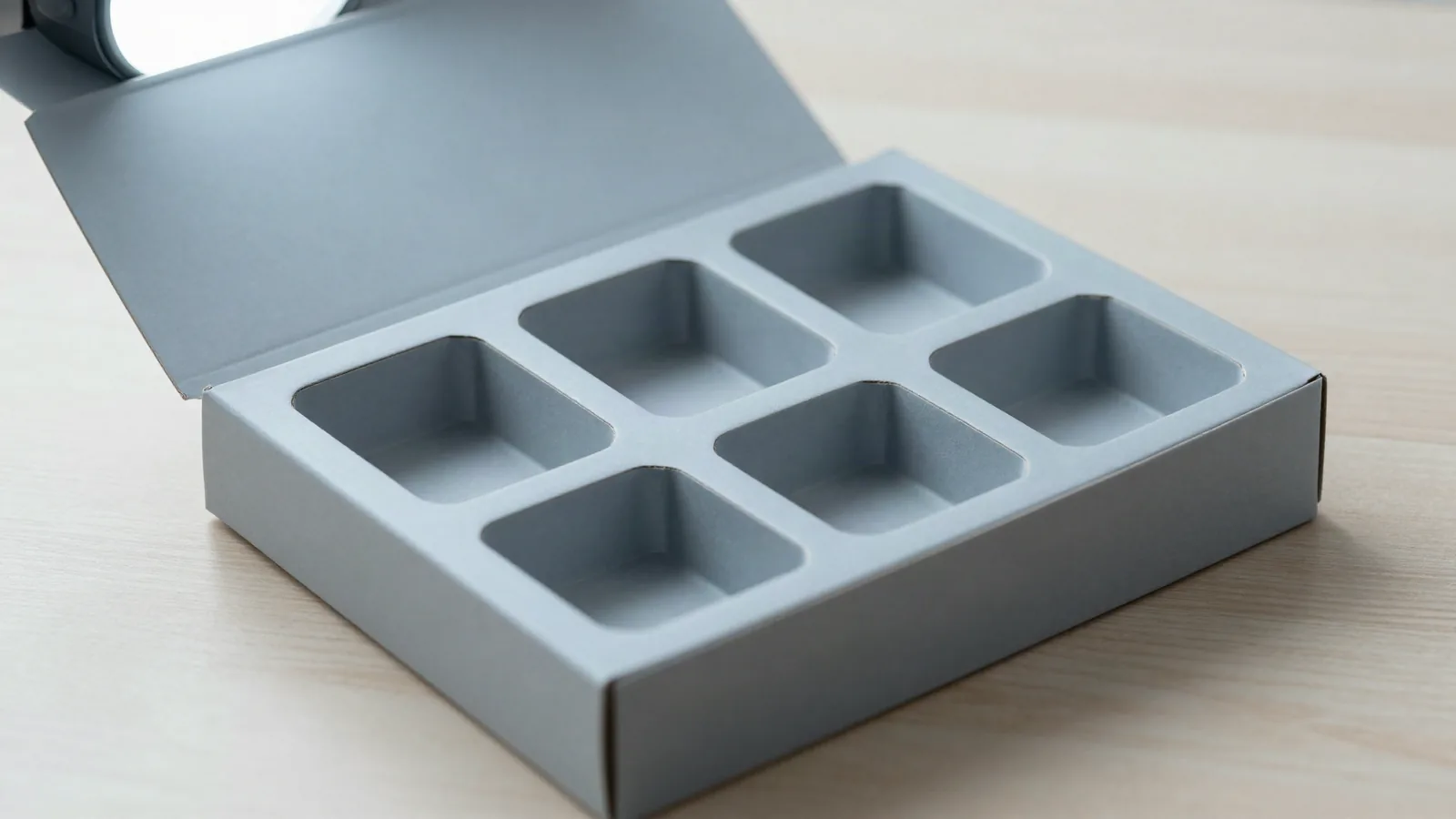




















































Cardboard ammo boxes with foam trays combine a printed cardboard or corrugated shell with a shaped interior insert. A foam tray is an insert cut or formed around the packed item, with pockets called cavities that hold each piece in a planned position. Buyers searching for an ammo box foam insert usually need the shell and tray quoted together, because the tray footprint changes the inside width, lid clearance, and packing sequence.
Foam has its own fit behavior. A deep pocket supports a part by its sides, while a shallow pocket leaves the top easy to grip. Repeated packing can compress a foam edge and change the feel of removal. Record whether the tray holds one piece or a nested set, then confirm the cut method and material in the quote. That detail belongs beside the cavity drawing.
One naming detail matters: styrofoam ammo tray boxes is a search term, not a complete material specification. Confirm the actual foam type, thickness, density, and fabrication method in the quote. The outer box still needs its own board, closure, print, and finish record.
What does a foam tray do inside a cardboard ammo box?
A foam tray holds each packed item in a fixed position inside the cardboard ammo box. It can separate pieces, cushion edges, and keep the opening organized, but each cavity must follow the product rather than a generic tray size.
Start with the product dimensions and the way a packer will place and remove each piece. Mark the top, bottom, front, and any side that must remain visible. If there are several pieces, number the cavities on the sketch. The tray layout then becomes something a printer and packer can check, not a vague request for foam inside.
How should the shell and tray be sized together?
Size the tray from the product outward, then check the assembled shell around it. The tray outside footprint must sit inside the box without pushing into the walls or the closure.
Write down actual packed dimensions, not the product name alone. Include a cap, handle, rim, or other part that changes the cavity. If the tray has several rows, mark the order in which each piece goes in and comes out. That small note can expose a blocked pocket before the dieline is finished.
A dieline is the flat cutting template used to print and cut the box. Keep type away from scores and glue tabs, add bleed where artwork runs to a cut edge, and check that a barcode has enough clear space to scan. RGB artwork can shift when it is converted for press, while a low-resolution logo shows its limits on a large panel. A digital proof catches those problems before anything prints.
Which parts need a separate fit check?
The shell, foam tray, cavity layout, and printed artwork each need their own check. Treat each part as a separate check in the same package record.
| Part | Job inside the package | Check before proof approval |
|---|---|---|
| Outer shell | Printed exterior and closure | Inside length, width, height, and opening |
| Foam tray | Product support and organization | Foam type, thickness, density, and footprint |
| Cavity layout | Fixed position for each piece | Pocket shape, clearance, and removal path |
| Printed artwork | Brand and package information | Panel order, scores, bleed, and ink coverage |
During a press check, look at ink coverage, registration, scores, and fold lines. The printed panels should read when assembled and when the box is flat. Matte and gloss lamination change reflection, while spot UV and foil need a clear panel map. Those are finish decisions, not substitutes for fit.
What should you specify for styrofoam ammo tray boxes?
A useful tray brief names the packed product, the cavity plan, and the shell that must hold it. Include these details:
- Packed dimensions, orientation, and the order of removal.
- Cavity count, shape, clearance, and any divider or channel.
- Foam material, thickness, density, and tray footprint.
- Box board, closure, outside dimensions, and printed panels.
- Artwork status, finish direction, quantity, and destination.
If you use the word styrofoam, add the material you actually want checked. Free design support includes drawing the dieline from the product dimensions, then sending a digital proof before anything prints.
Which CPL box formats should you compare?
The direct outer-shell reference is cardboard ammo boxes. For a built-in tray or insert structure, compare custom cardboard boxes with lid and tray and custom cardboard boxes with inserts. A rigid direction uses wrapped board rather than a folding corrugated shell, so rigid boxes with sleeve and tray and rigid boxes with magnetic closure are comparison references, not automatic replacements.
How do you order cardboard ammo boxes with trays?
Send the product dimensions, target quantity, shell style, tray sketch, and artwork. CPL can draw the dieline with free design support and send a digital proof before printing. Proof approval covers the shell, tray layout, artwork, board, and finish.
The MOQ is 100 units. Pricing is from $0.49 per unit at volume, quoted to spec. Production typically takes 8 to 10 business days after proof approval, plus delivery. Free US shipping and free design support are available. Order the $19.99 sample kit when you want to compare material and finish directions, then use custom packaging solutions to frame the request.
Frequently Asked Questions
What is an ammo box foam insert?
An ammo box foam insert is a shaped foam component that organizes or supports packed items inside an outer box. The insert is planned around product dimensions, cavity positions, clearance, and the shell footprint. The final foam type and fabrication method belong in the quote and digital proof.
Is styrofoam the final tray material?
Styrofoam is a search term, not a complete tray specification. A cardboard ammo box project should identify the actual foam type, thickness, density, cavity layout, and tray footprint before proof approval. CPL can check the material direction with the shell and insert details in the same quote.
Does CPL size the tray and shell together?
CPL can check the cardboard ammo box shell and foam tray as one package record. Send product dimensions, cavity positions, closure details, and artwork. The tray outside footprint must fit the shell without crowding its walls or blocking the lid.
What is the MOQ and price for an ammo box with a foam tray?
The MOQ for cardboard ammo boxes with foam trays is 100 units. Pricing is from $0.49 per unit at volume, quoted to spec. The final quote follows the shell, foam type, cavity layout, artwork, finish, and requested quantity, so the tray should be included from the first request.
How long does production take for an ammo box and tray?
Production for a cardboard ammo box and foam tray typically takes 8 to 10 business days after proof approval, plus delivery. That window starts after the shell, tray, artwork, board, and finish are approved. Free design support can help organize the dieline before the proof.












