























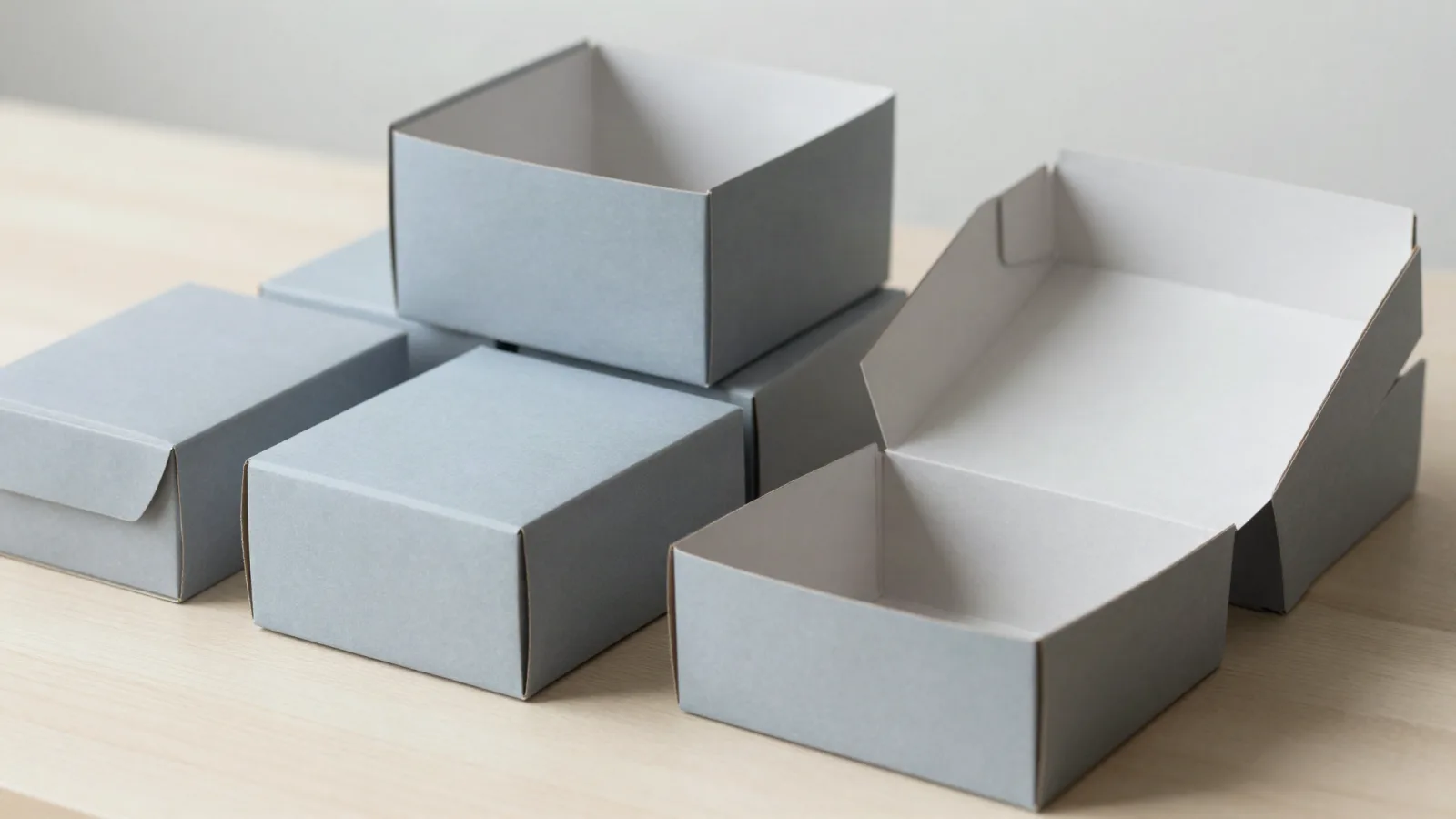
















































Cardboard ammo boxes with trays use an outer box and a fitted paperboard insert that gives the inside a repeatable layout. A cardboard tray is a folded or die-cut paperboard piece with panels, scores, and sometimes glue tabs. It differs from a foam insert because the board gains shape through folds and cuts, so the tray must be planned with the box footprint and lid clearance.
Paperboard grain affects fold direction. Slot tabs lock walls; glue tabs create seams. Put the fold pattern and tab positions on the dieline.
CPL's catalog includes tray-insert construction that can be custom sized and printed for ammunition retail packaging. The quote should name the carton blank, cut lines, fold order, tab style, board direction, print coverage, and quantity. A product name cannot determine the tray geometry.
What is a cardboard tray doing inside an ammo box?
The cardboard tray separates product positions and fixes the way the inside is seen when the box opens. It can use dividers, folded supports, or a shaped platform, with each feature drawn into the tray layout.
Paperboard folds create the tray shape at scores and tabs. That makes the crease pattern part of the fit. A tray cut to the exact product outline leaves little room for hand placement, while a loose pocket lets the item move. Add the actual product dimensions, including any rim or protruding part, before the tray is drawn.
The tray also changes the lid clearance and the space left for artwork. A high folded wall can cover an inside panel. A support that sits too close to the edge can catch the lid. Those are simple checks, but they are easier to solve on a dieline than after the carton is printed.
Which box construction should you compare?
Choose the outer construction before finalizing artwork. The box format sets the opening, the usable interior, and the space available for the cardboard tray.
| Construction | What it changes | Question for the quote |
|---|---|---|
| Cardboard ammo box | Printed shell and opening | Where should the tray sit inside the shell? |
| Box with inserts | Internal support and product positions | Should the insert fold, divide, or support? |
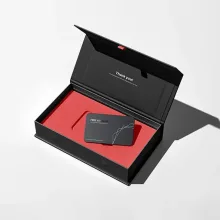
| Lid and tray | Separate top closure and reveal | Does the lid clear the tray rim? |
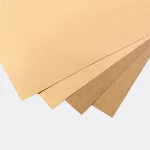
| Kraft cardboard | Base paper tone and print contrast | Will the artwork read on the chosen board? |
| Rigid sleeve and tray | Wrapped-board opening and feel | Does the requested presentation call for rigid construction? |
Use custom cardboard boxes with lid and tray, custom cardboard boxes with inserts, and cardboard ammo boxes as direct structure references. Kraft cardboard boxes can frame the board discussion, while rigid boxes with sleeve and tray show a different opening construction.
How should a cardboard tray be drawn?
Draw the cardboard tray from the product layout, not from a stock cavity. A dieline is the flat cutting template that shows panels, scores, cuts, and glue tabs before the sheet is printed and cut.
Mark the tray's outside footprint first. Then place each cavity, divider, and support inside that footprint. Check the order of loading and removal, because a row that fits on paper can still block the piece behind it. For a multi-piece set, label every position on the sketch and match those labels to the proof.
Prepress catches different problems. Keep type away from scores and cuts, add bleed to artwork that reaches an edge, and keep barcodes clear of folds. RGB art can change when it is converted for press. Low-resolution product art can look soft on a broad panel. A digital proof gives the buyer a place to catch those issues.
Should you use kraft board or full print?
Kraft board changes the base color and print contrast, while full print covers the selected panels with the artwork supplied for the job. Kraft can suit a restrained paper direction; white paperboard gives the art a different starting surface.
A simplified finish or one-color print can reduce production steps in a suitable project, but the quote still follows the requested board, construction, tray, quantity, and finish. Use kraft cardboard boxes as a board reference before the artwork is final. Free design support is available for the box and print plan.
What should an ammunition retail packaging brief include?
A useful brief states the product arrangement and the physical parts that must fit around it. Include:
- Packed dimensions and the orientation of every product position.
- Tray dividers, supports, cavity spacing, and removal clearance.
- Box footprint, opening style, lid overlap, and closure.
- Board direction, print coverage, artwork status, and finish.
- Quantity and destination for the quote.
The MOQ is 100 units. Pricing is from $0.49 per unit at volume, quoted to spec. Free US shipping and free design support are available. The $19.99 sample kit is a practical way to compare material and finish directions. For a broader buying request, use wholesale custom packaging.
How do you order cardboard ammo boxes with trays?
Send the tray sketch, box footprint, board preference, artwork, and target quantity together. CPL sends a digital proof before anything prints, so the shell, cardboard tray, panel map, and finish can be checked as one package.
Production typically takes 8 to 10 business days after proof approval, plus delivery. The clock starts at proof approval, not at the first quote request. Ask for the complete box and tray configuration to be quoted to spec.
Frequently Asked Questions
What is a cardboard tray in ammo packaging?
A cardboard tray is a folded or die-cut paperboard insert that separates product positions inside an ammo box. Scores, panels, and glue tabs create the tray shape. The tray footprint, cavity layout, lid clearance, board direction, and print coverage should be checked with the outer box.
Can the tray and outer box use one print plan?
The cardboard tray and outer box can be recorded in one packaging brief, but their printed surfaces should be mapped separately. The tray may have different visible panels, folds, or coverage from the shell. CPL can check the box, tray, artwork, and finish together before proof approval.
Does kraft board change the artwork?
Kraft board changes the base paper tone and the contrast of printed artwork on cardboard ammo boxes. A buyer should state the kraft direction, print coverage, and finish in the brief. A sample kit for $19.99 can help compare material and finish directions before the proof.
What is the MOQ for cardboard ammo boxes with trays?
The MOQ for cardboard ammo boxes with trays is 100 units. Pricing is from $0.49 per unit at volume, quoted to spec. The quote follows the box footprint, tray layout, board, artwork, finish, and quantity, so the paperboard tray should be included in the request.
How long does tray-insert production take?
Production for cardboard ammo boxes with trays typically takes 8 to 10 business days after proof approval, plus delivery. Free design support is available, and CPL sends a digital proof before printing. Proof approval should cover the shell, cardboard tray, artwork, board, and finish.